Article
Focus on the patient experience: How UX design works without software

- Reading time
- 11 minutes
- Updated
User experience design is at home in the digital world. The term was coined by Don Norman in the mid-1990s in the context of software development and has since been used to describe and improve the experience of users of digital applications. But aren’t the mindsets, methods, and principles from the UX field transferable to many other areas of life? Can UX design work its magic in other fields as well, bringing products and services of all kinds closer to people and their needs? The Managing Director of the Dr. Becker Clinic Group asked himself this question, and together, we can answer it with a resounding “yes.” In this article, we’d like to describe the current project in more detail and, using this example from the healthcare sector, highlight the previously untapped potential that UX can offer in other non-digital areas as well.
First analog project for UX&I
Dr. Becker Clinic Group thinks outside the box
At UX&I, we worked exclusively on digital products until we received a request that made us think outside the box. Bastian Liebsch is the Managing Director of the Dr. Becker Clinic Group. While researching UX, he came across my presentation at World Usability Day on using apps to promote personal health. Mr. Liebsch then reached out to us. He wanted to work with us to find out how a UX approach could help address his current, entirely analog, challenge.
The goal: improving the subjective outcome of treatment
The clinics of the Dr. Becker Group are grappling with the question of how they can improve the subjective success of treatment. The issue is not whether rehabilitation was objectively successful, but rather whether patients feel that rehabilitation was helpful to them. The background: Two months after rehabilitation, patients are asked by the pension insurance provider to provide feedback regarding their personal experience. Depending on the results, funding for these measures will continue. Satisfied patients are therefore also an economic factor for the clinic group. This makes it all the more crucial to identify which aspects influence subjective treatment success, so that these can ultimately be specifically optimized. The pilot project was initially conducted for the Multiple Sclerosis business unit.
Solutions from the UX toolkit
Kickoff workshop
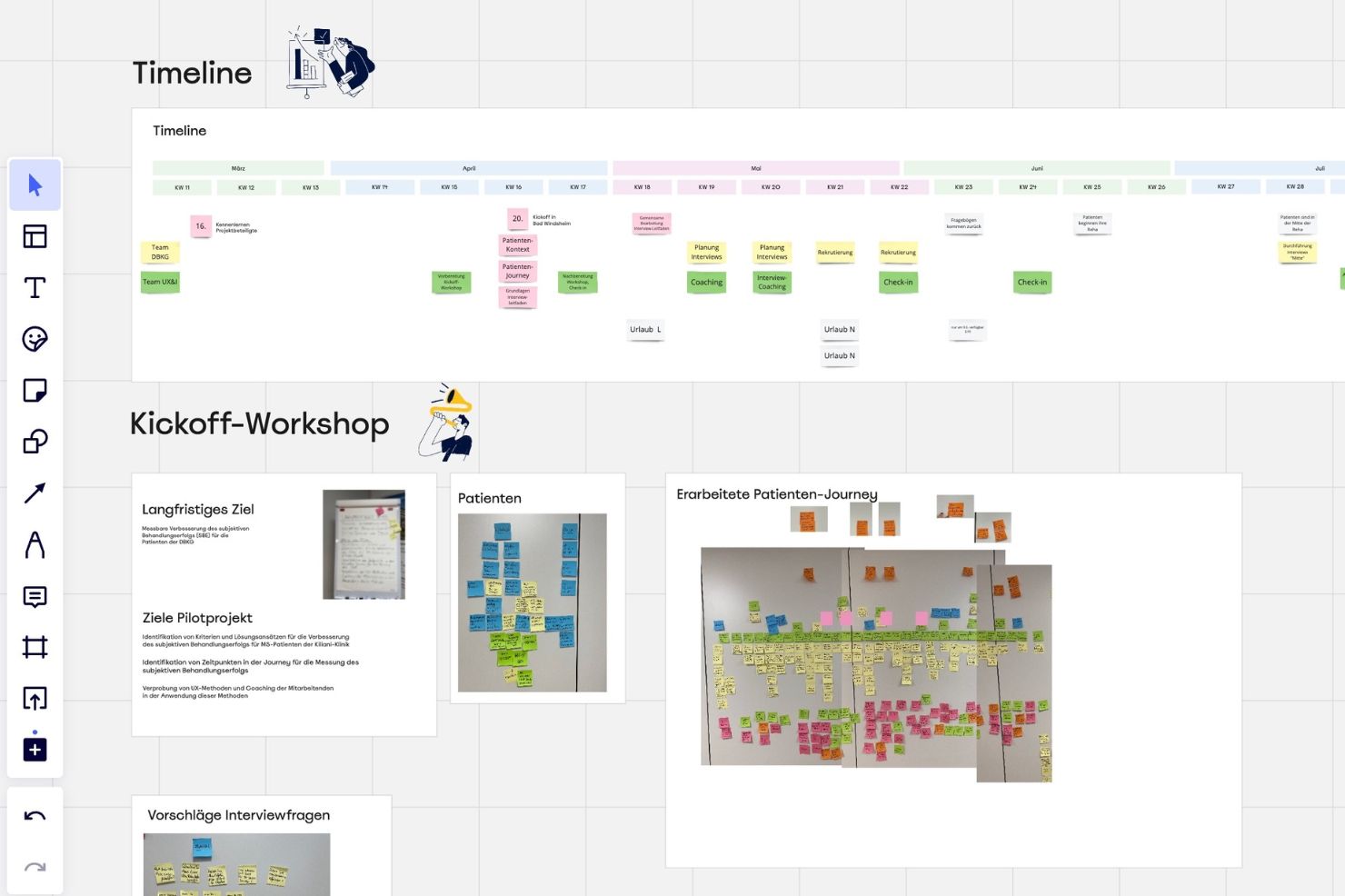
At the start of the project, we met for an initial joint workshop with the chief physician, the project management team, the Managing Director, Mr. Liebsch, and a staff psychologist. Following a classic approach, we first mapped out the journey that patients go through, from applying for rehab to receiving feedback. In addition to the major time blocks, we also gathered specific activities and initial assessments of the patients’ emotional states at each stage. By putting ourselves in the patients’ shoes, we identified the critical points in the journey for interviews. The plan was to interview the patients at four different points in time: before the start of rehab, halfway through, at the end of rehab, and again two months later. We also developed the criteria for selecting the patients who would participate in our project.
“Thinking from the customer’s perspective, that is, the patient’s, is unfamiliar to many in the healthcare industry. There’s a strong emphasis on the expert’s perspective.”
Pure enablement
From the very beginning, the project was structured so that we at UX&I would not be directly involved in the operational aspects. Instead, we equipped the research team with all the necessary skills to conduct the research independently and subsequently analyze the results on their own. For example, we assisted with the selection of candidates, the creation of questionnaires and interview guides, offered coaching sessions on conducting interviews, and provided feedback on the process. The analysis of the interviews proved particularly challenging: As always, the approach had to be tailored to the initial research question, while at the same time ensuring the results were easy to understand.
Closing workshop
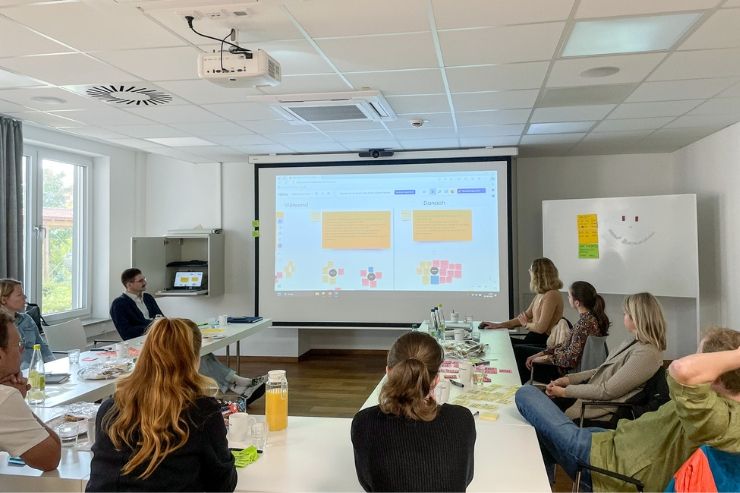
We traveled back for the final workshop. The other participants from the kickoff also took the time to join us again, and we were joined by additional employees from nursing and IT. The two team members presented their research findings to all of us. They had already done an excellent job of clustering their insights and presenting them in such a structured way that ideas started flowing, and the other participants immediately began jotting down initial ideas on Post-its. The research team also reported on “aha” moments. It became clear how patients had fared before, during, and after rehab, physically and cognitively, but also socially and emotionally. There were fascinating insights into how the sometimes standardized rehab processes affect individual people. Things came to light that otherwise sometimes remain hidden or are overlooked, such as regular communication with patients, potential frustration with prescribed procedures and treatments, and the uniqueness of life situations, ranging from managers who manage their illness like a project to single mothers who undergo rehab with their children.
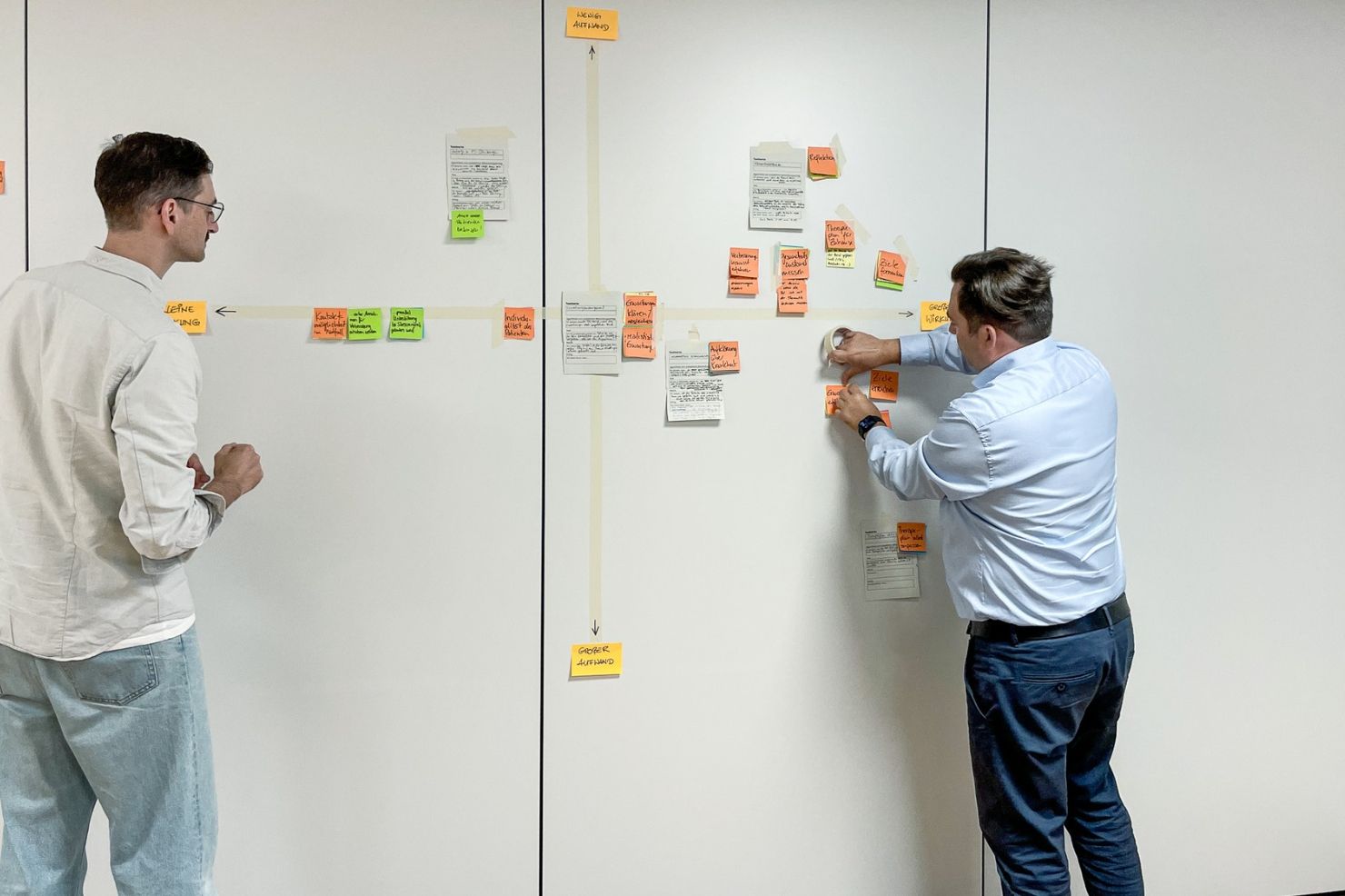
In a subsequent ideation workshop, we entered the solution space together. The ideas were clustered, and through a voting process, the approaches that would ultimately be tested as experiments were selected. For each one, the following was documented:
What is the hypothesis, how do we test it, and when do we achieve success? At the end of the workshop, all experiments were mapped onto a matrix to evaluate their impact and effort required.
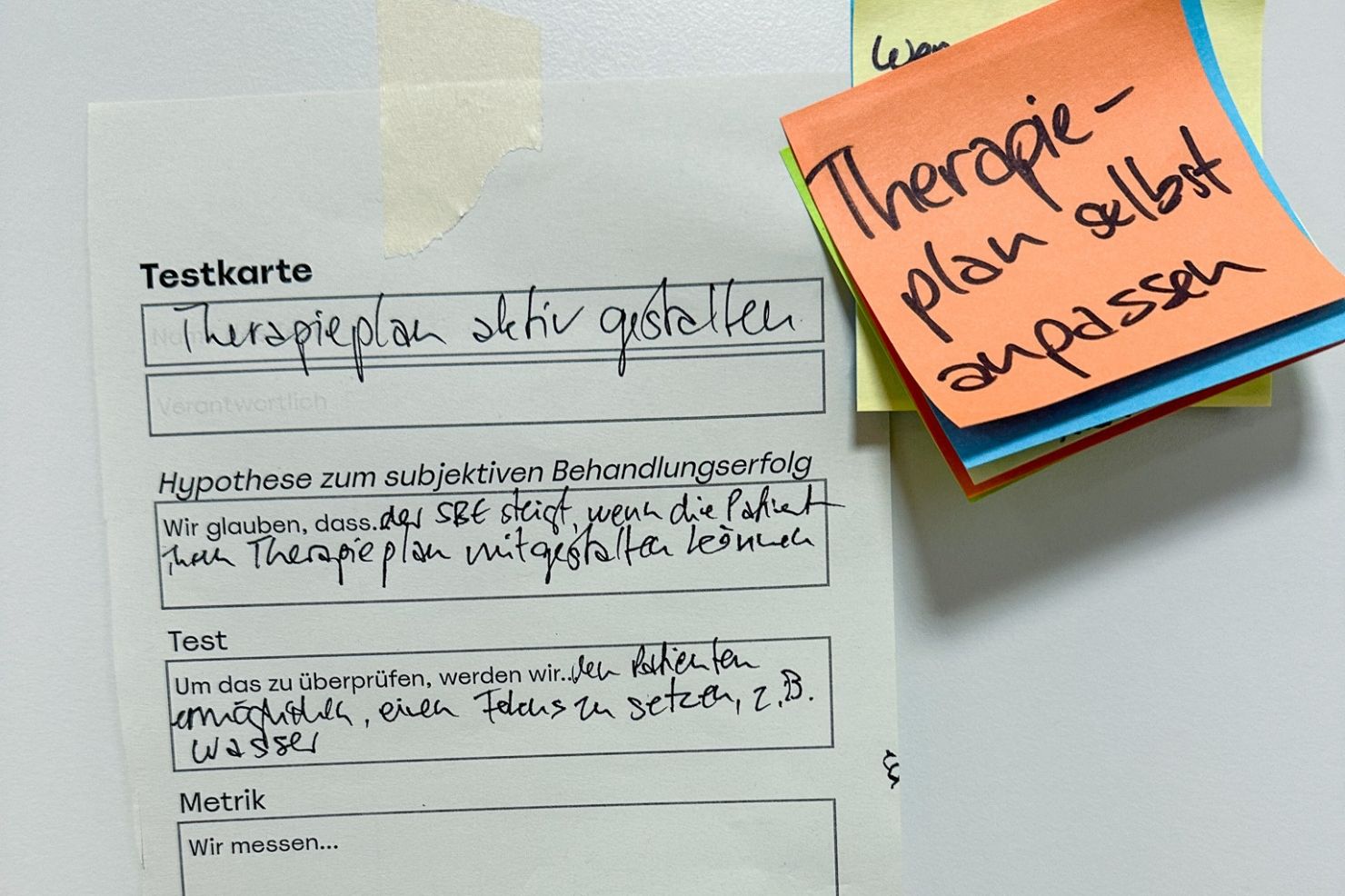
The very next day, we held an internal workshop to plan the implementation of the solutions developed during the ideation phase. Among the experiments to be tested was, for example, a rehabilitation journal designed to encourage reflection. Other business units within the hospital group are already using this format successfully. In addition, patients are to be given more say in their treatment plans.
“In our industry, we tend to think in terms of solutions; what was truly innovative about this project was its examination of the problem space.”
Success Stories
Insights and solutions
One challenge that came to light through the surveys was that while specific goals were set with patients at the start of rehab, these goals were not particularly prominent as the rehab progressed. An experiment demonstrated that the visibility of these goals influences the subjective success of treatment. In addition, the existing online survey was revised. Another important finding: MS patients, in particular, are sometimes overwhelmed by the volume of (prescribed) treatments. In this area, however, the clinic’s options are limited. A total of seven experiments were conducted in small groups. The groups met regularly to compare their progress with one another. Five of the seven experiments were so successful that they are being implemented in their respective business units.
What’s next
The project at the Dr. Becker Klinikgruppe has shown that it pays to put people at the center of our thinking and thereby optimize the functionality, safety, and user-friendliness of products and services, whether digital or analog. The research team’s new findings are now being implemented across the clinic group. In the future, additional processes will be scrutinized, tested through patient surveys and small-scale experiments, and optimized with a human-centered approach. Furthermore, the topic will be presented at a specialized symposium to further raise awareness of the benefits of the UX approach in the healthcare industry.
“Of course, I can always help people with good UX, but this time I had a deep sense that I was doing something good. It was also fascinating to gain deep insights into multiple sclerosis and the challenges that come with it.”
After gaining these exciting insights, we at UX&I are already looking forward to a planned follow-up project in another area of the hospital group.
Thinking ahead: How can the analog world benefit from UX superpowers?
From our practical experience
As shown in our project example, principles and methods from UX design can be easily applied to other areas of work. For example, we’ve successfully applied them here:
- The heart of UX: a human-centered mindset
How can we improve people’s lives by tailoring products and services to their needs? In this article, we’ve outlined how a human-centered approach becomes part of an organization’s DNA. - Journey Mapping: This process illustrates and analyzes users’ paths through an experience.
- Strategizer Test Cards: Ideas are prepared for testing by documenting the hypothesis, how it will be confirmed or refuted, which metrics are relevant, and when the experiment is considered successful.
- Impact-Effort Matrix: Ideas are evaluated based on the effort required and the benefits they offer. This quickly makes it clear which ideas should be prioritized for testing and implementation. One example is the Bet-Cost Matrix.
- User interviews: One of the most important principles at UX&I is: “You are not the user.” We are not the users, patients, or consumers ourselves, so we need to get to know the people for whom we’re developing products. What is their daily life like, and how do they interact with the product or service? User interviews and questionnaires were also key components of Dr. Becker’s approach.

Basic principles of UX
The examples from our project show only a small fraction of the wealth of possibilities. The fundamental principles behind good UX design, in particular, can have a positive impact in a wide variety of areas of life:
- Clarity and simplicity: Even in the analog world, things should be intuitive and easy to understand, for example, a map at a zoo or museum.
- Avoiding and correcting errors: Even in analog settings, clear instructions should be provided, and opportunities to correct errors should be created. For example, consideration could be given to whether it would be possible to correct errors when filling out forms by hand.
- Consistency: Similar elements should always function the same way, ideally not just within a single product or company, but consistently across other experiences our users have. For example, signs related to a particular topic should always be the same color as they are in other contexts.
- Accessibility: Whether digital or analog, products and environments should be accessible and usable by everyone, including people with disabilities.
- Affordance: An object’s design should signal how it is used. For example, a doorknob indicates that you need to push it down to open the door. A panel at hip height indicates that you need to push the door.
- Wayfinding and navigation: In physical spaces, clear directional signs and signage can help people orient themselves and find their way. UX methods can be used to optimize not only the signs themselves but also the entire information architecture.
- Aesthetics and emotion: A pleasant and appealing design is crucial for a positive overall experience. This already plays a major role, for example, in the design of hospital rooms. But why not apply the same principles to ticket machines or waiting rooms at the registration office?
- Flexibility and adaptability: Even analog products and environments can be designed to adapt to different people and their needs, for example, an adjustable office chair.
- Feedback: In digital products, users often receive immediate feedback, such as through animations or text-based confirmations. In the analog world, this can be achieved through haptic feedback, signals, lights, acoustic cues, or text-based cues as well.

UX methods
Many UX methods developed in a digital context are universal and can therefore also lead to improvements in usability and positive experiences in analog environments. Here are a few examples:
- Personas: Creating fictional user profiles helps you put yourself in the target audience’s shoes and view potential solutions from their perspective.
- Prototyping: Physical models or mock-ups help test ideas and gather feedback before moving into full-scale production, whether it’s a piece of software or a sofa with a built-in popcorn machine.
- Usability testing: By directly observing people as they use a product or navigate an environment, you can identify weaknesses and opportunities for improvement.
- Contextual observation: To gain a deeper understanding of needs and behaviors, it also helps to observe people in their natural environment.
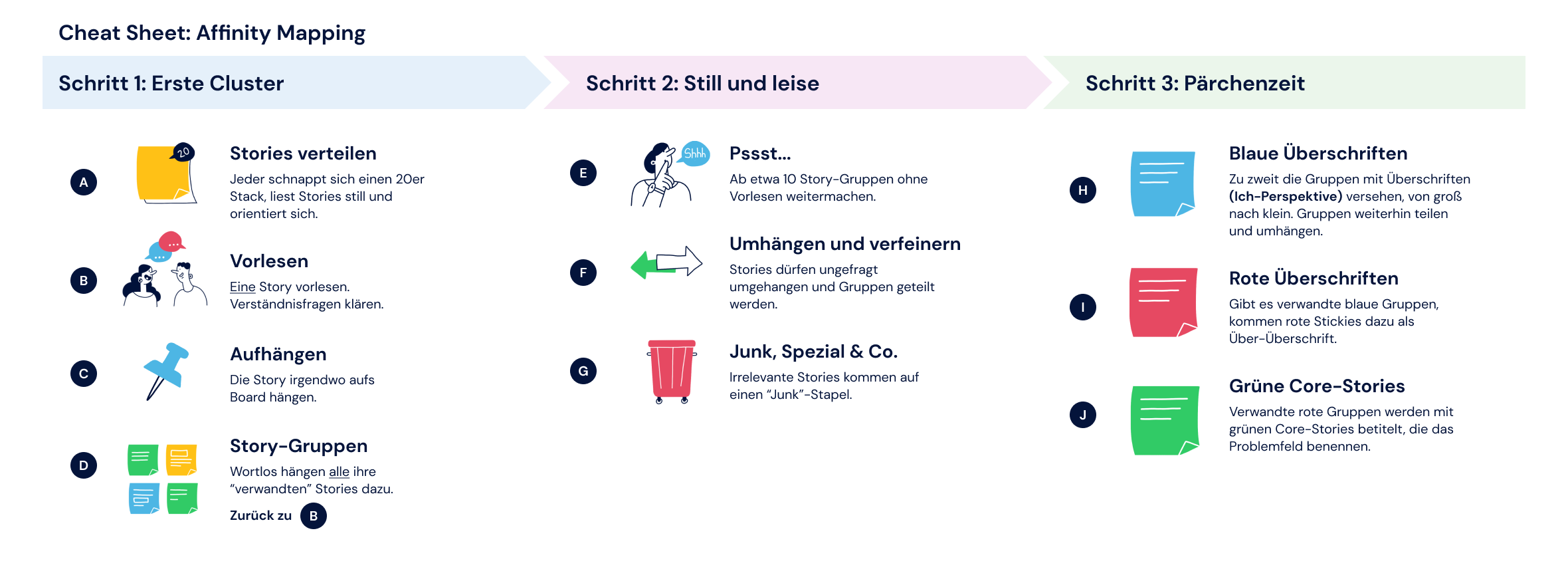
- Affinity Mapping: Organizing ideas or feedback into thematic groups is used to categorize research findings. Here’s a guide that can also be used in an analog setting: Affinity Mapping Cheat Sheet (PDF) (PNG, 195 KB).
- Card Sorting: In this method, users sort concepts or topics into categories to create structures or hierarchies. This could also be useful, for example, for planning the layout of a supermarket or the structure of menus.
- A/B testing: For physical products, two different versions of a design could be made available, and the results could be observed to determine which one performs better.
- Heuristic evaluation: Even non-digital products can be evaluated using established usability guidelines to identify potential problems.
Traditional industries and fields
With these “superpowers” in mind, we can quickly think of environments where focusing on the user experience is valuable. Here are just a few examples:
- Public transportation: The design of train stations, bus stops, ticketing systems, etc., can be optimized from the user’s perspective.
- Retail: UX design can help arrange and present products in a way that makes customers feel comfortable, allows them to find products easily, and makes the purchasing process a pleasant experience.
- Museums and exhibitions: The design of exhibition spaces, informational materials, and signage could be optimized to provide visitors with a better experience.
- Housing construction: Apartments and houses could be designed with UX principles in mind to maximize comfort and functionality for residents
- Product design: By applying ergonomics and user research, we can design more comfortable, functional, safe, and intuitive everyday objects.
- Apparel industry: By taking user feedback into account, clothing can be developed that fits better, is more comfortable, and meets the needs of different body types.
- Medical devices: UX can help design medical devices that are easier to use, which can reduce errors and improve patient care.
- Food packaging: UX can help design packaging that’s easier to open, better protects the contents, and is more sustainable.
- Office supplies: From pens and notebooks to organizers, applying UX principles can help develop products that boost productivity and comfort in the workplace.
- …
Conclusion: More UX for the physical space?
Our project with the Dr. Becker Clinic Group has shown that it pays to put people at the center of our thinking and thereby optimize the functionality, safety, and user-friendliness of products. Some of the common UX principles and methods certainly require a few adjustments to be effective in an analog context. Their fundamental purpose, however, is clear: understanding and improving the user experience. This approach ensures that products, services, and spaces are designed to meet the needs and expectations of the people who use them. And to answer the final question: Yes, let’s make more room for analog UX!
Our expert
For more than 12 years, Nadine has been passionate about complexity and has been breaking it down for clients, teams, and users, in a pragmatic way and with snappy headlines.