
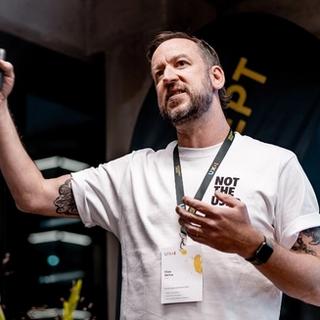

Accessibility by Design: Training with Bernd Feldmayer
Accessibility is no longer just a nice-to-have. Learn how to develop products from the ground up that work for everyone, and get even better in the process.
- Format
- On site or remote
Product Academy
Systematically discover what your users really need. Over the course of two days, you’ll learn the most important product discovery methods and how to turn insights into real opportunities.
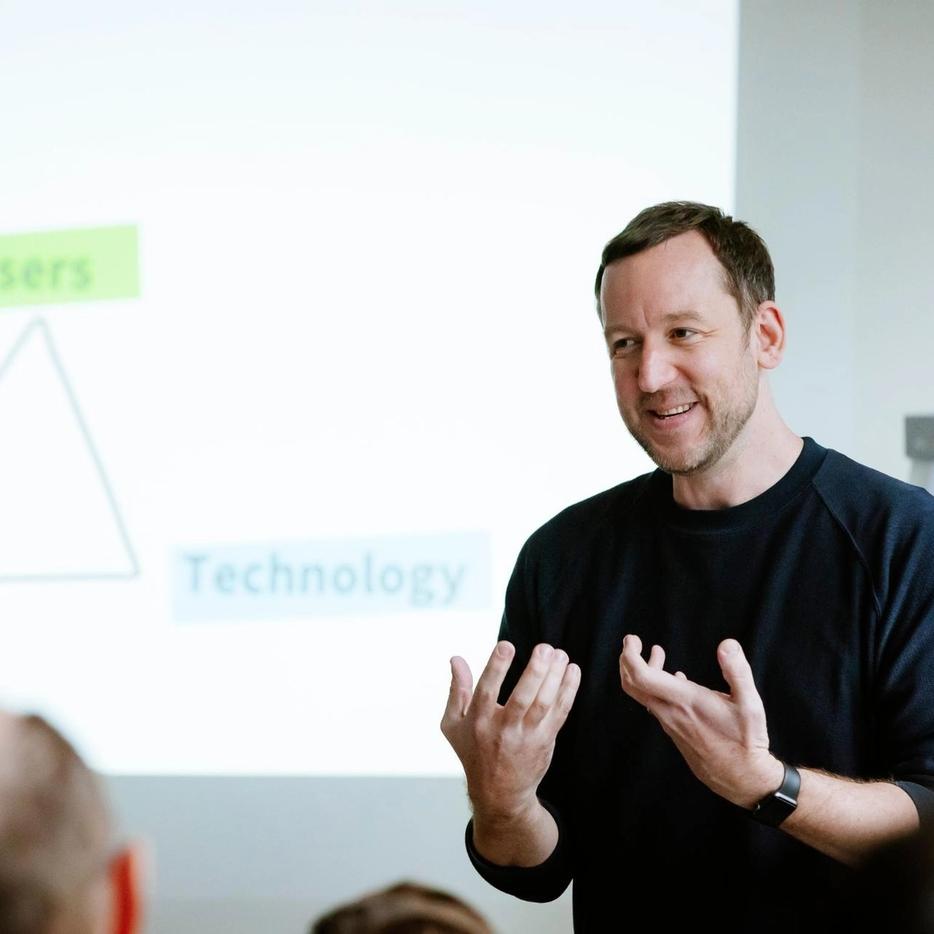
The best product ideas don’t come from the drawing board, but through systematic discovery. In this training, we’ll show you how to use proven methods to uncover real user problems and develop valid product opportunities from them. You’ll learn how to test assumptions before investing in expensive development and how to turn insights into concrete opportunities for your product backlog.
Product owners, product managers, and anyone who wants to make product decisions based on a solid foundation. Ideal for teams that want to rely less on guesswork and more on knowledge.
In a deliberately small group of no more than 15 participants, we’ll make sure you take away exactly what you need. Our trainers will tailor the session to your needs (feel free to bring examples from your everyday life) while also ensuring that you, as a group, learn from and inspire one another. The diverse perspectives of the participants are always valuable.
Hias is a product coach who, driven by his passion for agile methodologies, bridges the gap between people, business, and technology. He also shares his expertise at artop in Berlin through the UX Thinking concept, which he helped develop.
Product Discovery is the process by which teams determine which problem they should solve for which target audience, before investing a lot of time in development. The goal is to mitigate risks early on and focus only on solutions that deliver real value.
• Understanding user needs and jobs-to-be-done (e.g., interviews, observation)
• Identifying and prioritizing assumptions
• Quickly test solution options (prototypes, fake doors, MVP experiments)
• Define success metrics (e.g., activation, conversion, retention)
This creates a solid foundation for product strategy and roadmap: start with the most important assumptions.
The discovery phase is the early stage of a project or product in which the problem, target audience, and proposed solution are defined. It provides direction before design and development move into implementation.
• Define objectives, scope, and success metrics
• Conduct user and market analysis (qualitative & quantitative)
• Formulating hypotheses and prioritizing risks
• Iteratively validating concepts (prototyping, testing, data)
• Create a decision-making template for “Build/No-Build”
The result is usually a clear, tested solution, ideal for then moving on to delivery or implementation with a clear focus.
A discovery product is not a “finished” product, but rather a validatable artifact that helps identify the right solution. It serves to test assumptions and make learning progress measurable, quickly and with minimal effort.
• Prototype or click-through mockup for usability testing
• Landing page or “fake door” for testing demand
• Concierge/Wizard-of-Oz approach to simulate value
• MVP with minimal functionality and clear metrics
• Experiment setup (tracking, A/B testing, survey)
It’s important to remember: A discovery product answers specific questions. Choose the format that will most quickly reduce your greatest uncertainties.
Discovery ensures that a team prioritizes the right problems and finds the right solution before resources are poured into features that no one uses. The focus is on learning, validation, and clear decision-making.
• Understanding customer problems and their causes (research, data analysis)
• Refine the value proposition and segment the target audience
• Evaluating ideas: Value, feasibility, effort, risk
• Testing and iterating concepts (tests, experiments, feedback)
• Translating insights into clear requirements and priorities
This makes product development more predictable and effective. Start with the top three risks, and test them first.
Product discovery refers to the process of defining a product or feature in such a way that it meets a genuine need and makes economic sense. It often involves understanding the problem, generating ideas, and validating them in the market.
• Identifying needs: user problems, market trends, data
• Define the target audience and value proposition
• Develop and compare potential solutions
• Assess demand and usability (tests, MVP, pilot)
• Prioritize and develop a realistic plan
The process varies depending on the industry and stage of development. The best next step: Formulate a clear problem statement and test it with real users.
In product management, product discovery is the systematic phase that precedes implementation, during which product managers work with design and engineering teams to determine what is worth building. It combines a user-centric approach, business objectives, and technical feasibility.
• Defining problems and goals, including metrics (outcome rather than output)
• Research: Interviews, analytics, competitive analysis
• Hypotheses and prioritization (e.g., RICE, Opportunity Scoring)
• Prototyping & experiments for validation
• Handoff to Delivery: Clear Requirements, Risks, and Lessons Learned
This makes roadmapping more robust and stakeholder communication easier. Treat discovery as an ongoing process, not just a one-time phase.
We support you from strategy and agile product development all the way to training your team.

Nadine Pieper Senior UX consultant · Berlin
30 minutes by video call, free and with no obligation. All times are Berlin time.




Your call with
Nadine Pieper
Senior UX consultant
Berlin
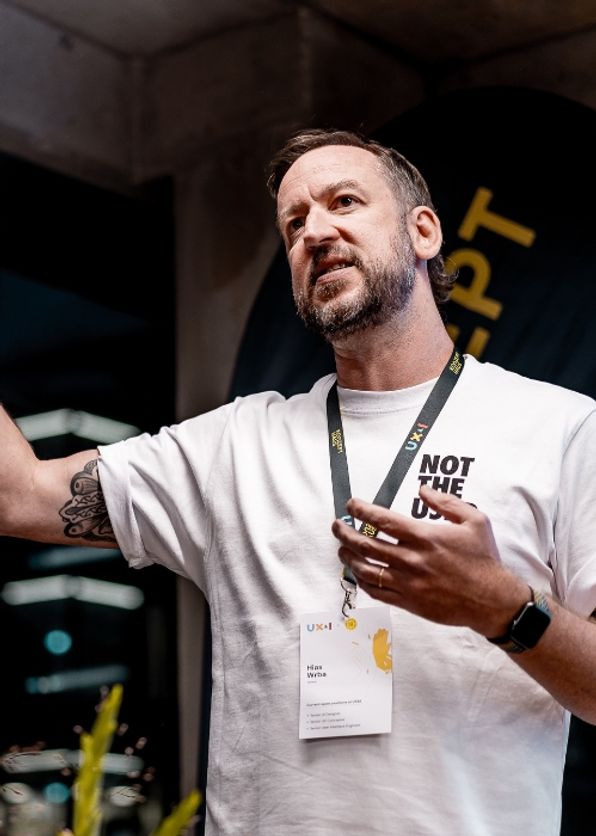
Your call with
Hias Wrba
Product coach
München
Your call with
Patrick Oselka
Managing director at UX&I
Düsseldorf
Your call with
Claudia Schönwälder
Senior UX consultant
Hamburg
Your call with
Mato Sauer
Customer empowerment lead
Frankfurt
Accessibility is no longer just a nice-to-have. Learn how to develop products from the ground up that work for everyone, and get even better in the process.
In two days, learn how to smartly combine analytics, A/B testing, and user research. Afterward, you’ll be able to make the case with numbers that convince stakeholders, and you’ll know exactly which metrics matter for your UX goals.
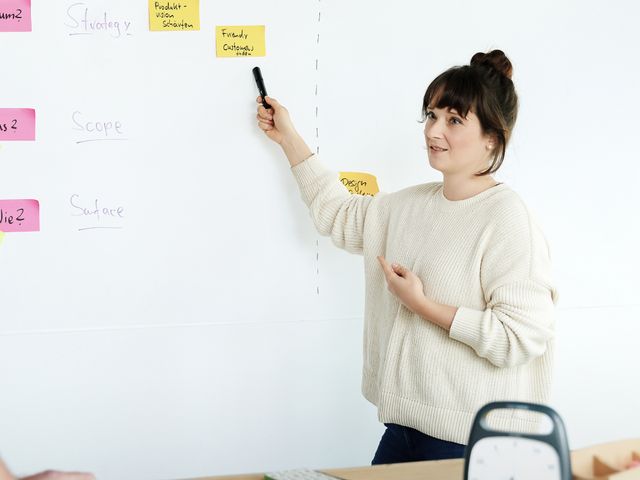
We’ll help you deeply and permanently embed UX and a human-centered approach within your company, far beyond the development teams.