Interview
From an idea to a $500 million sale: a conversation with Mirko Novakovic, founder of Instana


- By
- Juliana Hirsing & Mirko Novakovic
- Reading time
- 7 minutes
- Updated
In this interview, Mirko Novakovic, founder of Instana, gives us an exclusive look into his entrepreneurial journey with Instana. From the initial discussions with investors to the impressive sale of the company to IBM for an estimated $500 million, Mirko shares his thoughts on the importance of deep tech, the challenges of building a product, and the key strategies that led to Instana’s success.
If you want to know how to build a technology-driven company that’s celebrated by users and ultimately makes it big, this interview is a must-read for you.

Mirko Novakovic
Founder of Instana

Mirko Novakovic is not only one of the co-founders of codecentric GmbH; in 2015, the computer science graduate founded the startup Instana, driven by his long-standing interest in Application Performance Management (APM). Through his company New Forge, he has since invested in 35 startups, primarily in the German tech scene. He tells us what core values helped Instana succeed and how one manages to sell a company to IBM for an estimated $500 million in a very short time.
Interview
Mirko, in what ways is Instana a deep-tech company?
What sets deep tech apart from other companies: The end user isn’t a typical consumer, but a technical user, usually a software developer or someone working in IT. And deep tech uses software technology, such as machine learning, to solve a complex problem. Deep tech is typically sold to companies, not to individual users. The term originates from the venture capital industry. It requires specific skills and an understanding of the technology to evaluate the solution. For example: Is the algorithm of a recommendation engine better than that of others?
How did you manage to make Instana so successful?
I was just one part of the whole picture. What matters most is having the right team and the right timing for the idea. That also involves a lot of luck. The product has to gain traction in the market, and quickly. There are also products that are simply too early, or too late. Application monitoring has always been my area of expertise, so I knew the market and realized there was a gap when the architectural shift to containers and microservices took place. We had good timing and a good team. And luck, after all, containers might not have worked out.
What was a key milestone on the path to the sale to IBM?
You need to reach a certain scale. Of course, there are also “acqui-hires” to acquire talent, or IT acquisitions where only a specific technology is purchased. Those don’t involve as much money. Things get interesting when a company already has significant revenue and is in the relevant target market. Then a corporation like IBM comes in with its sales force, and revenue can multiply very quickly. You have to reach this point: A buyer must see strategic potential and revenue relevance.
How did you convince your first investors?
I pitched to easily 100 venture capitalists and got only one “yes.” In the beginning, you’re not generating any revenue yet and don’t even have a working product. You have to build trust. Show that you know what you’re talking about and that you have staying power. Overselling is part of the game. In the beginning, we only had a PowerPoint presentation, and we put a lot of effort into making it look like we already had a product. In fact, the presentation looked like a demo. People could see exactly where we were headed. Another key factor was the product’s market potential. It has to be very high for someone to get on board that early and invest millions.
Why is Instana so highly praised by users, for example in the G2 reviews? What did you do differently?
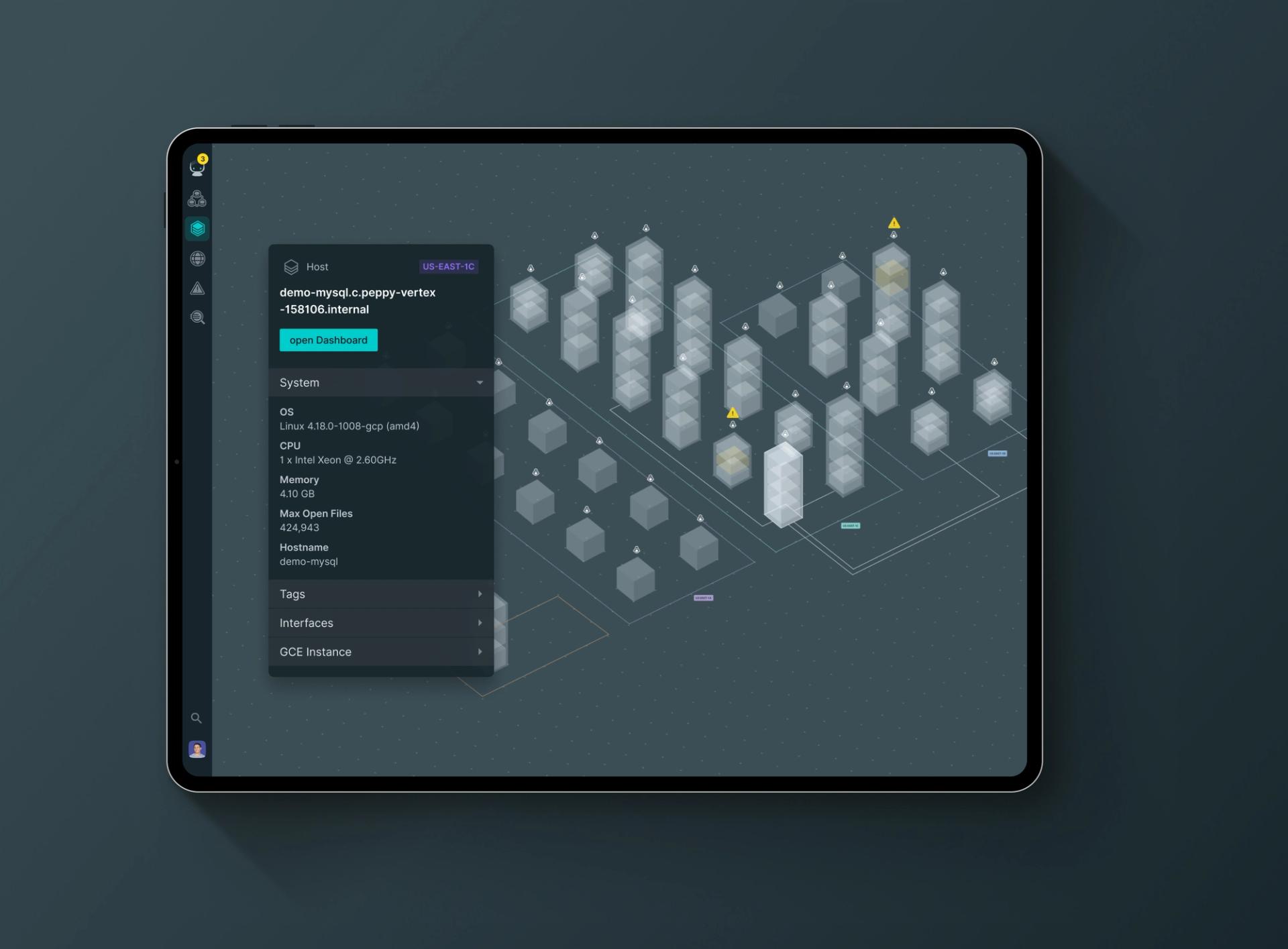
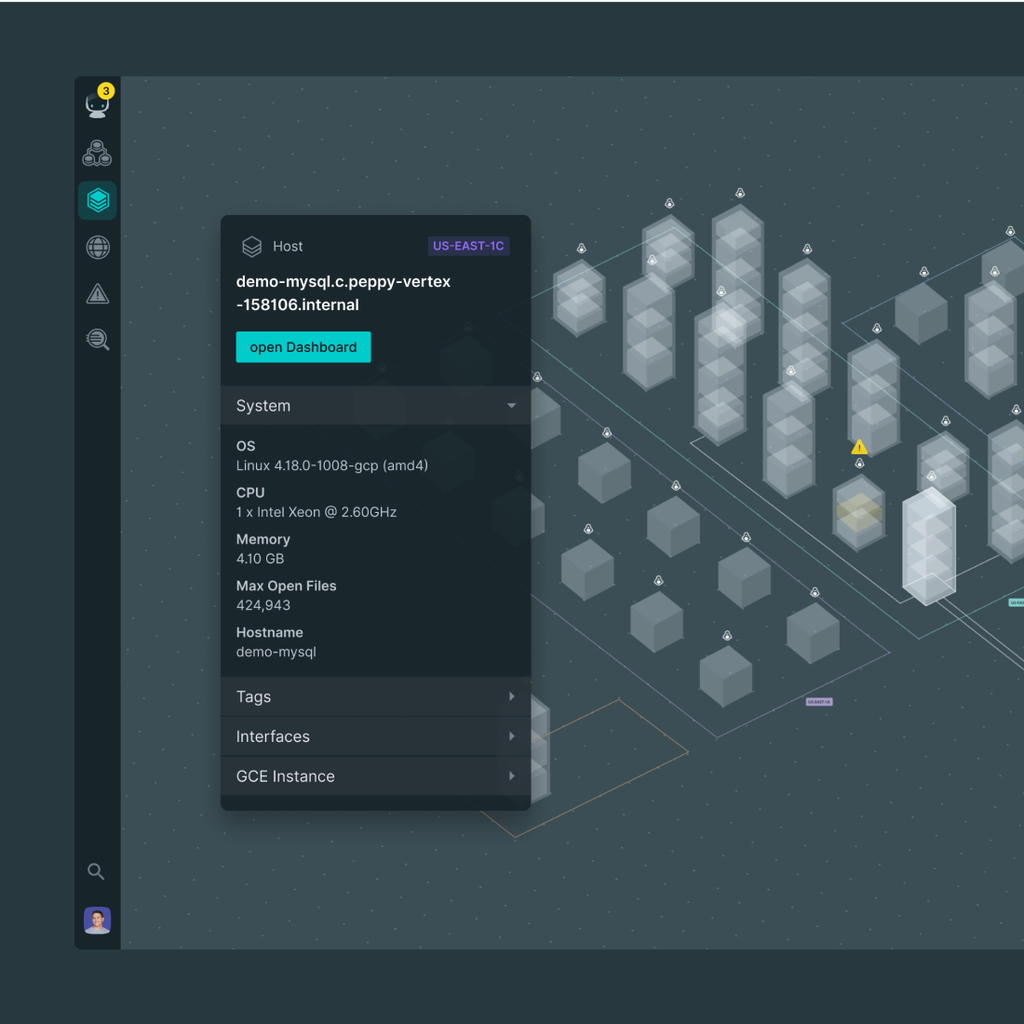
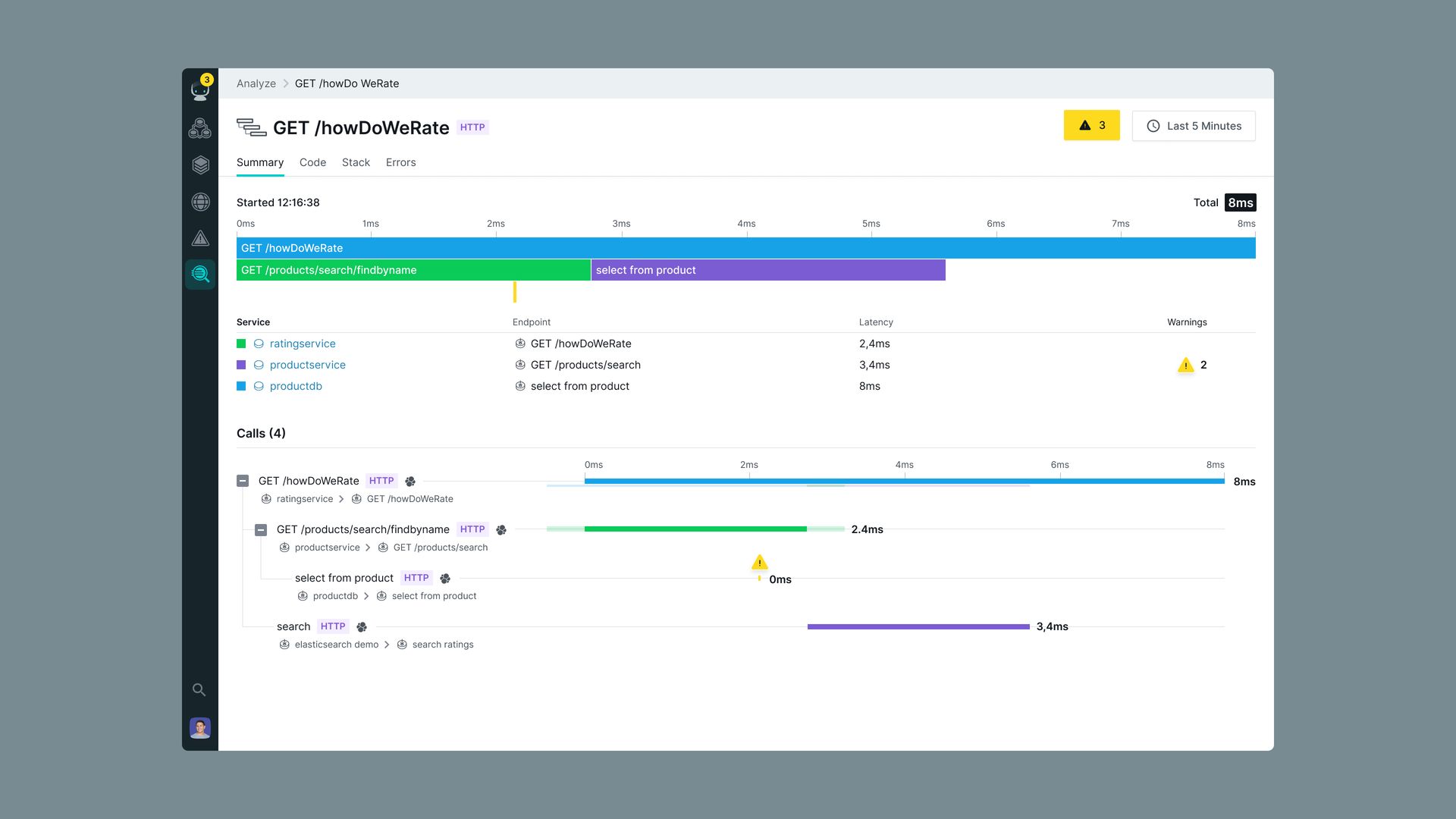
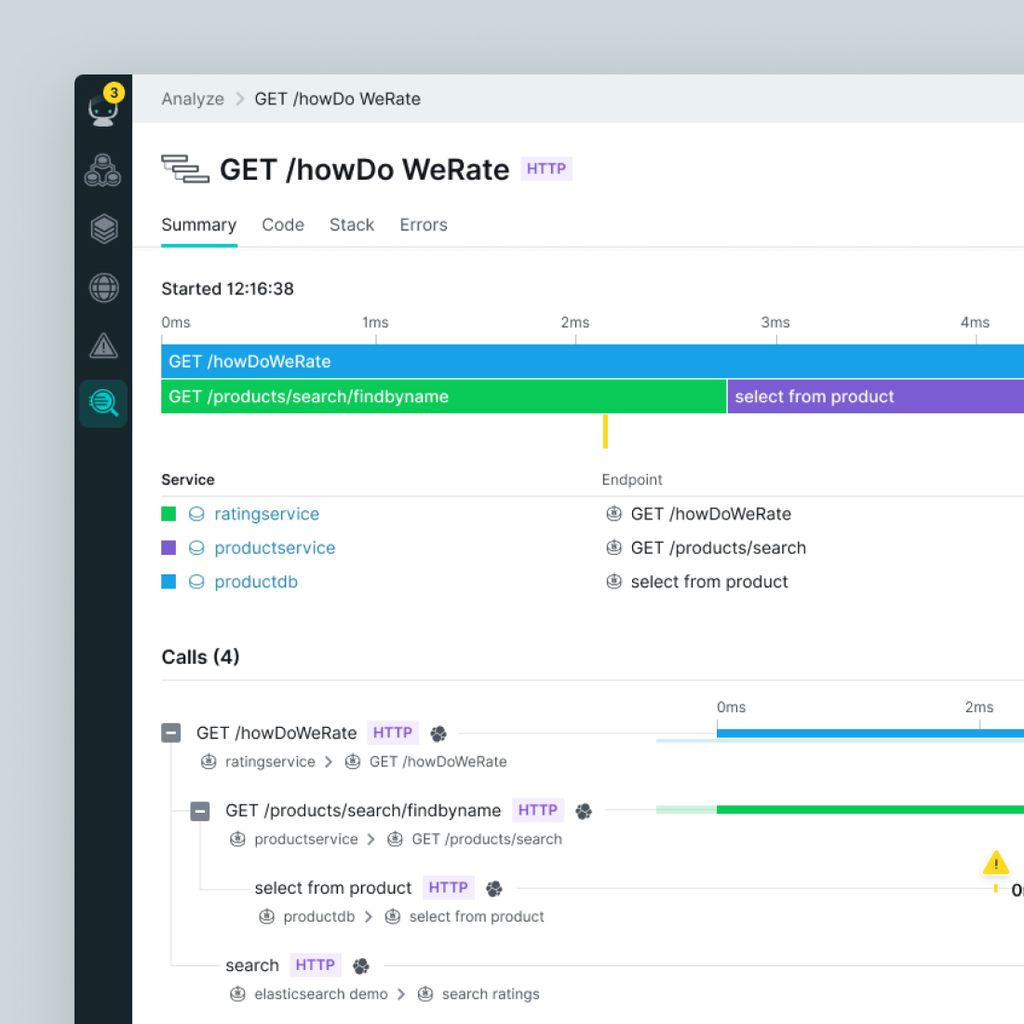
Reviews of Instana often focus on automation, which is becoming increasingly important today. People expect things to be easy. For example, connecting devices to Wi-Fi can be incredibly complicated, or it can work like magic with a QR code. Automation has always been one of our core values. The second was democratization. APM products used to be tools exclusively for experts. I wanted everyone in IT to be able to use Instana. Together with UX&I, we spent a long time figuring out how to present things in a way that everyone would intuitively understand. For example, we had small boxes on the infrastructure map that you could immediately recognize as servers. No one else had these infrastructure maps before us; now almost everyone does it. We set the standard there. It was challenging at times because people weren’t used to it yet, but at the end of the day, it helped a lot. I’ll never forget when we were at re:Invent in Las Vegas back then, and we had that UI on our monitor. Everyone stopped in their tracks and said, “Wow.” It was a real eye-catcher.
What was the work culture like at Instana? Did the UX mindset and methodology fit right in?
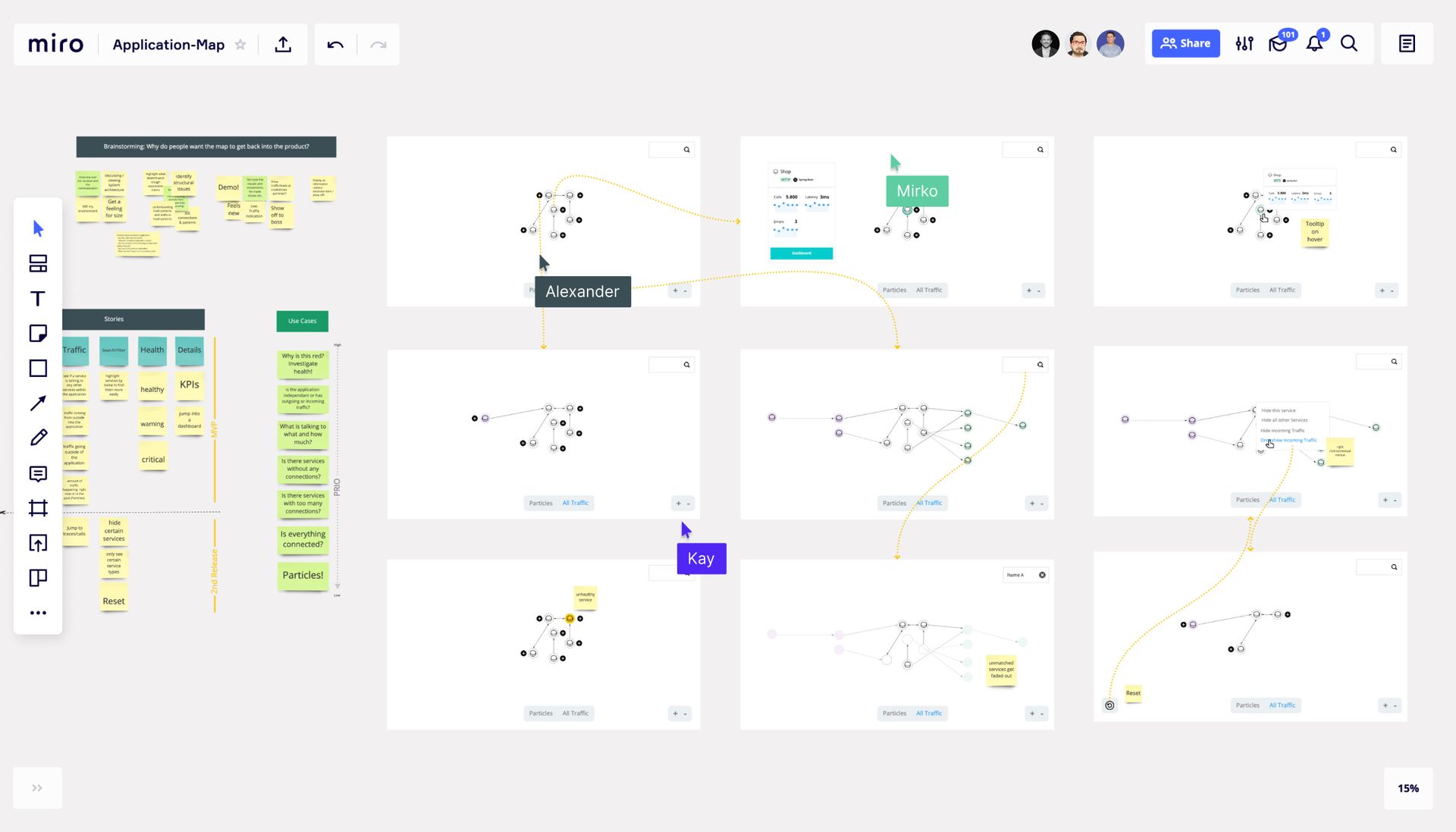
Democratization was our goal. So from day one, it was clear that we needed a new kind of user experience and had to integrate UX right away. That meant UX&I was involved in every discussion. In the first six months, we held countless sessions to build a shared understanding across the entire team: What exactly did we want to build? And then we discussed and iterated on a wide variety of solutions in great detail.
Instana has always moved quickly. Did UX methods like research and the numerous iterations ever seem time-consuming?
Iteration doesn’t mean you’re slow; quite the opposite. It’s also about setting the right priorities and clearly stating what you want. Sometimes speed is more important than perfection. As a team, you have to figure out: How can we achieve the most with the least effort? In the beginning, we worked very hands-on, for example, with really simple mockups. We tried to implement things as quickly as possible. When it comes to research, I’d distinguish between different phases. User research works best when users can already interact with the product to some extent. At the beginning, you don’t have the product yet, so user testing isn’t very productive, especially with brand-new technology. Before the iPhone came along, I would have just kept saying how to improve the Nokia 6310. Once we’d been on the market with Instana for two or three years, we conducted thousands of interviews. I was very skeptical at first, but I learned that they’re extremely valuable. We discovered many important patterns.
At UX&I, we like to talk about a startup formula: Refine your vision, present your idea, develop your product. What helped you initially to pinpoint your vision?
I’d start with the product idea. We first spoke with 50 “friendly customers” and pitched the idea because we wanted to know if the problem even existed. We explained what problem we saw and how we planned to solve it, and then asked for their feedback. Forty out of the 50 were familiar with the problem. And 20 of them went on to become customers. The most important thing is simply to listen. In my experience, you talk for about 5 minutes and the customer talks for 55. Customers often feel the need to tell you about the problems they face in their day-to-day work.
What are your tips for phase 2: presenting the idea?
In my opinion, the MVP concept is flawed. Customers don’t accept it. Their expectations are far too high. Especially as a startup, you have to start selling and acquiring customers. You have to generate revenue to move on to the next round. To do that, you need more of a “minimum sellable product,” one with enough features that someone will pay for it. Elon Musk knew he couldn’t serve the mass market at the beginning. So he started by building an extremely cool sports car. The product has to align with the go-to-market strategy. What steps do I need to take to build my actual product? Customers won’t forgive mistakes. If the younger generation downloads an app today that doesn’t work, they’ll delete it right away.
How did Phase 3, product development, go? Were you able to implement what had previously been worked out strategically and visually?
I recently took a look at the roadmap from our first workshop. Of what we wanted to accomplish in six months back then, we’ve completed about half after five years. But we’ve thrown away almost nothing, at least in broad terms. We’ve made quite a few changes in the details, but overall, there weren’t any major hiccups during implementation. To achieve that, you have to bring everyone to the table right from the start. Product management, development, and UX have to work very closely together.
In summary: What matters most when it comes to a highly complex application like Instana? For users, but also for investors and buyers?
If users love the product, you sell it, and that makes the investor happy, too. And we’re seeing a major shift in sales processes: a bottom-up motion. It’s no longer the case that someone from upper management buys the tools. Today, developers choose their own tools. You build the product for the users: they’re the ones who matter. They have a wide variety of tools at their disposal, and some stand out for specific reasons: In my view, the number one factor is usability: being able to do what you want to do quickly, easily, and without major obstacles. A developer today has about 20 to 30 tools, and new ones are constantly being added. He or she doesn’t have the time to spend a long time learning them or to go through two weeks of training. Tools simply need to work right out of the box.
Would you launch another startup yourself in the same leadership role you held at Instana?
Good question: I don’t know yet. It’s a tough job that you commit to for five or ten years. Right now, I don’t feel the urge.
Thank you very much, Mirko, for the interview.
We conducted this interview on October 6, 2021. It is an excerpt from our white paper “Deep tech meets user-centered design.”
Our expert
Juliana has been bringing text to the digital world since 2009. As a UX writer, she ensures that language guides users to their goals and makes products measurably more successful.