

Skip to content

Instana

From Solingen to Silicon Valley: Instana & the mega deal.

November 2020: A startup from Solingen becomes part of IBM in a deal valued at an estimated $500 million. We supported Instana along the way, from the initial strategy sessions to the product that’s taking the international tech world by storm.

Mirko Novakovic
“UX&I has supported us from day one in meeting our customers’ high expectations. In the process, the user experience was taken to a new level, continuously tested, and improved. It’s worth noting that the UX&I team worked with us as a startup in a very dynamic environment: from the MVP in less than 18 months to over 200 paying enterprise customers, the partnership has consistently grown alongside us, even as our requirements increased.”
Mirko Novakovic CEO of Instana, an IBM Company

From the very beginning, Instana was moving at full speed, like a space shuttle.

From the initial flash of inspiration, ideas were quickly conceived, sketched, and developed at the speed of light. But if you want to ride along on a rocket, you have to step outside your comfort zone.

We helped Instana check off every milestone, and, in between, leverage the flexibility that allows startups to zoom past the big players. Our guiding principles included not only the user perspective but also deep practical knowledge of startups, as well as the interests and working methods of investors.

The startup formula

Whether it’s AI-powered application performance monitoring, as in this case, or a cat meditation app set to be the next big thing: there are key milestones that help startups break out of the garage. 

1. Refine the vision

1. Refine the vision

Let’s dive right in with a UX heavyweight: paring down complexity. The initial idea becomes a concrete vision.

Instana was the ultimate challenge from the very beginning: conceived as an application by and for IT masterminds, it regularly pushed us to our limits even in the first phase. What are the requirements of DevOps specialists? How do they work, and what hacks do they use themselves? And how on earth do they keep track of everything? Still, by the end of Phase 1, we all had a clear picture, and the founders knew where they wanted to go.

2. Present the idea

2. Present the idea

The vision is in people’s minds. But how can we make the story understandable to customers? How can it captivate users and bring investors to the table? The idea needs a face: a prototype and a rudimentary brand.

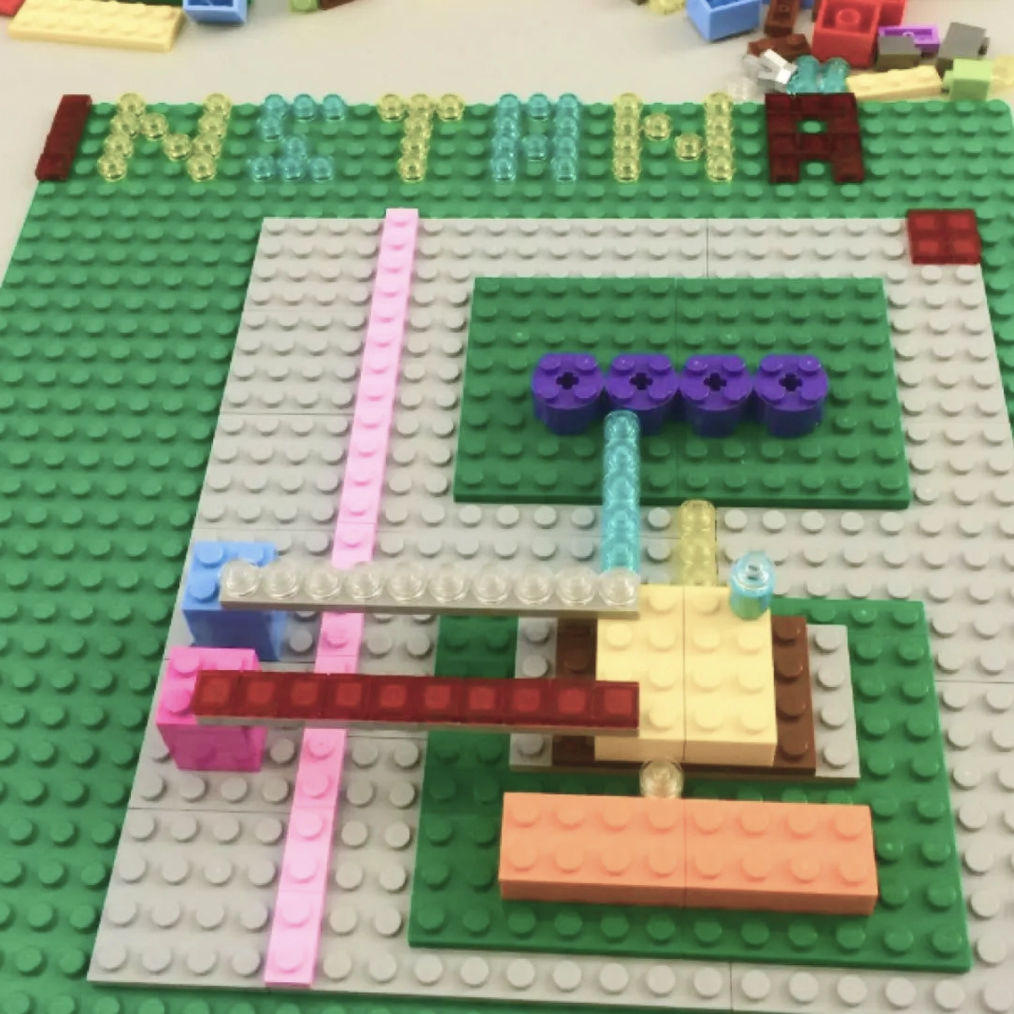
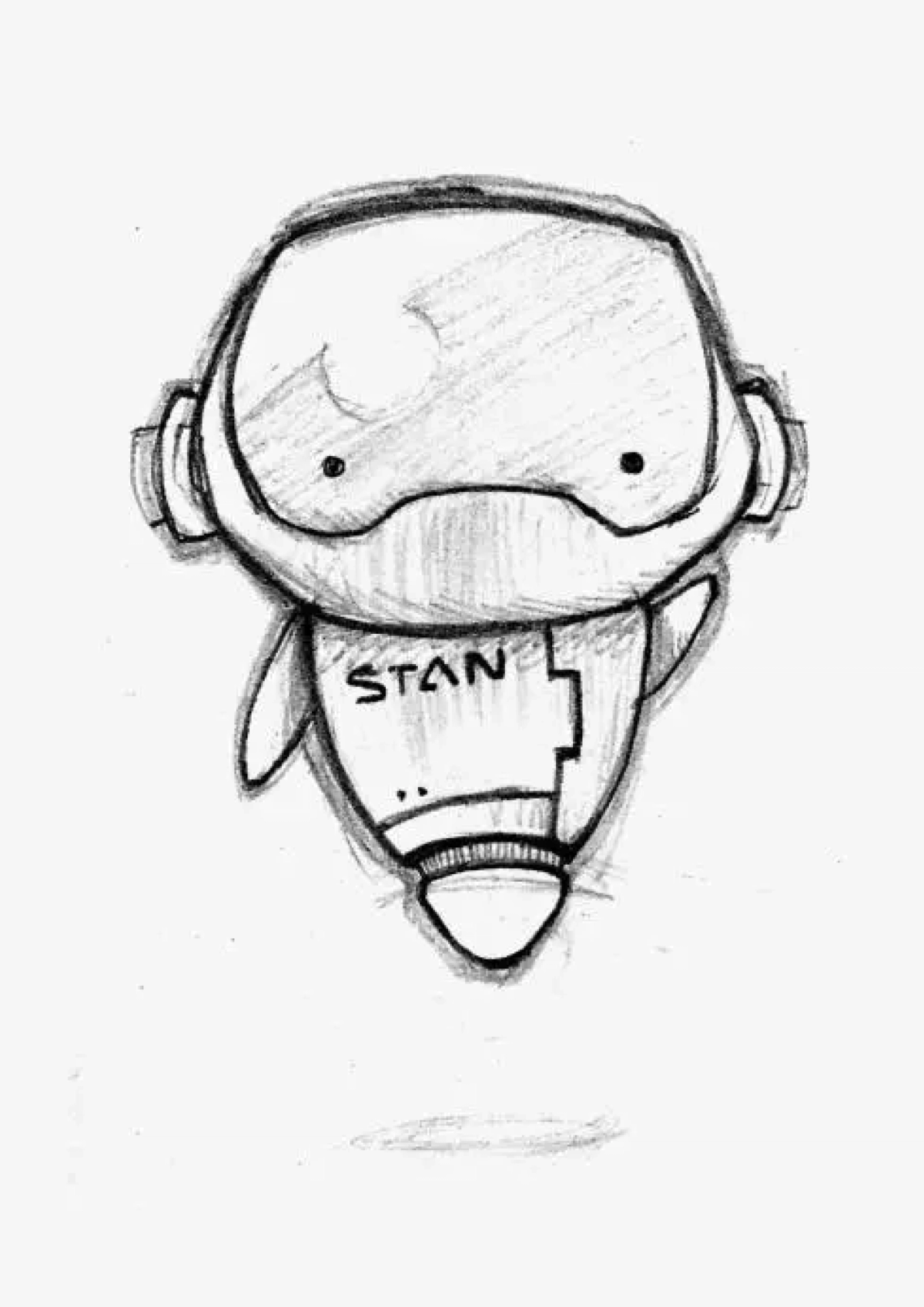
Together with Instana’s CEO, we held visualization workshops featuring lots of Lego and a thoroughly challenging process of developing a shared visual and interactive understanding. In the process, the product also gained a tangible face: the robot STAN was brought to life.

3. Develop the product

3. Develop the product

Here we go: we’re shifting from innovation mode to development mode. Loose structures become solid code; visual ideas evolve into a design system. The product takes shape and takes flight. Always in focus: users, founders, and investors.

By mid-2016 the time had come: the tangible product vision had convinced the first investors, and further development was secured. And where that led: see right at the top. Today, Instana has around 150 employees and users all over the world. The foundation we built still forms the bedrock of Instana.

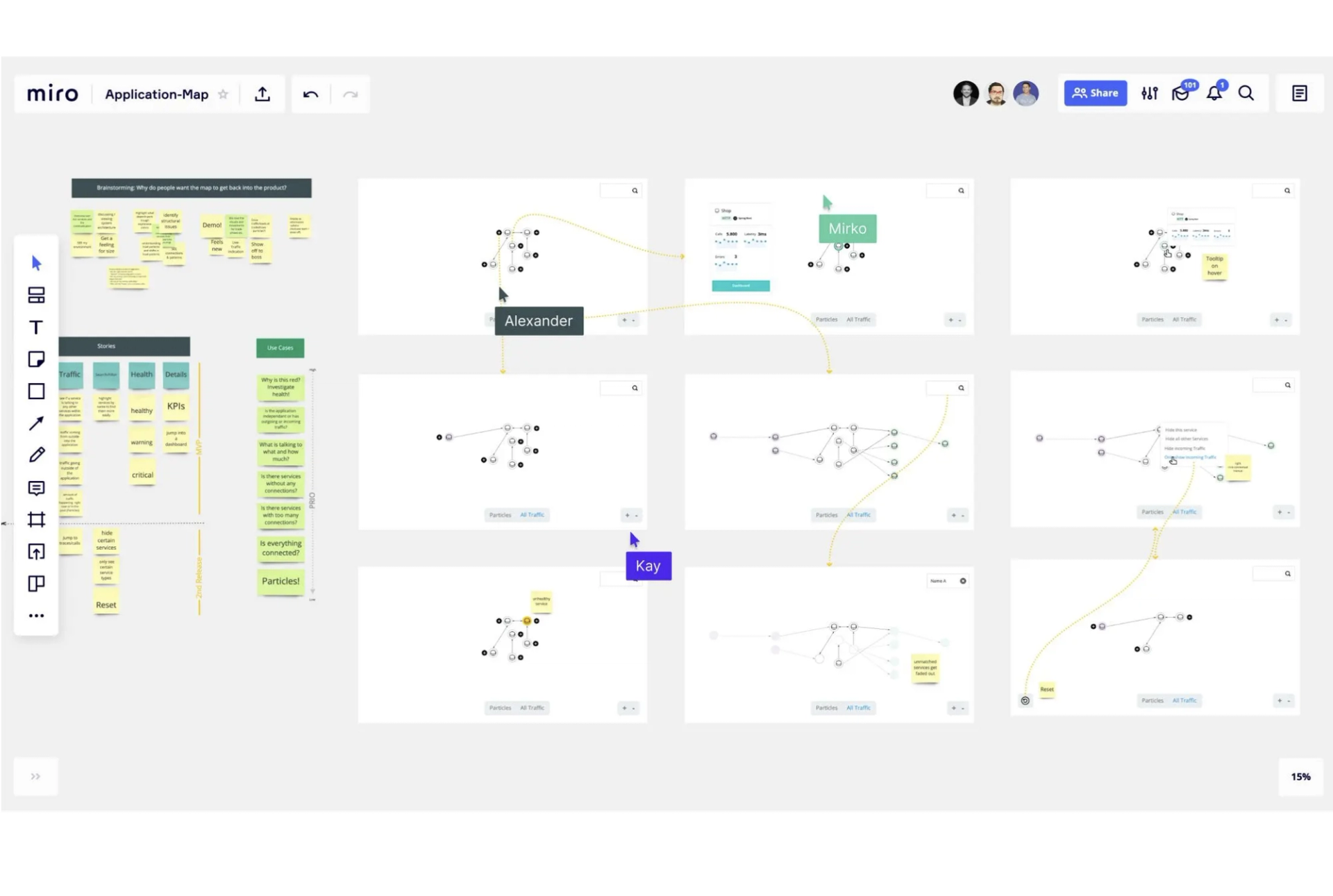
Miro board “Application-Map” with frames of network sketches, brainstorming sticky notes and cursors labeled Alexander, Mirko and Kay

Allow us to introduce STAN!

The little robot, which started out as a self-initiated idea sketch, makes Instana part of the team. He’s been explaining how everything works since the very beginning and is always available on Twitter. Any reservations about such an extensive product don’t stand a chance.

Complexity can be simple, too.

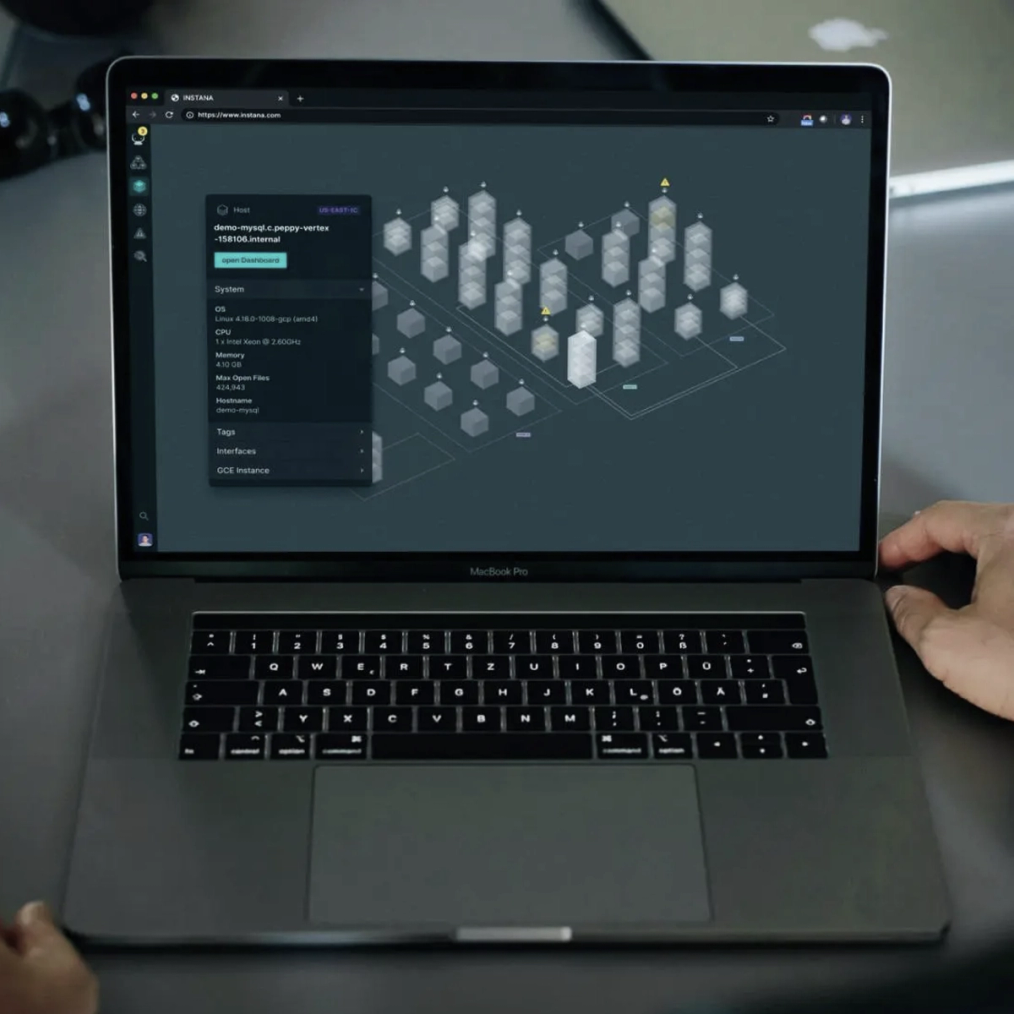
Even though Instana’s multidimensional monitoring is a tool for specialists, clean interface patterns, clear structures, and continuous iteration and testing of the user interface helped us translate the complexity of the subject matter into interactions that are easy to understand and use.

2014–2019

Two tablets with interfaces of the Instana APM tool: the “GET /howDoWeRate” trace view with a timeline and calls, and the flow of a “cities” service
Three tablets with Instana interfaces: a dashboard with calls, error rate and latency, the “All Services” service map and the 3D infrastructure map

Related

Do you have an idea or a tricky UX problem?

We support you from strategy and agile product development all the way to training your team.

Nadine Pieper, senior UX consultant at UX&I, smiling with glasses and arms crossed in the office

Nadine Pieper Senior UX consultant · Berlin

Prefer to talk right away?

30 minutes by video call, free and with no obligation. All times are Berlin time.

 Loading available times …

Or send us a message

Two or three sentences are enough.

We reply within two business days.

We process your data to handle your request. Details in our privacy policy.

Nadine Pieper
Hias Wrba
Patrick Oselka
Claudia Schönwälder
Mato Sauer

Your call with

Nadine Pieper

Senior UX consultant

Berlin

Your call with

Hias Wrba

Product coach

München

Your call with

Patrick Oselka

Managing director at UX&I

Düsseldorf

Your call with

Claudia Schönwälder

Senior UX consultant

Hamburg

Your call with

Mato Sauer

Customer empowerment lead

Frankfurt