Business-critical software
B2B UX that not only looks good but is actually used
The budget’s been approved, the deadline’s set, and expectations are high. But there’s a nagging worry: What if, in the end, no one actually uses the finished software? Good B2B UX isn’t about pretty screens; it’s about whether you’re building the right solution that truly meets the everyday needs of your business units.
Book a free intro call
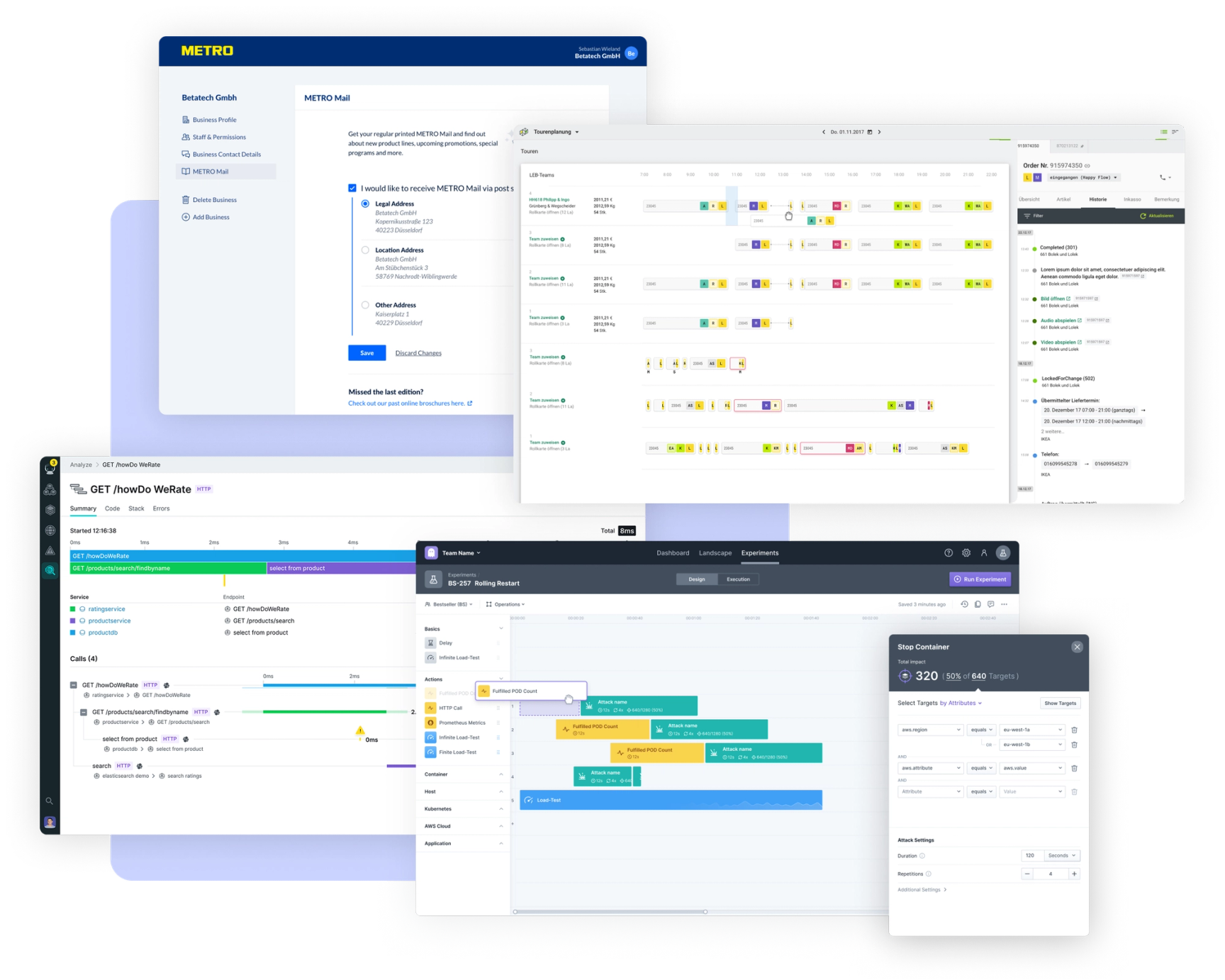
The real risk lies elsewhere
It only becomes clear after the rollout
Budget spent, deadline met, everyone relieved. Then you realize: The business units are still working the same way as before because the application doesn’t meet their actual needs.
Not enough time with the user
Firefighting, tickets, coordination. In the day-to-day grind, there’s hardly any time left for genuine interaction with the people who work with your product every day.
Faster, but not better
AI and new tools make you more productive. But working faster doesn’t necessarily mean you’ll end up with the right product, one that makes a difference in the market.
Many opinions, no clarity
Business, IT, and functional teams talk about the same software but mean different things. What’s actually supposed to be built remains unclear for a surprisingly long time.
Why B2B UX works differently from B2C

Many people have a say
In B2C, you’re convincing a single person. With complex B2B software, business units, IT, management, and the future users pull in different directions for months on end. The hardest part isn’t the user interface. It’s bringing these people together: building understanding, fostering trust, and finding a shared vision. That’s exactly where we come in.

Complex subject matter domains
Machine control, ERP, insurance processes, legacy systems that have evolved over time, and their interdependencies: What matters here isn’t a pretty user flow, but whether deep domain expertise is translated into clear workflows. We delve deep into the domain rather than oversimplifying it.
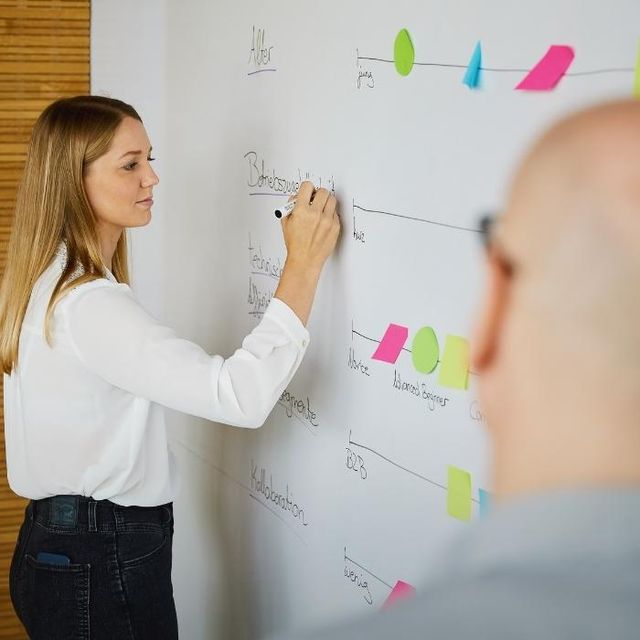
First the what, then the how
The most expensive part is rarely the design. It’s the unanswered question of what should actually be built. We address this early on, through research and testing, before development starts costing money.
How we take you from concept to rollout
From idea to IBM acquisition

“From day one, UX&I has helped us meet our customers’ high expectations. In the process, they’ve taken the user experience to a new level, constantly testing and improving it.”
Machinery software that users embrace
“UX is a crucial factor for our applications, and we couldn’t have pulled it off without UX&I.”
Ready for market in twelve weeks

“Through their goal-oriented approach, codecentric and UX&I were able to demonstrate that, within the framework of the Product Sprint program, it is possible to significantly accelerate the development cycle while maintaining a high level of quality.”
Frequently asked questions about B2B UX and our work
What exactly is B2B UX?
B2B UX ensures that business software not only works but is actually used in day-to-day work. The focus is on complex tasks and the needs of many stakeholders, not on making a quick, attractive first impression, as is often the case in B2C.
How does B2B UX differ from B2C UX?
In B2C, decisions are usually made by a single person based on gut feeling and first impressions. In B2B, decisions are made by multiple stakeholders over the course of months; the tasks are more complex and tied to specialized business processes. Success, in this context, isn’t about a high click-through rate, but rather about enabling business units to work faster and more reliably.
Why is UX important in B2B software?
Because poor usability is costly: more training, more support, low adoption rates, and, in the worst case, an application that no one uses. Good UX mitigates this risk early on by clarifying what’s truly needed before development begins.
How does a B2B UX project work with you?
We start with research and workshops, quickly bring ideas to life through prototypes, and test them with real users before development begins. The end result is development-ready specifications that your team can use to build directly, from concept to rollout.
Ready for software that people actually use?
Tell us about your project. In a brief intro call, we’ll work together to assess where your product stands and how you can turn your idea into an application that your business units will actually use. Calm, clear, and on equal footing. Enterprise software: designed around people, with people, for people.

Nadine Pieper Senior UX consultant · Berlin
Prefer to talk right away?
30 minutes by video call, free and with no obligation. All times are Berlin time.
Or send us a message




Your call with
Nadine Pieper
Senior UX consultant
Berlin
Your call with
Hias Wrba
Product coach
München
Your call with
Patrick Oselka
Managing director at UX&I
Düsseldorf
Your call with
Claudia Schönwälder
Senior UX consultant
Hamburg
Your call with
Mato Sauer
Customer empowerment lead
Frankfurt