Interview
Benjamin Wilms, founder of steadybit, explains how important it is to embed UX in the early stages of a startup


- By
- Juliana Hirsing & Benjamin Wilms
- Reading time
- 6 minutes
- Updated
In 2019, Benjamin Wilms founded steadybit, a platform for chaos engineering and resilience. In this interview, he tells us what role UX played in the startup’s early days and how he strategically plans the company’s UX resources.

Benjamin Wilms
Co-founder and CEO of steadybit

Benjamin has over 20 years of experience as a developer and software architect. Five years ago, he became fascinated with chaos engineering and has been sharing his knowledge as a speaker and author ever since. He contributed to the open-source project CHAOS MONKEY for Spring Boot, which has received 500 stars on GitHub and has been downloaded over 800 times per month. When he’s not pounding away at his keyboard, he relaxes by mountain biking.
Product focus
Benjamin, what do you think is the essence of steadybit?
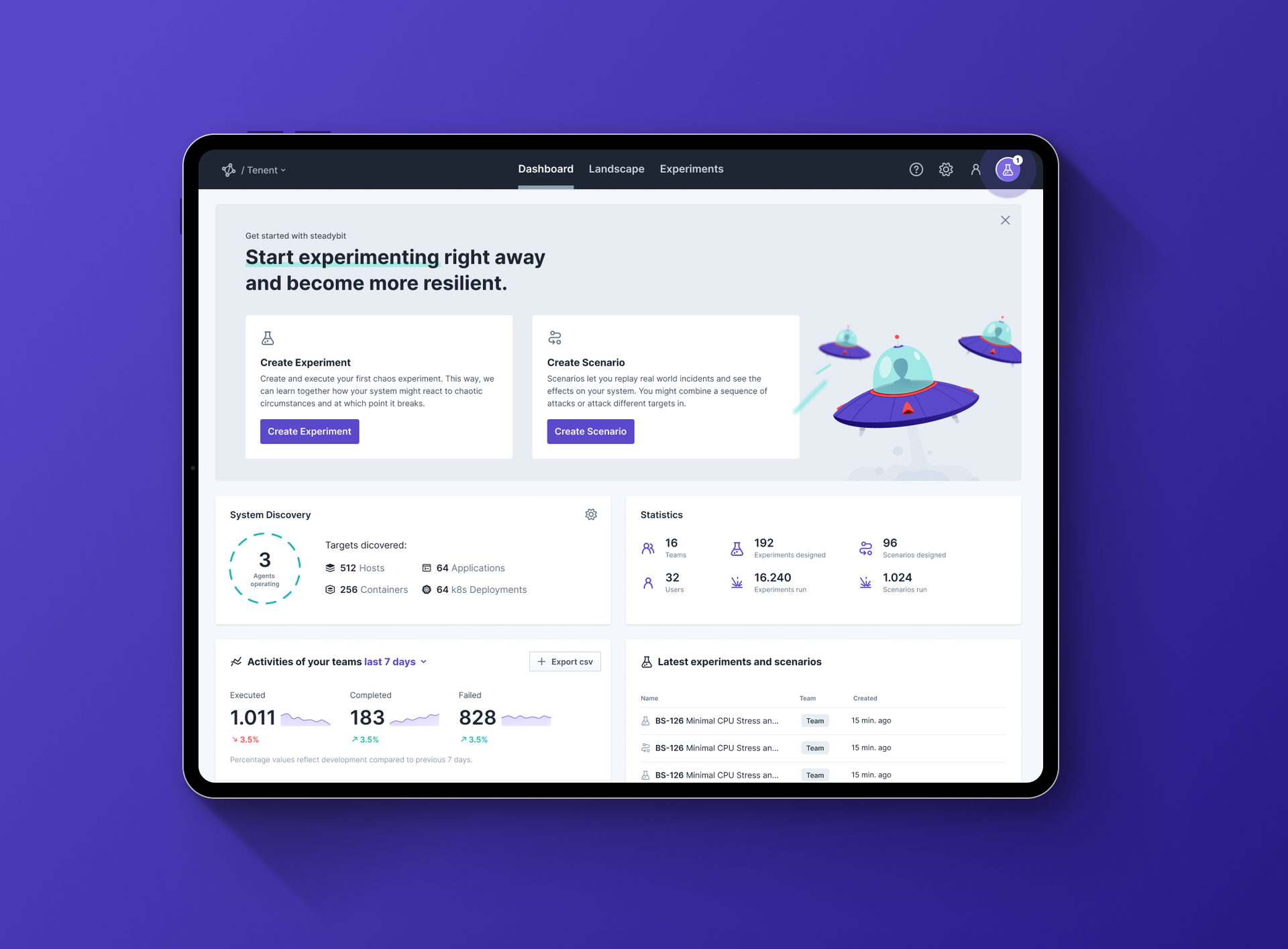
You can only succeed through the product. That means we have an absolute focus on the product. We have the great opportunity to work with a handful of design partners. These are customers who pay to use the unpolished product, and in return, we involve them in the product development process.
We talk regularly and get very detailed descriptions of the problems the customer is facing on the ground and how we can solve them for them with the steadybit product. This leads to new features, which we then test directly with the customer, conduct interviews, and also observe firsthand how the customer uses our product. We identify where there are weaknesses and where we can improve the whole experience.
UX & deep tech
That certainly sounds like a well-defined UX methodology.
Yes, it’s always been important to me personally, too. We’ve been doing this with UX&I from day one. You can just see very clearly when people who don’t focus on it build a UI that others want to use. It’s like a disconnect. Some people have a knack for it, while others just say, “There’s the button, just press it.” That’s also how you can tell the quality of the software. That’s why UX expertise is very important to me. And our product shouldn’t feel like a nuisance either. Please don’t lecture me, and don’t leave me to fend for myself: instead, help me grow on my own, improve myself, and level up through using the software.
Does UX play a special role when software is made by developers for developers?
Yes. Let’s think of the final boss: Once the developer has a complete grasp of the UI, they’ll want to automate things via the API. To do that, they first need to be taught, in a very playful way, without being lectured, how steadybit feels and what you can do with it.
Once they’ve learned these basic concepts about the UI, that has to be reflected just as clearly in the API. And: Developers always want to improve themselves and have something to talk about: “Check this out, I’ve achieved this and that; you should do the same.” You have to incorporate that into the product.
Team setup
What was your team setup like right at the beginning?
The three of
us founders are all developers. That had many advantages in the beginning.
We were able to move extremely quickly in implementation and faced no technological hurdles: it was a blank slate. The problem was: When developers are tasked with building a UI, no one knows how to actually use it. That’s when UX&I came on board. In addition to the hands-on work on the UI, we also held many workshops to figure out the basics: What are our strengths and weaknesses? What should the product be capable of? What do customers expect? And who exactly are our customers?
Why should you, like them, incorporate UX from the very beginning?
As an early-stage startup,
you don’t have a loud voice. You won’t be heard: the crowd out there is far too big. You have to build a product that makes people say “Wow.” Then they’ll spread the word for you. You could also pay for that and blow through a massive marketing budget, but that doesn’t solve any customer problems. You can only win through your product: that’s the key takeaway. If customers love the product, it sells much more easily—maybe even on its own. That’s also steadybit’s long-term strategy: land and expand. It’s already been a huge hit twice.
We have two huge corporations working with us. They found us because they had a problem that we described on our website. A demo convinced them. In both cases, the customers were the early adopters within their companies and were the first to recognize the problem. Then they saw steadybit and found it useful. Suddenly, we had two champions fighting for us. Land and expand. You don’t have to do top-down selling on the golf course; that doesn’t work.
Is the UX mindset embedded throughout your entire team?
Not everyone gets it. You can spot these people right away because they’re immersed in the world of ideas and problems. They’re thinking about how the company and the product should evolve. Others can’t seem to break out of their technical mindset. In meetings, we often have to find a common language first. One person is stuck in some spreadsheet, while another is trying to think from a user’s perspective.
You have to invest a lot of time in preparation and make sure the groups aren’t too large and are well-mixed. And you need a good facilitator to set the right framework. Someone has to understand how each individual thinks. Because you can learn from everyone. And in the end, the idea has to be implemented. You can’t fall into compartmentalized or siloed thinking.
How would you assess your internal UX expertise today?
We definitely went through the initial rounds to learn this. We were given many, many tools. Some of them didn’t make it into our toolkit. Methods like the Design Studio or the Affinity Map, on the other hand, are part of our daily routine, just like research, which, after iterations, many discussions, and testing with the team, clearly reveals how the UI should be designed.
How do you plan to position yourselves in the field of UX in the long term?
Strategically speaking, UX has to be part of steadybit. It’s incredibly helpful to work with UX&I, but UX is a core competency when you’re building a product. You have to have that in-house. People need to be able to fully engage with it.
Research
To what extent has your product vision changed as a result of research?
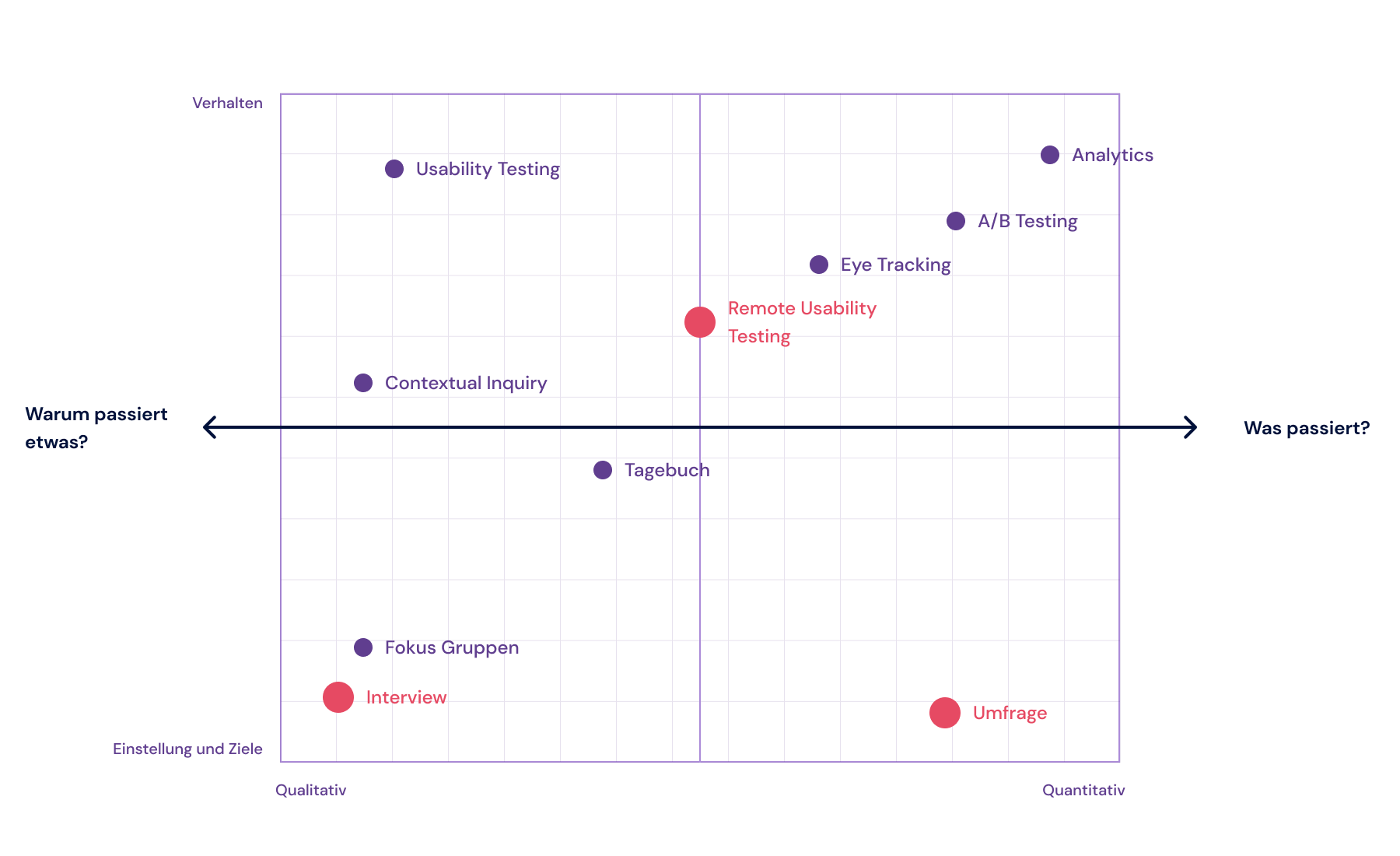
We conducted many interviews, both within our network and, with a more marketing-focused approach, with external interviewees. That had a major impact on our product. We’d started out with pure chaos engineering. Everyone said, “Wow, it’s so simple with you guys.” But it’s not enough to just tackle individual problems head-on. We realized that we need to proactively tell people: “Here’s a vulnerability; this is where it’s worth your while.” We can analyze the fragile moments in advance and let customers know, which wasn’t clear to us at all in the beginning. The tool shouldn’t waste time; instead, it must clearly indicate when investing time and money makes sense. Customers realize: “I trust this tool because it’s helping me improve my skills, my team is making progress, and our company is in a better position.”
Were there any other lessons learned?
There were fewer surprises during the interviews with friends and colleagues. But once we’d built up a larger network and were able to talk to people working at huge software companies, we gained a lot of new insights. They’re dealing with completely different challenges and are two or three years ahead of us. We were able to use this knowledge and make it available to others, so that our clients can identify their problems earlier. And a nice bonus lesson: Even in Silicon Valley, they’re only human.
What research methods do you use?
We used pre-designed questionnaires, extracted key insights, and clustered them. What are the overarching problems, and from which roles were they described?
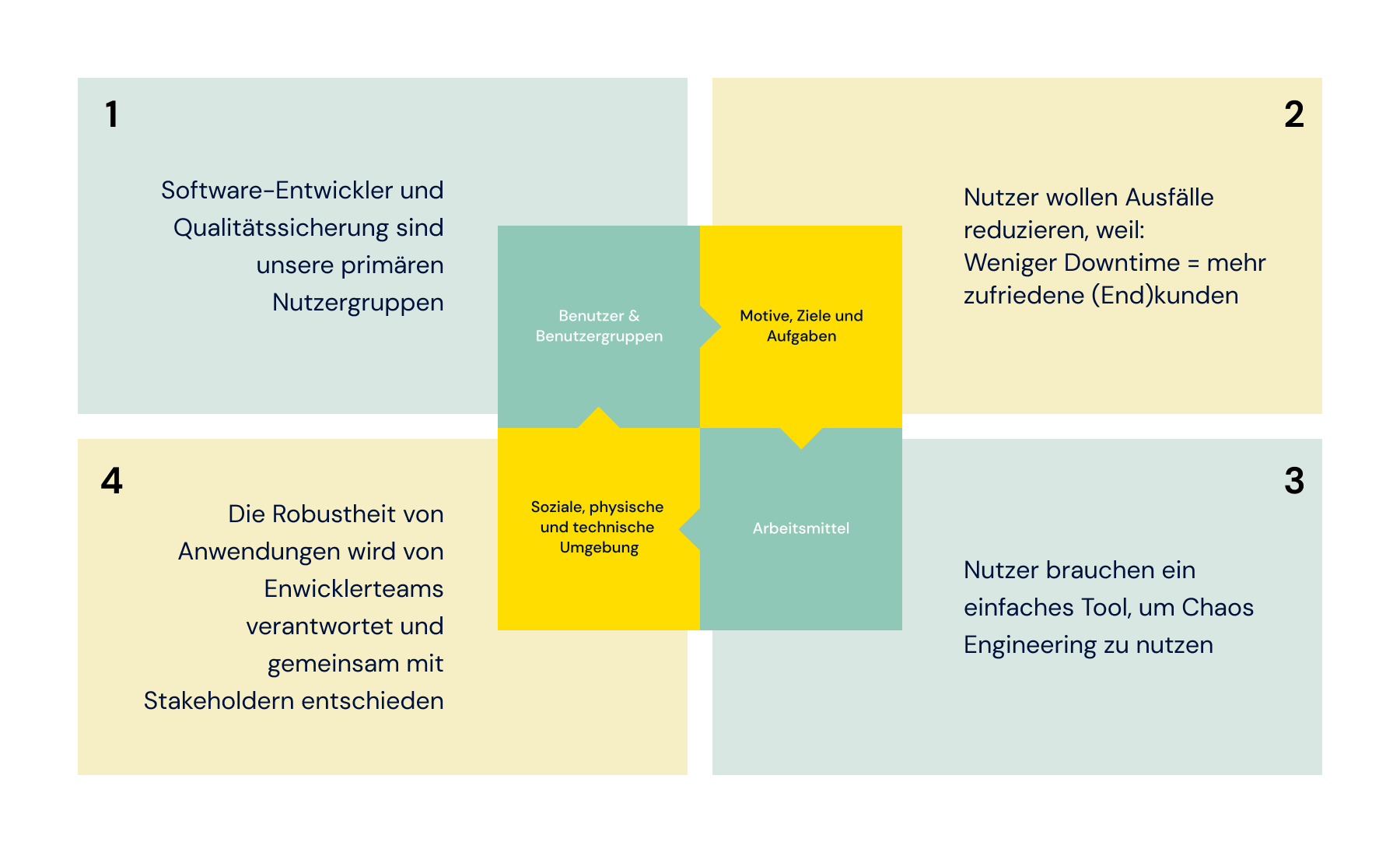
In the end, everything was incorporated into one huge affinity map. We now know who is asking for what and how, where the greatest pressure currently lies, and which problems need to be solved in the long term. We also regularly hold design workshops where we use initial sketches to explore what a UI might look like. We incorporate the developers’ perspective as well as that of the UI designers. It’s the mix that makes all the difference in the end.
Continuous development
How did you handle the dual task of developing the product while also marketing it to the outside world?
You always face this dilemma, and you have to work with it. That means “fake it until you make it” or “good enough for now.” You build something for the customer that conveys a certain amount of value, but it’s only enough for the moment. Then you use the momentum as they interact with the product and observe what ideas start popping into their head. To do that, you have to give them a piece of it without making your investment too big.
Thank you very much for the interview, Benjamin.
Our expert
Juliana has been bringing text to the digital world since 2009. As a UX writer, she ensures that language guides users to their goals and makes products measurably more successful.