Interview
UX in a highly complex research environment: Interview with Dr. Christian Matyas from LIfBi


- By
- Juliana Hirsing & Dr. Christian Matyas
- Reading time
- 7 minutes
- Published
When research, development, and numerous business units come together, it quickly becomes challenging to meet users’ needs. LIfBi has taken on this challenge and, together with UX&I, launched a project to bring clarity: Who uses our tool, what do these people need, and how can we make better decisions? Dr. Christian Matyas, division head at the Leibniz Institute for Educational Trajectories (LIfBi), and Christian Ringleb, senior UX consultant at UX&I, explain how they implemented UX in a research setting for the first time and why the shared learning process within the team was the most important step.

Dr. Christian Matyas
Division head · Abteilungsleiter am Leibniz-Institut für Bildungsverläufe

The Leibniz Institute for Educational Trajectories is a central research infrastructure that studies educational processes from birth through late adulthood. Dr. Christian Matyas has headed the Software Development division since completing his dissertation on “Geographic Recommendation Systems.” Since then, he has been interested in ideas and concepts for how software development can succeed in a small team. Since 2020, his training has focused on topics related to UX. In this interview with Christian Ringleb of UX&I, he discusses the unique conditions of research operations and the insights their joint project has yielded.

Christian has been an integral part of UX&I since 2020. For over two decades, he has been conceptualizing and designing digital products that work for people: well-founded, transparent, and grounded in what’s feasible. He speaks the language of both business and technology, ensuring smart design decisions based on solid research data.
Interview
What does LIfBi do, and what role does the Metadata Editor (MDE) play?
Dr. Christian Matyas:
LIfBi follows participants in large-scale longitudinal studies over many years to better understand how learning and education succeed. We work with several age groups, who are surveyed annually. It is important that the research questions remain consistent over long periods of time.
The MDE is our primary tool for documenting this content and refining it for new surveys. We use it to manage the questions included in our studies and to track when and how they were used.
Originally, the MDE was intended for early questionnaire development. In practice, over the course of 10 years, it evolved into an archive. With the shift from paper and pencil to digital surveys, we returned to the original purpose, and as a result, the number of users grew significantly. This gave rise to new requirements that we were no longer fully able to address. At that point, it became clear that we needed structure and had to understand who was using the MDE and what needs were driving their use.
When did you realize that you were lacking direct contact with your users, and what were the consequences for the MDE?
Dr. Christian Matyas:
The moment came later than it should have. With a new cohort, we conducted the survey entirely digitally for the first time. Suddenly, we had many more people who had to work with the MDE, and we barely noticed the stress it caused them in their daily lives.
It wasn’t until about a year and a half later that we had direct contact with the new user groups. That’s when it became clear just how challenging it was for some people to use the MDE. The discussions were very emotional because certain processes simply weren’t working well, while at the same time the time pressure was very high.
This showed us just how far we had strayed from the real-world context of use and how urgently we needed to reconnect with what the people who work with the MDE actually need.
What motivated you back then to bring in external UX experts, and what gap did this help to fill?
Dr. Christian Matyas:
I had trained myself to become a UX professional, but in my day-to-day work, I didn’t have the time to actually apply UX. At MDE, there was a lot of operational work, and at the same time, there was a gap left by our requirements analyst when he retired.
It was clear to us that we needed someone with experience who could guide us through the ongoing process. Someone who wouldn’t just explain how UX works, but who would help us implement it in the project.
We came into contact with UX&I by chance at a UX festival. It quickly became clear: This is the support we’ve been missing to turn theory into real-world practice.
Christian Ringleb, you’re familiar with many projects in large organizations. What was different here at the beginning, and what was your experience like getting started?
Christian Ringleb:
The research environment was the most distinctive feature. At first, I thought it might be less complex than, say, a large corporation, but the opposite was true. As soon as we asked a question, new exceptions would pop up everywhere. Every situation had multiple special cases. The project was one of the most complex I’ve ever worked on.
At the same time, I encountered an attitude that is very much in line with UX. And I didn’t have to explain or justify research. The team wanted to understand how to develop good software and was willing to engage with the process. Of course, it helps that the institute is staffed entirely by top-notch research experts and that there was a fundamentally open attitude toward our research activities.
It was never about us taking over the work. The expectation was clear: Get us started. That’s exactly what made the start so special.
You decided against traditional consulting and learned UX directly through day-to-day experience. How did you go about it?
Dr. Christian Matyas:
We had the advantage that we didn’t have much else on our plate during this phase. That allowed us to really immerse ourselves in the learning process. With traditional consulting, we wouldn’t have gotten very far. The budget was small and would have only helped in the short term. It was more important to us to embed UX within the team because we lacked that role in requirements engineering. Everyone should experience firsthand how UX works.
Christian Ringleb:
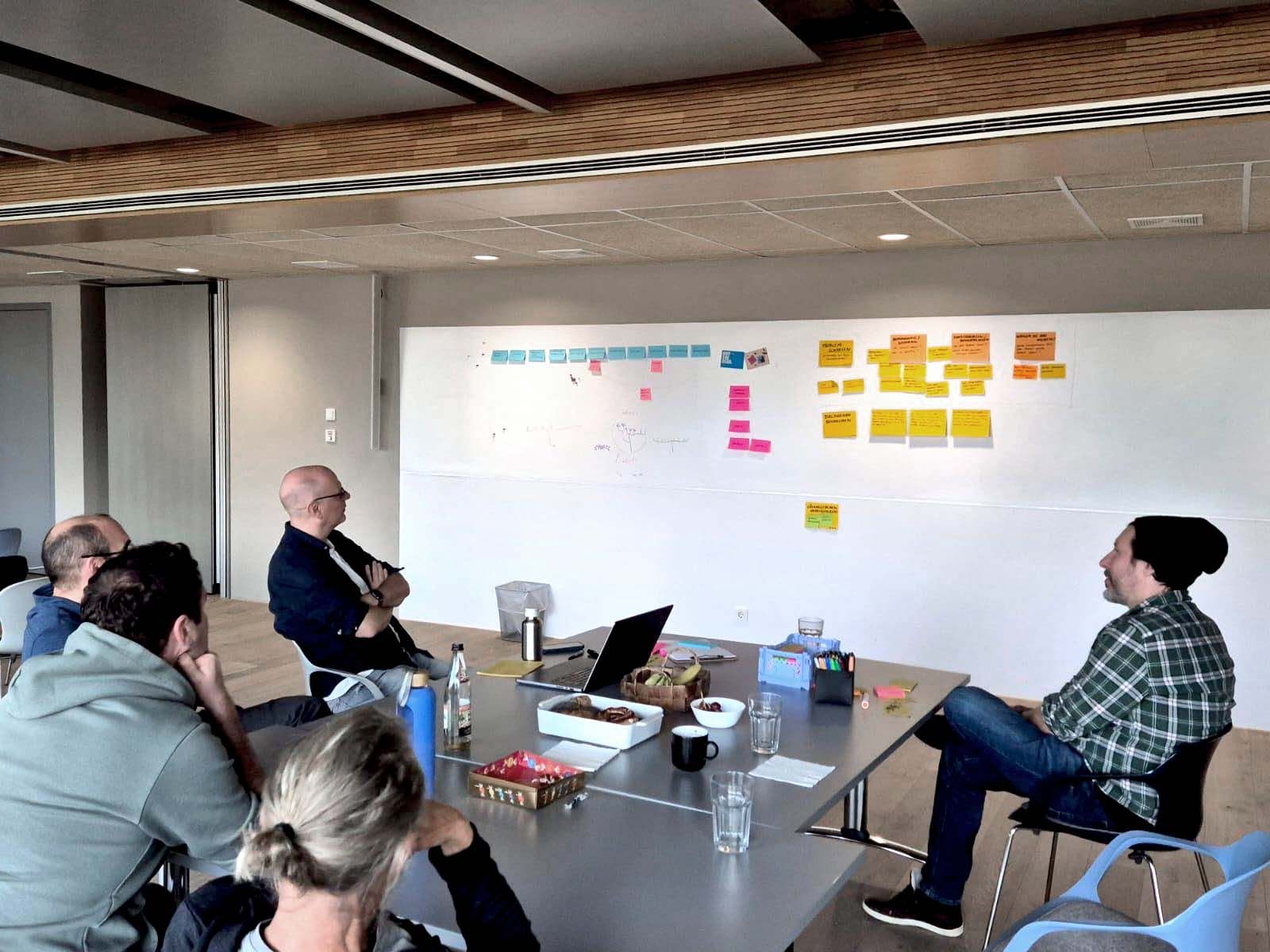
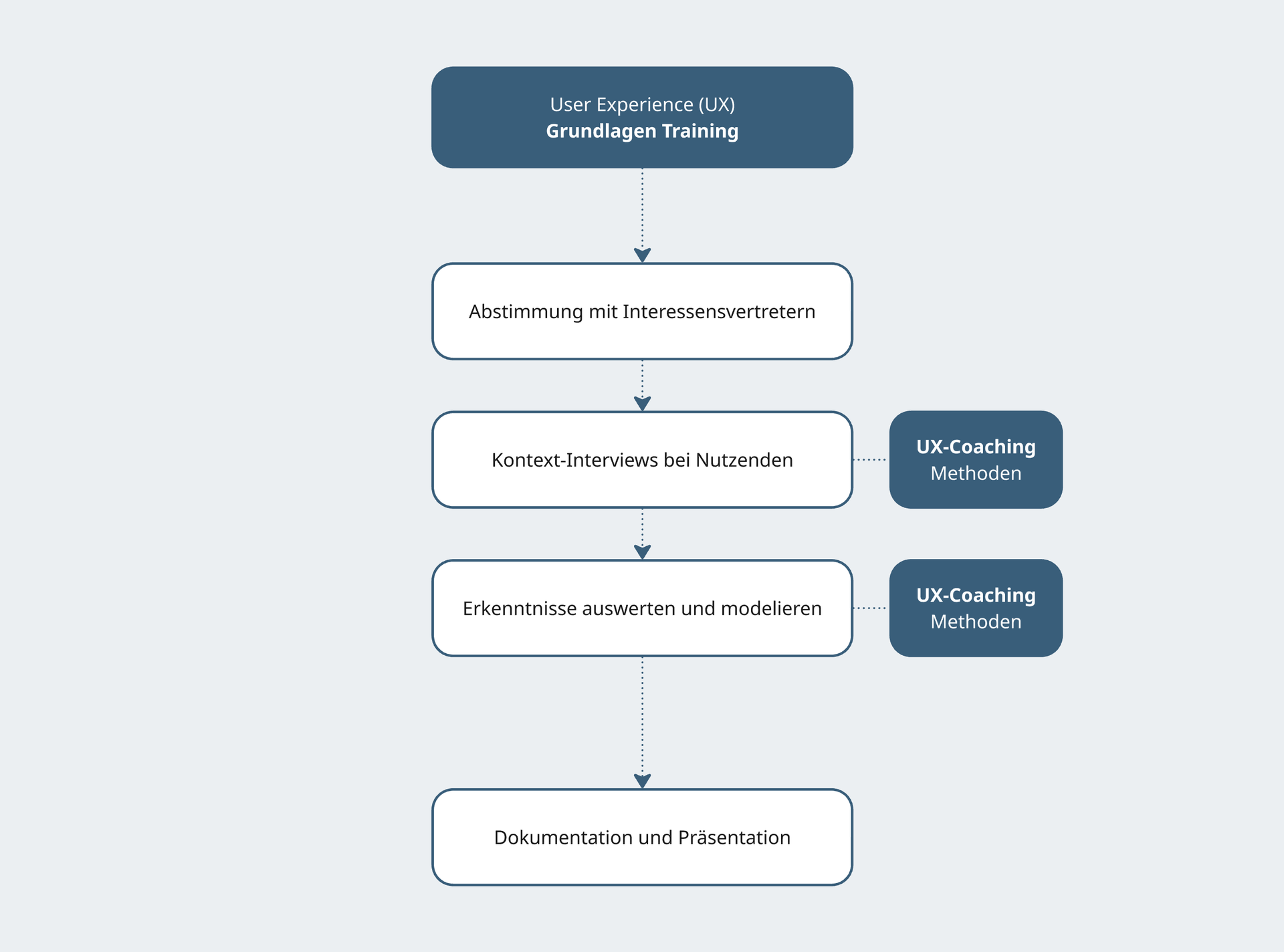
We started with a two-day introductory UX training session. It was specifically tailored to the institute and its challenges. We discussed basic emotional needs in the context of usage, methods that make sense for you, and have already developed some initial research questions. Everything was directly linked to your day-to-day work.
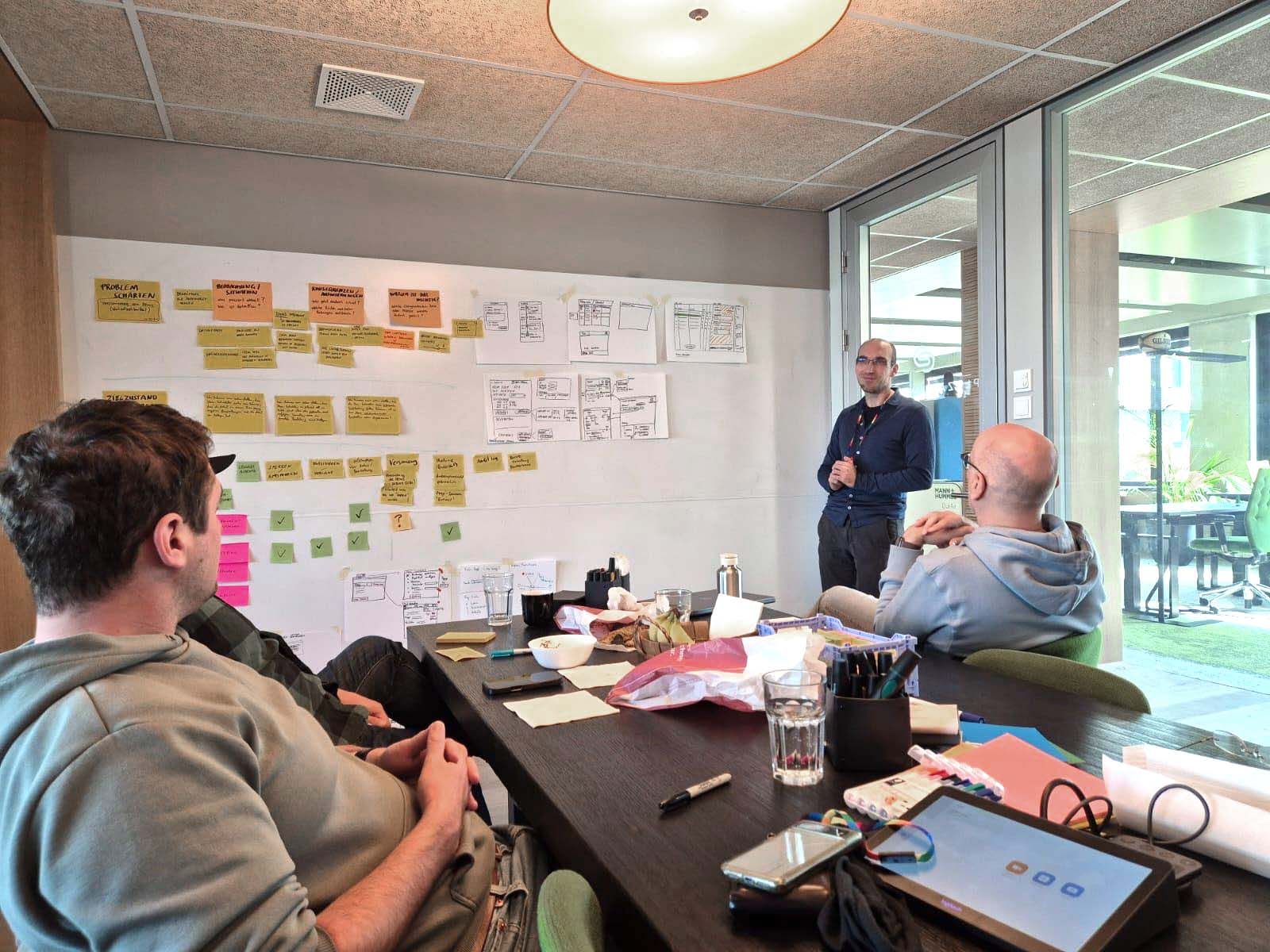
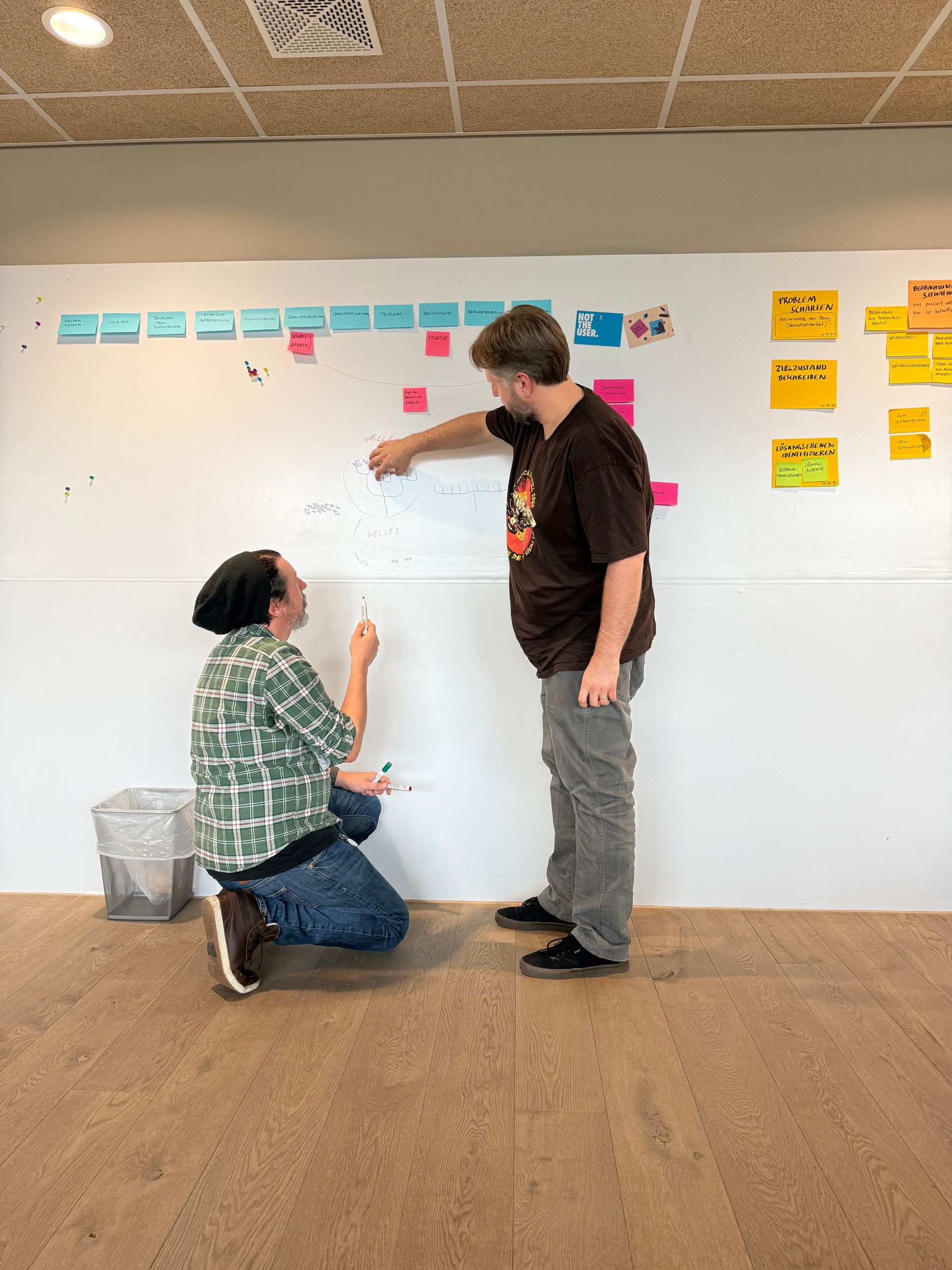
After that, we planned our approach. Who do we need to involve? What are the implications? How do we ensure strong buy-in? During a preliminary evaluation phase, we identified key user groups and then dove right into the problem space: recruiting users, formulating questions, creating interview guides, facilitating sessions, observing, and taking notes. Every member of the team took on each role at least once.
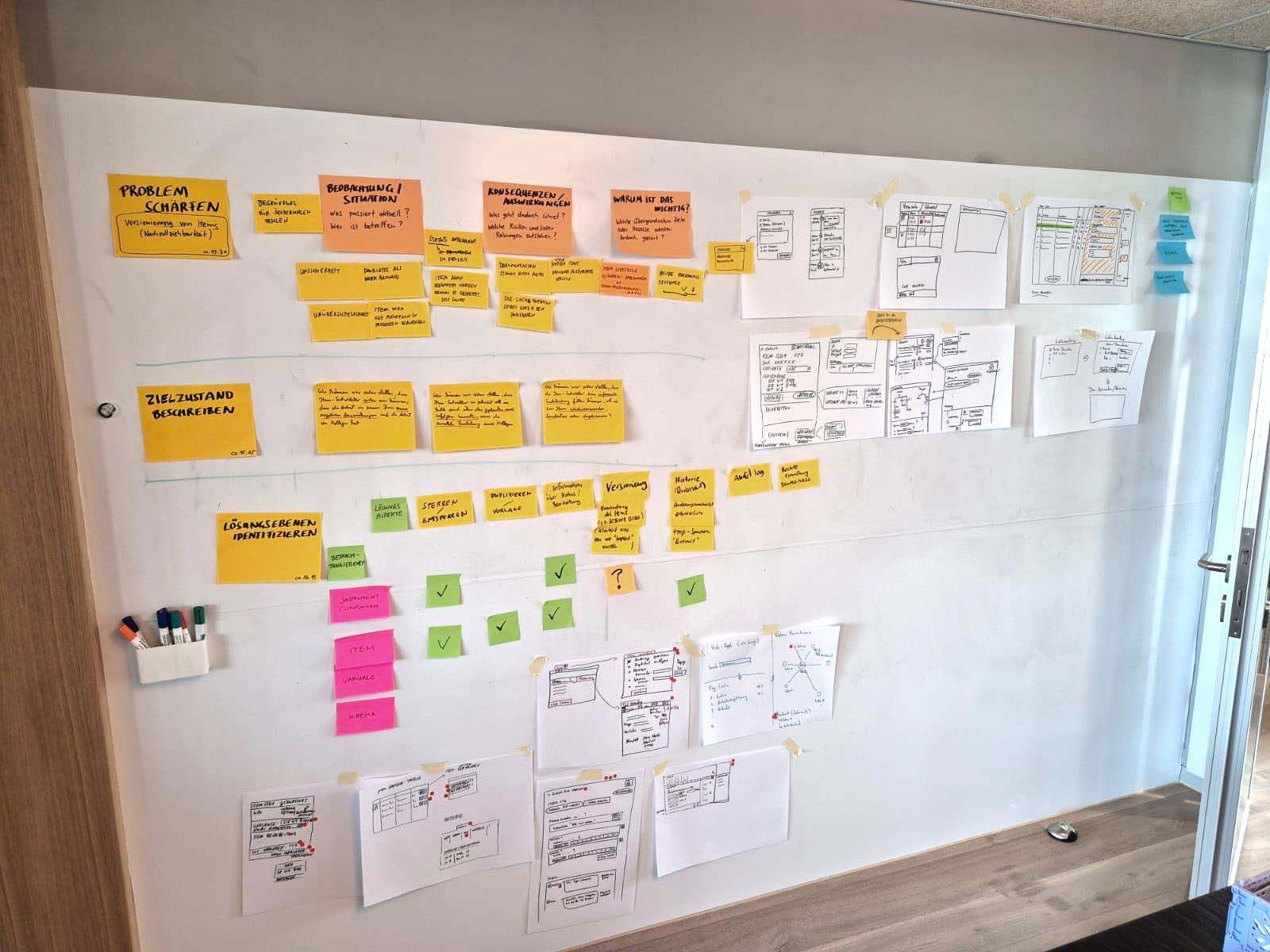
We visualized our findings in an experience map. This gave us an initial shared understanding of the processes and context. Only then did we move into the solution space and develop ideas. However, the focus was clearly on the problem space.
Where did you face particular challenges, whether technical, linguistic, or cultural, and what helped you stay on track?
Dr. Christian Matyas:
We were inundated with information during the user interviews. Although we focused on two target groups and one research question, the result was a massive experience map.
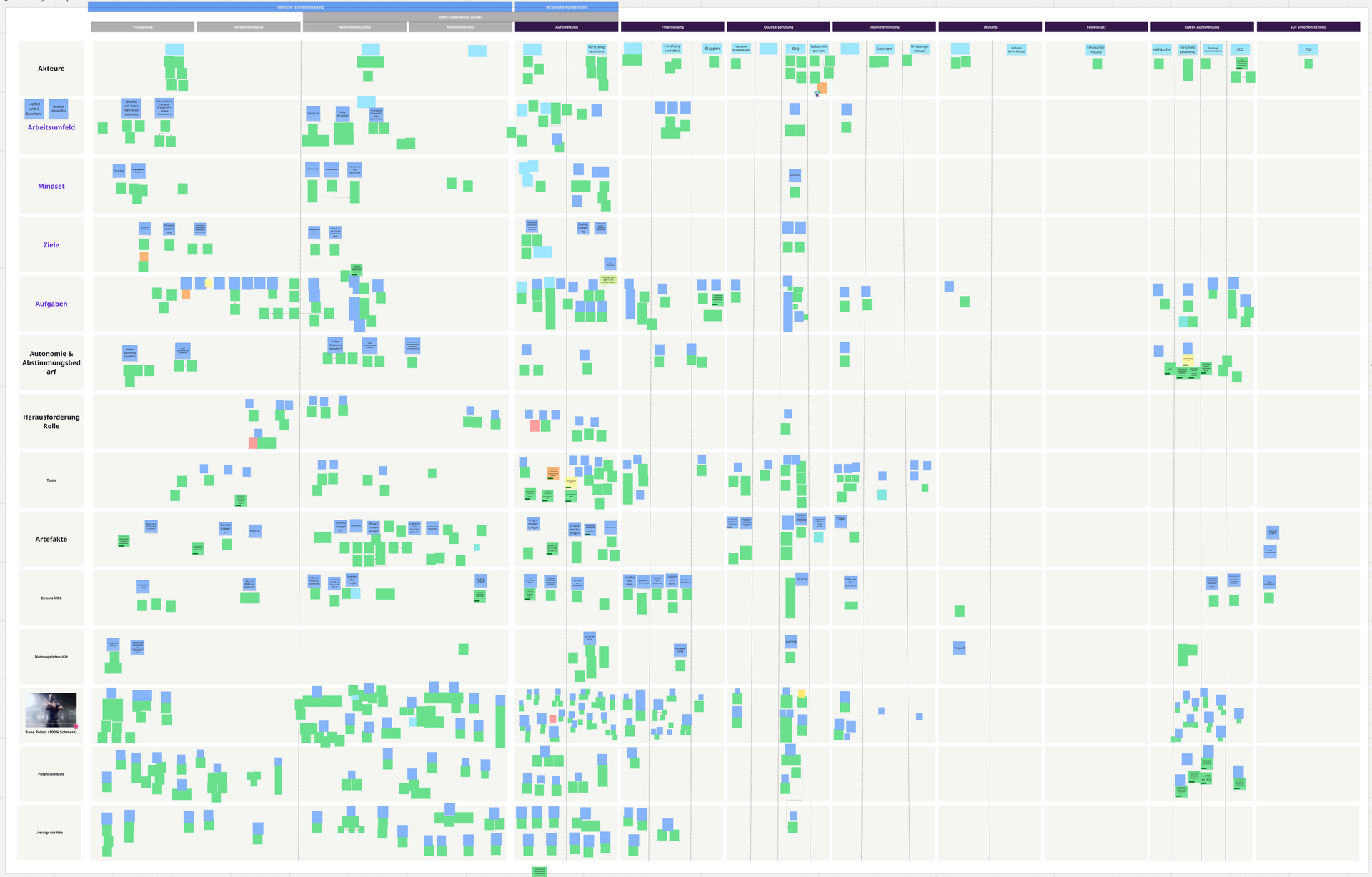
The interviews were full of new details, and for us, this was anything but routine. During my first interview, I was so curious that I even lost my focus. For our team, it meant stepping completely out of our comfort zone.
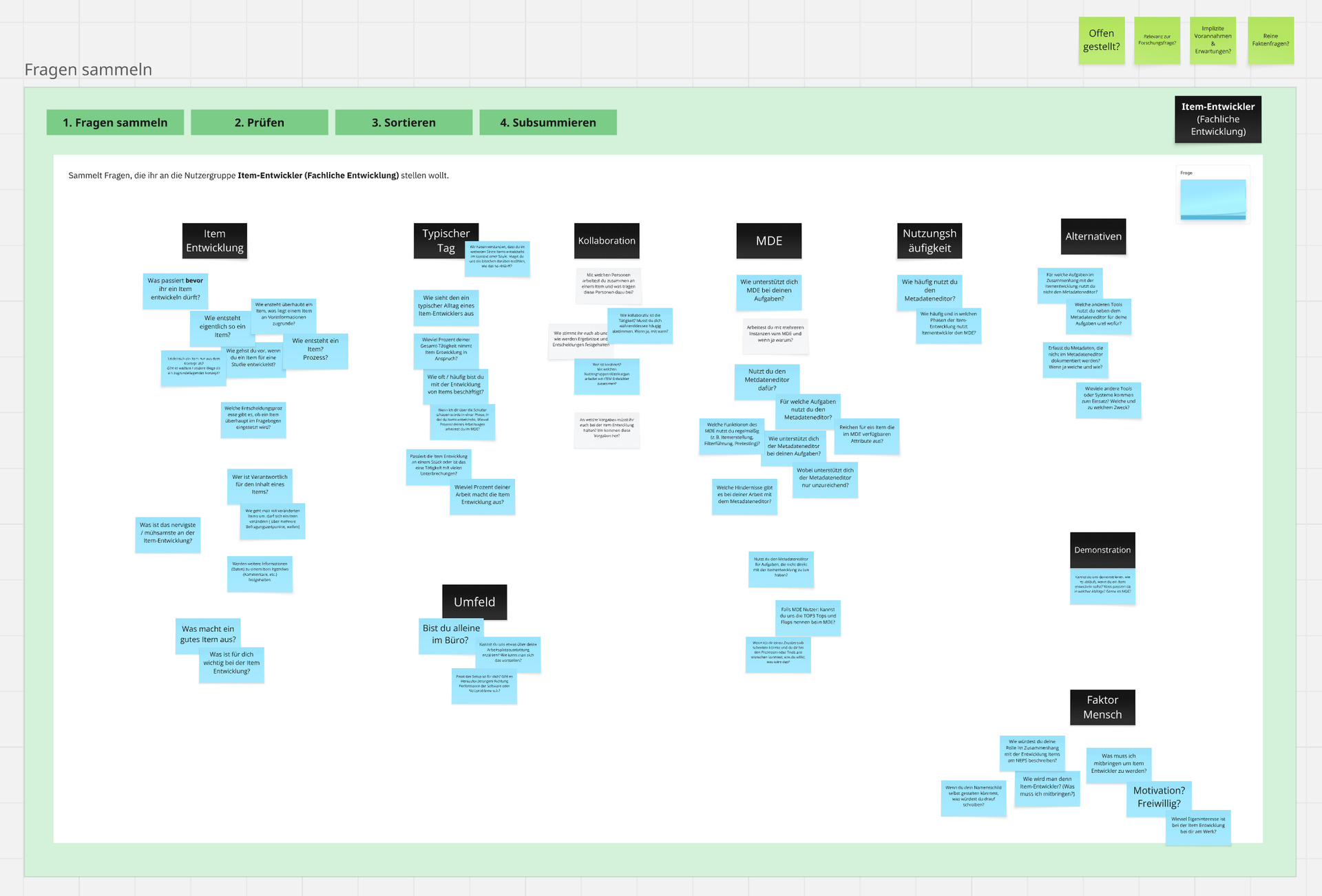
At the same time, we learned a lot because everyone made mistakes at some point. The workshops, in which we distilled hundreds of individual statements into something useful, were incredibly valuable. And it helped to have someone there to guide us through these steps. During a four-hour session, we took on certain parts as a team, and Christian structured the rest. That was a good mix.
Christian Ringleb:
There were two major challenges. The first was to truly engage with the users during the interviews. Many team members initially thought that, as developers, they weren’t the right people for the job. In the end, they turned out to be really good interviewers. Having a clear interview guide helped a lot.
The second challenge was modeling the findings. That’s always painful at first, but it forces you to go through the process yourself and understand what really matters. Culturally, it was challenging not to jump to solutions too soon. The team was eager to get back to coding, but they understood why defining the problem space comes first. It was particularly exciting to conduct UX research in an environment that conducts professional research itself. There was a great deal of openness and gratitude for the fact that we took a structured approach.
And an important “aha” moment for all of us: just how valuable one-on-one conversations with individuals are. Otherwise, many people come to meetings with ready-made solutions. It’s only through dialogue with the users that you understand the real problem.
Looking back, what has this project changed for you, and what successes do you take away from it?
Dr. Christian Matyas:
The fixed timebox helped us stay on track: it gave us a boost. In training sessions, you set ambitious goals but quickly lose sight of them in everyday life. Being supported over the long term is a different experience altogether. And knowing that there’s someone else I can ask at any time.
My biggest “aha” moment was realizing just how much the format of a discussion affects the results. A stakeholder discussion that had completely stalled via email suddenly became open and constructive when we switched to face-to-face communication. I take this experience with me into every consultation.
I was also impressed by how many people we met at the institute and how much awareness the topics of UX and requirements analysis generated.
Especially now, as AI is bringing about so many changes, the human touch and thorough requirements analysis are more important than ever.
Christian Ringleb:
For me, the project had several appealing aspects. One of them was the question of who is actually responsible for UX and who implements it. When I’m mentoring a team, my goal is always to eventually make myself redundant, because the team can do it on its own. The fact that this is exactly what happened here was a real success. Many methods can be applied using the resources already available, as long as the mindset is right.
It was particularly impactful when the team itself suggested going to where people actually work. Seeing how they work on-site was a real eye-opener for everyone. The team really got to work on their own. I saw the mouse cursors darting around on the Miroboard and knew right then that this was working.
And the context itself was valuable. The feeling of contributing to a large-scale study that makes people’s work easier is something that stays with you.
The interview was conducted by
Juliana has been bringing text to the digital world since 2009. As a UX writer, she ensures that language guides users to their goals and makes products measurably more successful.