





Skip to content

Sartorius

A design system as a community builder

Sartorius, a pioneer in the life sciences and bioprocess technology industries, recognized the importance of a consistent user experience across its highly complex portfolio and sought ways to optimize its UX maturity. The initial goal was to create a design system, which gradually evolved into a master tool for communication and collaboration.

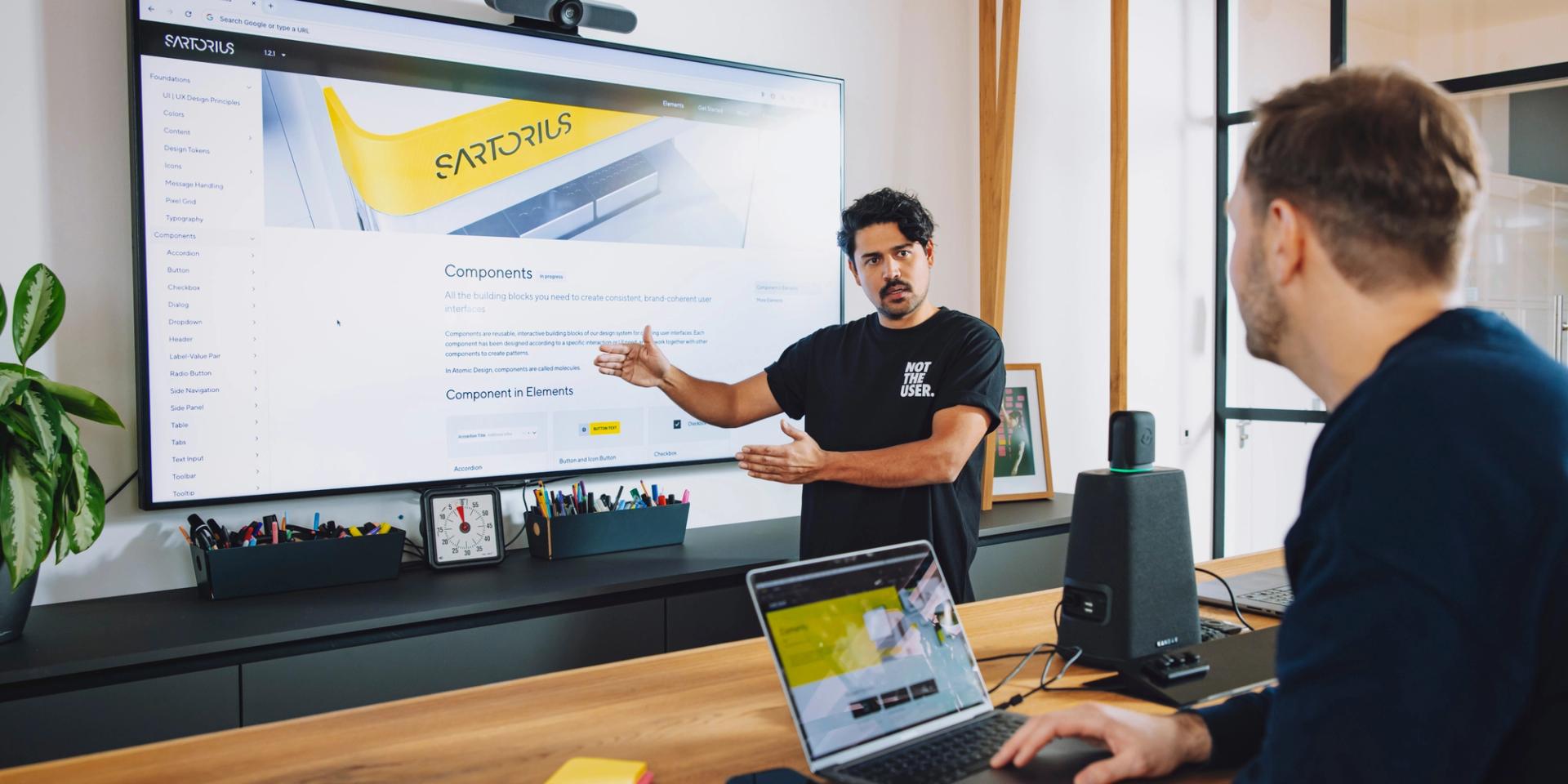
Man in a “Not the User.” T-shirt presents the “Components” page of the Sartorius design system on a large screen while a listener sits at the table with a laptop

Background & goals

Inconsistent product design

Sartorius’ products, diverse and technologically complex, are designed to drive innovation and scientific progress. An outstanding UX is essential and crucial to living up to the brand promise of “Simplifying Progress.” This goal must be reflected in a minimalist yet bold UX that aligns with the brand. However, various factors stood in the way of this. Among other things, due to numerous acquisitions, product development took place independently of one another. This led to multiple design libraries developed in parallel, inconsistencies in the user interfaces, and limited cross-project collaboration. The lack of internal UX resources, the varying levels of UX maturity among teams, and the expansion of the product portfolio all heightened the urgency for a standardized and user-centered UX approach.

The goal: a design system that brings people together

Sartorius approached UX&I to collaboratively develop a company-wide, strategic solution. The goal was to create a cohesive brand identity and an improved user experience across the entire product portfolio. It was clear that a design system was needed to strengthen all future UX activities. This system was not only to be structured as a set of guidelines but also ultimately implemented company-wide. With regard to the new corporate design, which was created as part of a comprehensive brand relaunch in 2020, the design system was

also intended to serve as the framework for all future product developments and to support the adjustment of existing user interfaces as needed. 

In addition, UX&I was to contribute its expertise from the perspective of an external consulting firm, serve as a sparring partner, challenge existing practices, and help build up internal UX resources. The goal was always to empower the internal teams to help themselves and gradually transfer these competencies to them. 

What is a design system?

A design system is a framework for the consistent design of digital products within an organization. It serves as a comprehensive repository of knowledge and includes design principles, documentation, and implementation guidelines such as interface components, code snippets, tonality guidelines, and design specifications.

Pascal Hirt
“In our incredibly complex product environment, we worked with UX&I to build internal UX expertise, laying the groundwork to further establish and strengthen UX at Sartorius.”
Pascal Hirt Manager of design & UI/UX at Sartorius

Challenges

Complexity

First, we had to determine how such a mammoth task could be tackled in such a complex environment with the resources at our disposal. One fundamental challenge, for example, was how to adapt the design system to the many different technologies used in Sartorius products.

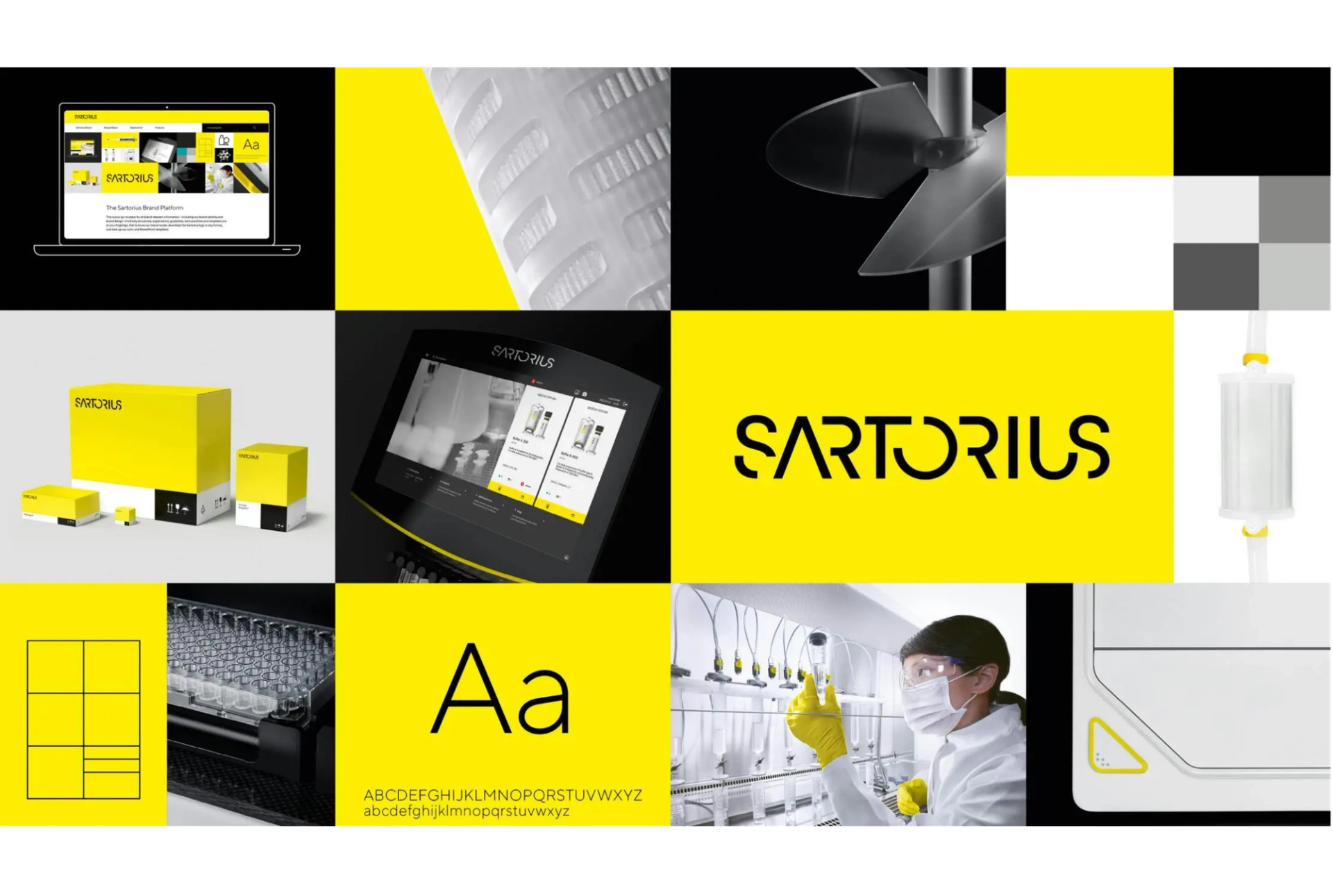
Collage of the Sartorius brand world in yellow, black and white: logo, “Aa” typeface sample, laptop with the brand platform, device screen, packaging and a lab scene

Different requirements and starting points

From the very beginning, there were many stakeholders and a wide range of views and requests. These had to be reconciled into a set of shared design requirements. On top of that, various teams were already working independently on their own initiatives: at least four design libraries were being developed in parallel, and a significant amount of time and effort had been invested in them. We couldn’t simply ignore this.

Acceptance, a sense of community, and engagement

The most important challenge was to ensure from the very beginning that the design system would be accepted and used. It was crucial to secure the commitment of designers and developers and to involve all stakeholders. We needed to foster a sense of community and a shared purpose. To do this, we had to take a two-pronged approach: First, we had to communicate the benefits of design systems and make it clear that they provide valuable support for brand-compliant design (brand compliance had previously been vague and difficult to ensure in the software sector). Second, and even more crucially, we had to adopt a bottom-up approach that allowed everyone involved to contribute and make the design system their own. A great deal of communication was necessary, including to break down barriers between teams. 

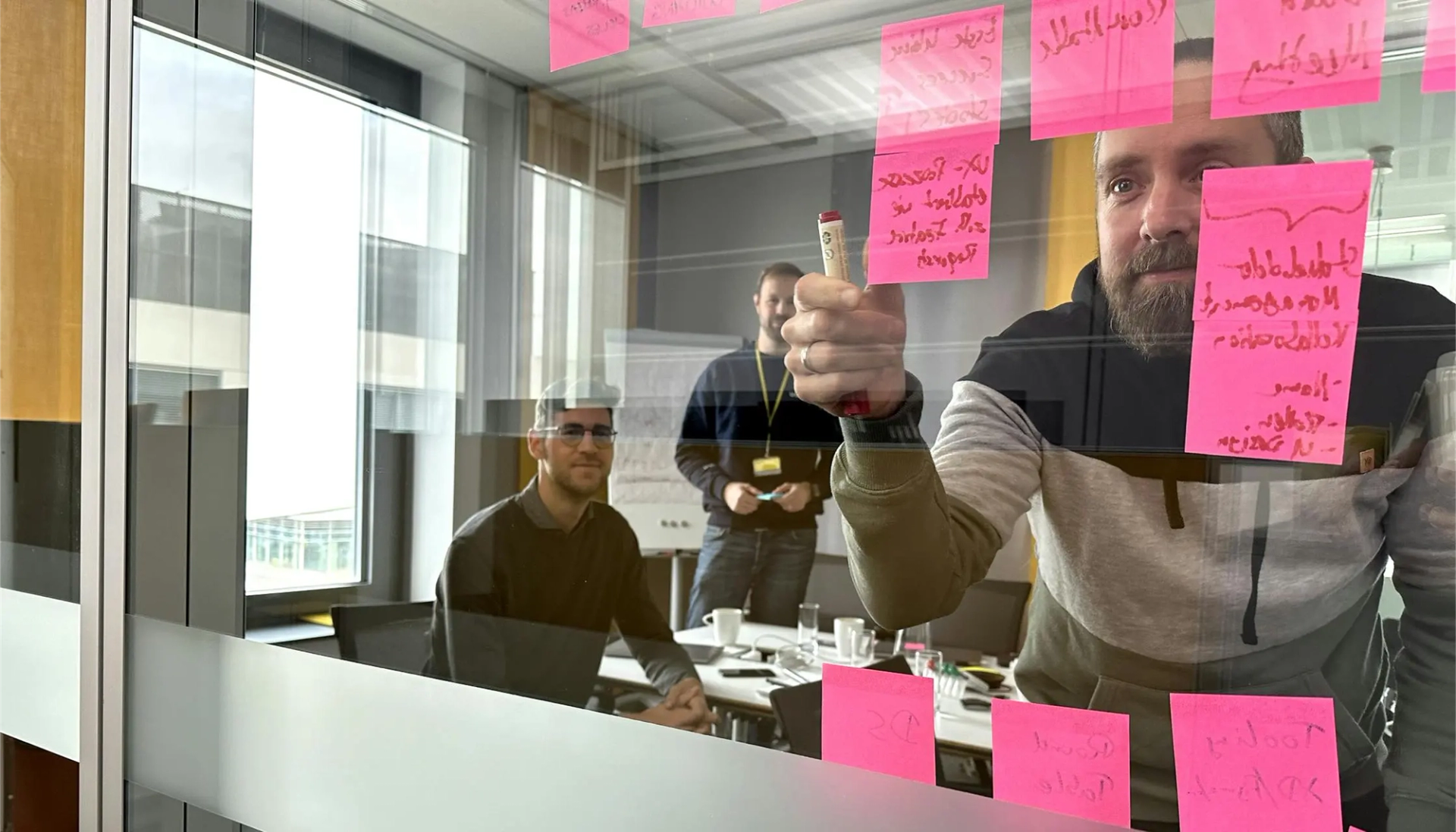
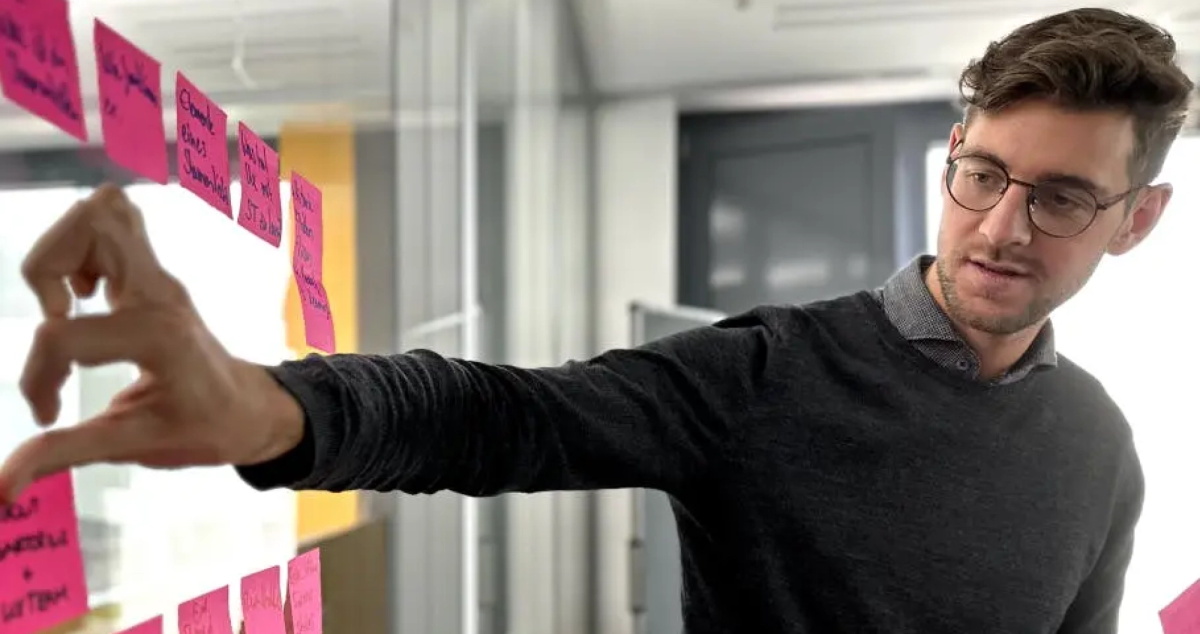
Participant in a design system workshop at Sartorius sticks pink sticky notes on a glass wall, two colleagues at the conference table behind him

Steps

Background and research

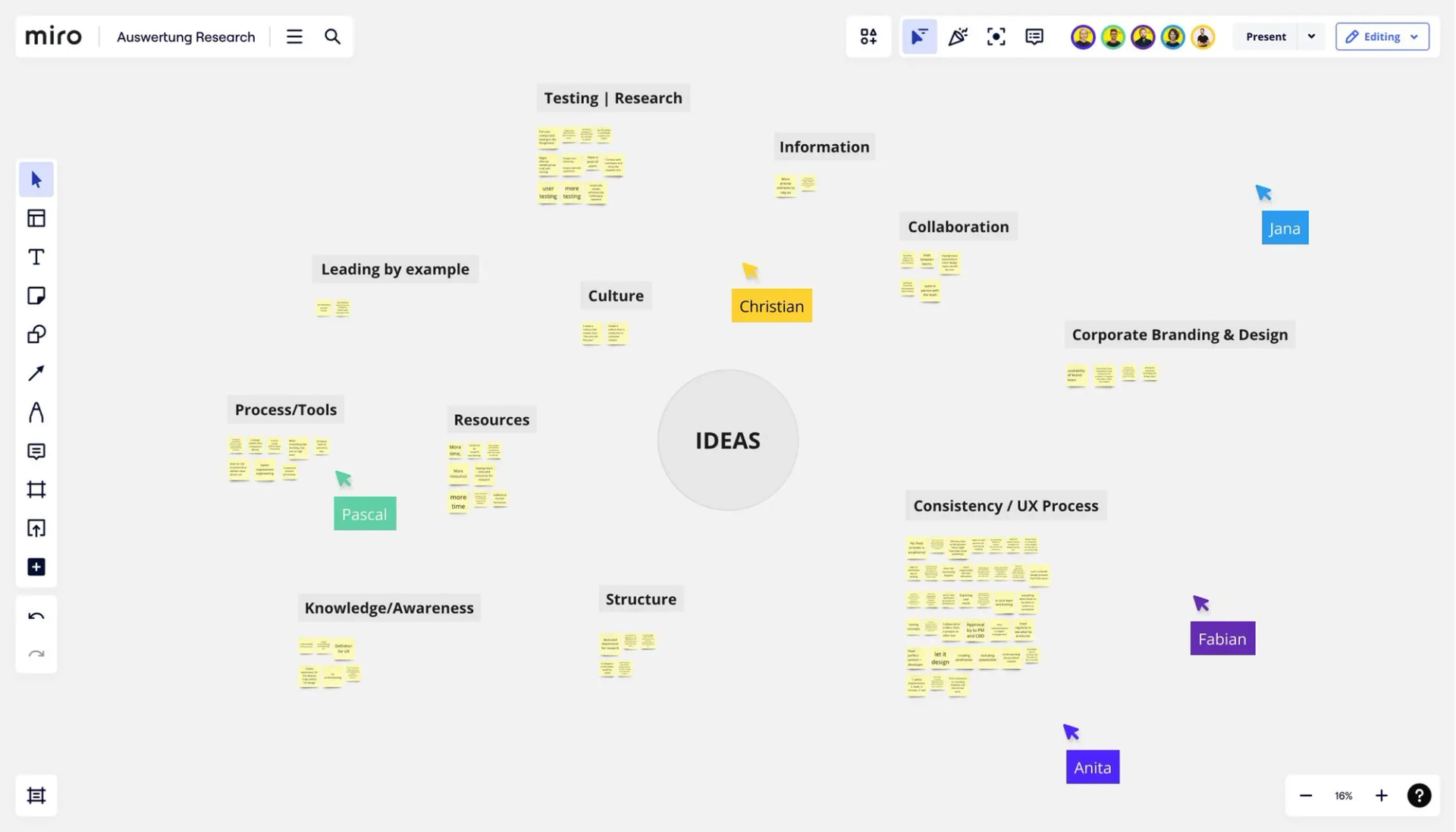
We began by taking stock of the situation and, through in-depth research, sought to capture and understand the diversity of development processes and designs. We conducted stakeholder interviews, spoke with various project teams, and discovered that the most important thing is to bring everyone to the table and involve them in the process.

Miro board “Auswertung Research”: clusters of sticky notes around “Ideas,” such as “Consistency / UX Process,” “Collaboration,” “Culture” and “Corporate Branding & Design,” with cursors for Christian, Jana, Pascal, Fabian and Anita

The IKEA effect

Things we’ve created ourselves, much like furniture we’ve assembled ourselves, are valued much more highly by us than something we buy ready-made or are even presented with unasked. The so-called “Ikea effect” also plays a crucial role in building a design system. “People prefer to use what they’ve helped develop themselves: your own creation is always the best,” emphasizes Anita Arnold, a UX designer at Sartorius.

Round table as the heart of collaboration

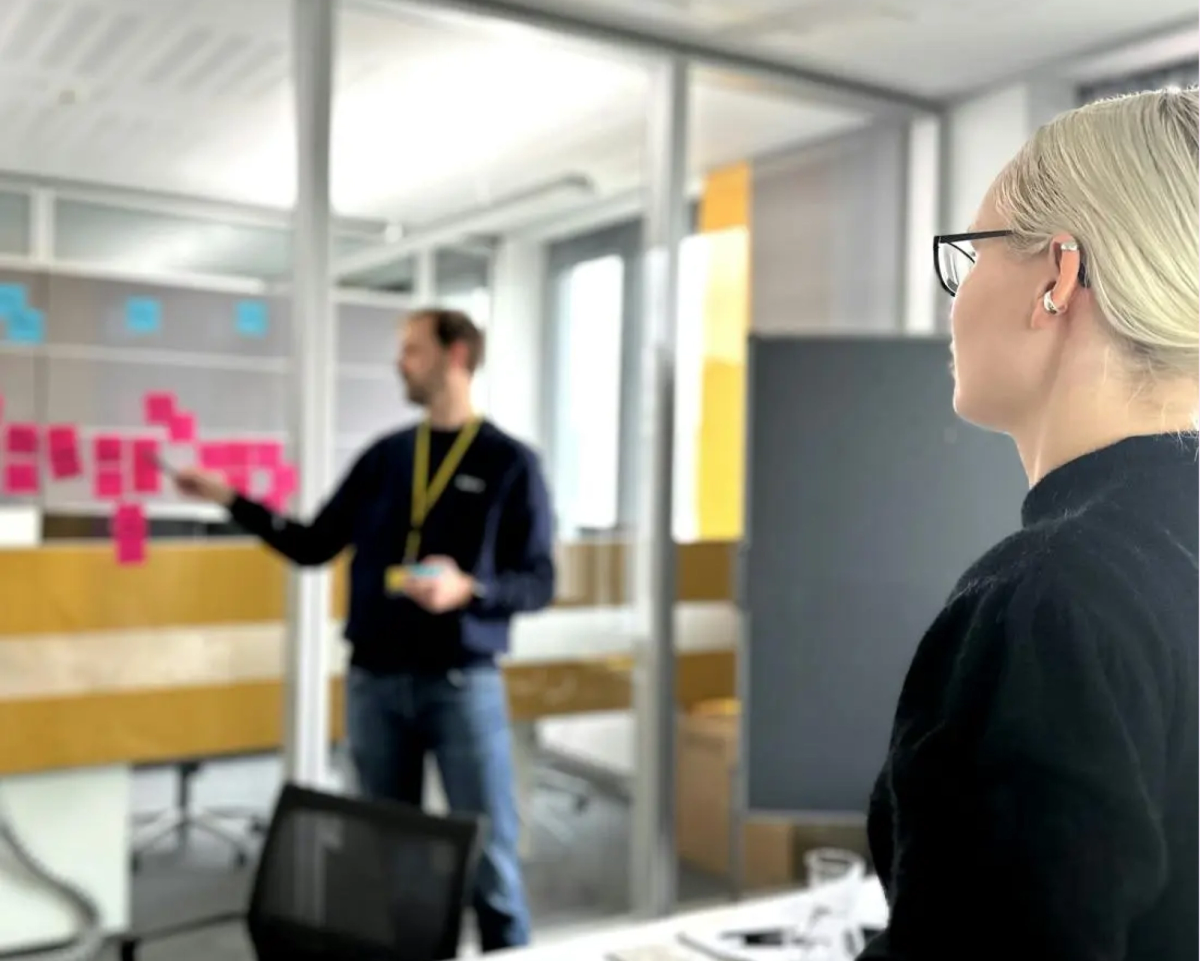
After a series of internal discussions, we established a roundtable where all relevant stakeholders, such as developers and designers from various project teams and representatives from the Corporate Branding & Design department, meet every two weeks. Together, we analyzed individual components, gathered requirements, asked questions, and collaboratively found answers. A major advantage was that the various experts were directly involved, allowing us to clarify a range of questions, such as “What is essential to the brand?” In addition, the different teams now had insight into each other’s designs and could understand design approvals, and rejections, much more easily. This helped counteract the “not invented here” syndrome.

Speed and focus

In UI design, we built components based on the results of the roundtable discussions, then collectively discussed them, optimized them as needed, and finally integrated them into the design system. Everyone was involved and played a direct role in creating the design system. We were able to analyze, conceptualize, build, iterate, and test at a healthy pace. Yet no one was left out, and we always had the stakeholders’ approval.

Anita Arnold
“Taking a broad view, then working in small teams, always flexible, not over-engineered, and not in groups that are too large… Communication at the roundtable is open and unhindered, which makes the work very enjoyable.”
Anita Arnold UX designer at Sartorius

Successes

We have a design system

The first release of the “Elements” design system is live. The documentation is growing alongside the Figma Library. User numbers are steadily rising, and most importantly, the components and patterns are being used and actively requested. Overall, the Figma architecture has had a very positive impact on the company. It’s been so well received that even existing libraries have been restructured along these lines, and designers are voluntarily switching to Figma so they can work with the library. Even non-designers, such as product owners, are starting to use the library for their own purposes. The inclusive and communicative approach is paying off; the design system is truly being put into practice.

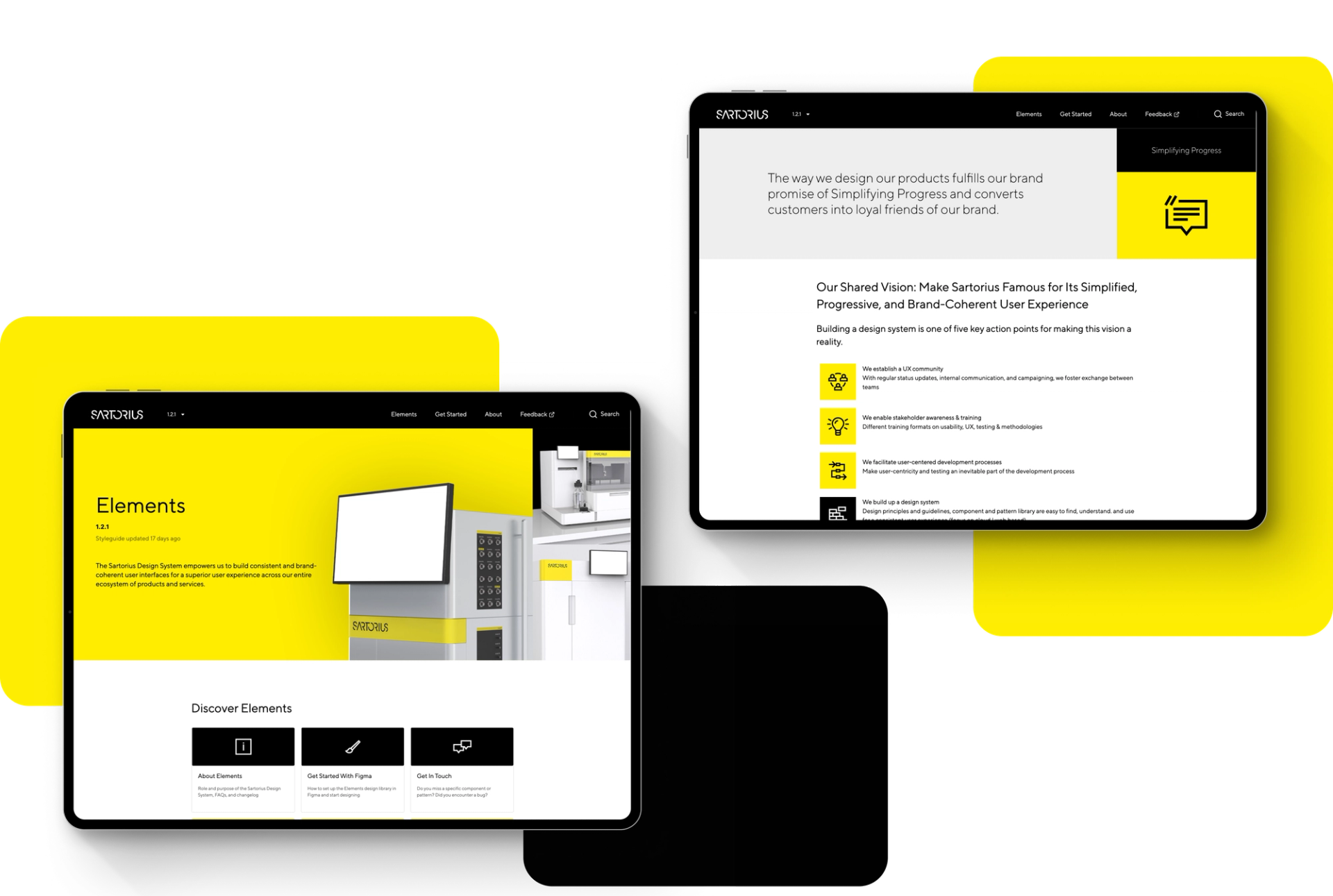
Two tablets showing the Sartorius design system website: the “Elements” entry page and the vision “Make Sartorius Famous for Its Simplified, Progressive, and Brand-Coherent User Experience”
Fabian Klindt
“We’re a super-small UX team tackling a super-important topic. This only works if we do it together, involve the right people, let them help shape the process, and manage the whole thing as a team (stakeholder management). How we do it is more important than what we do.”
Fabian Klindt Brand manager, UI/UX design at Sartorius

Round table brings everyone together

Originally more of a byproduct of building the design system, the Round Table has become an effective link and anchor point for a wide variety of teams and product landscapes. It has become clear that communication is at least as important as design, and that silos can be broken down when communication is encouraged.

Although participants are spread across a wide range of time zones, the format has become firmly established and is enthusiastically embraced. At times, it has even been a challenge to keep the number of participants from growing too large.

Christian Korff
“I’ve often heard people say, “The round table is our favorite activity.” That makes me incredibly proud.”
Christian Korff Senior UX consultant at UX&I

A small “design family” and internal user-centered design

Designers, who often worked in relative isolation, have now gained insights into the work of other product teams and can exchange ideas with them to collaboratively create consistent products. At the same time, the Round Table, alongside other formats such as the UX Community Call, serves as a cornerstone for a community of practice focused on UX processes. Communication feels natural (in line with the brand campaign “We’re In This Together”), and user-centered design has also taken root internally.

Jana Roeper
“To promote user-centered design in our products, we at Sartorius aim to adopt a user-centered approach ourselves. When it comes to the design system, our colleagues are the users, and we put them at the center of everything we do.”
Jana Roeper UI/UX brand manager at Sartorius

Empowering people to help themselves has worked

From the very beginning, our goal at UX&I was to eventually make ourselves redundant. The expertise needed to be brought into the team and distributed throughout it. That’s why it’s a major success for us to have established processes and ways of working and to have laid a foundation upon which internal resources can be built. Those in charge are equipped with solid arguments for their approach, and the design system can be further developed internally on its own. There’s a strong push from the UI designers: they want to contribute more to the topic and take it on themselves.

Let’s continue

The design system is continuously being expanded and established as an anchor for all UX-related topics within the company, such as methodologies, research, and testing. Various activities are taking place to further increase awareness and UX maturity and to expand the community of practice.

Six tablets showing pages of the Sartorius design system: Elements, Foundations, Components, Patterns, Typography and Icons

Related

Do you have an idea or a tricky UX problem?

We support you from strategy and agile product development all the way to training your team.

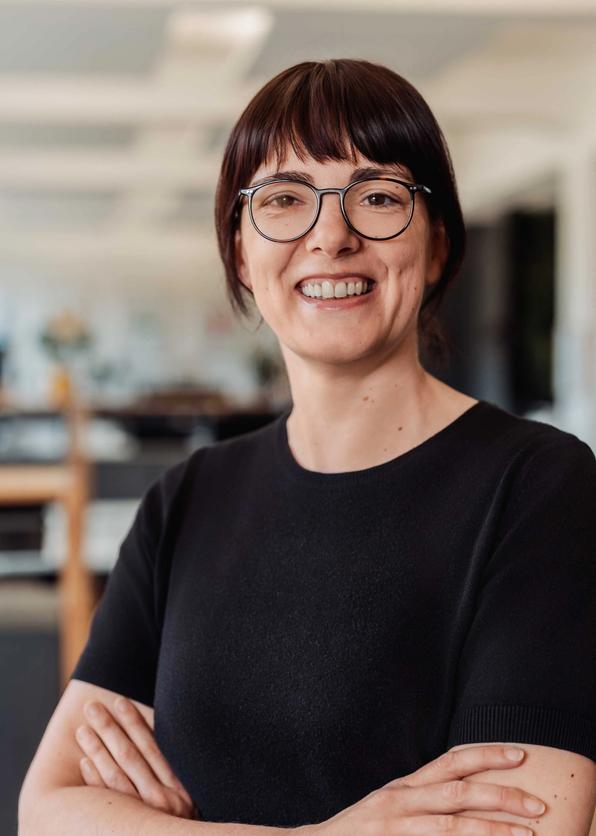
Nadine Pieper, senior UX consultant at UX&I, smiling with glasses and arms crossed in the office

Nadine Pieper Senior UX consultant · Berlin

Prefer to talk right away?

30 minutes by video call, free and with no obligation. All times are Berlin time.

 Loading available times …

Or send us a message

Two or three sentences are enough.

We reply within two business days.

We process your data to handle your request. Details in our privacy policy.

Nadine Pieper
Hias Wrba
Patrick Oselka
Claudia Schönwälder
Mato Sauer

Your call with

Nadine Pieper

Senior UX consultant

Berlin

Your call with

Hias Wrba

Product coach

München

Your call with

Patrick Oselka

Managing director at UX&I

Düsseldorf

Your call with

Claudia Schönwälder

Senior UX consultant

Hamburg

Your call with

Mato Sauer

Customer empowerment lead

Frankfurt