UX Camp Hamburg celebrates its 10th anniversary on the New Work SE campus
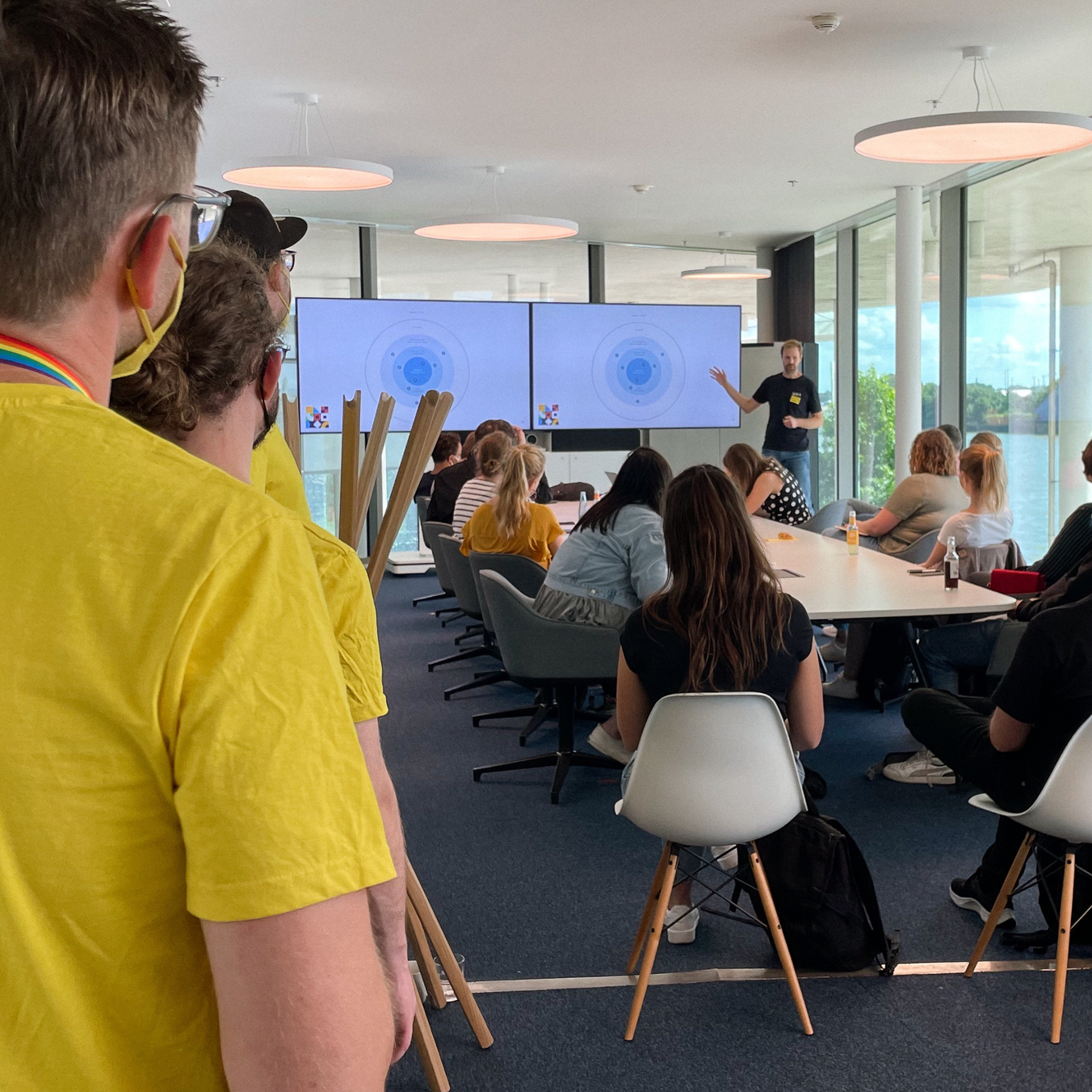
On August 6, 2022, the time had come again: After a two-year hiatus due to the pandemic, UX Camp Hamburg was back in action to celebrate its 10th anniversary. The Barcamp impressed attendees not only with 15 exciting sessions but also with an impressive venue: the New Work SE campus in HafenCity. We were among the 100 participants and documented our impressions.
Focus on sustainability
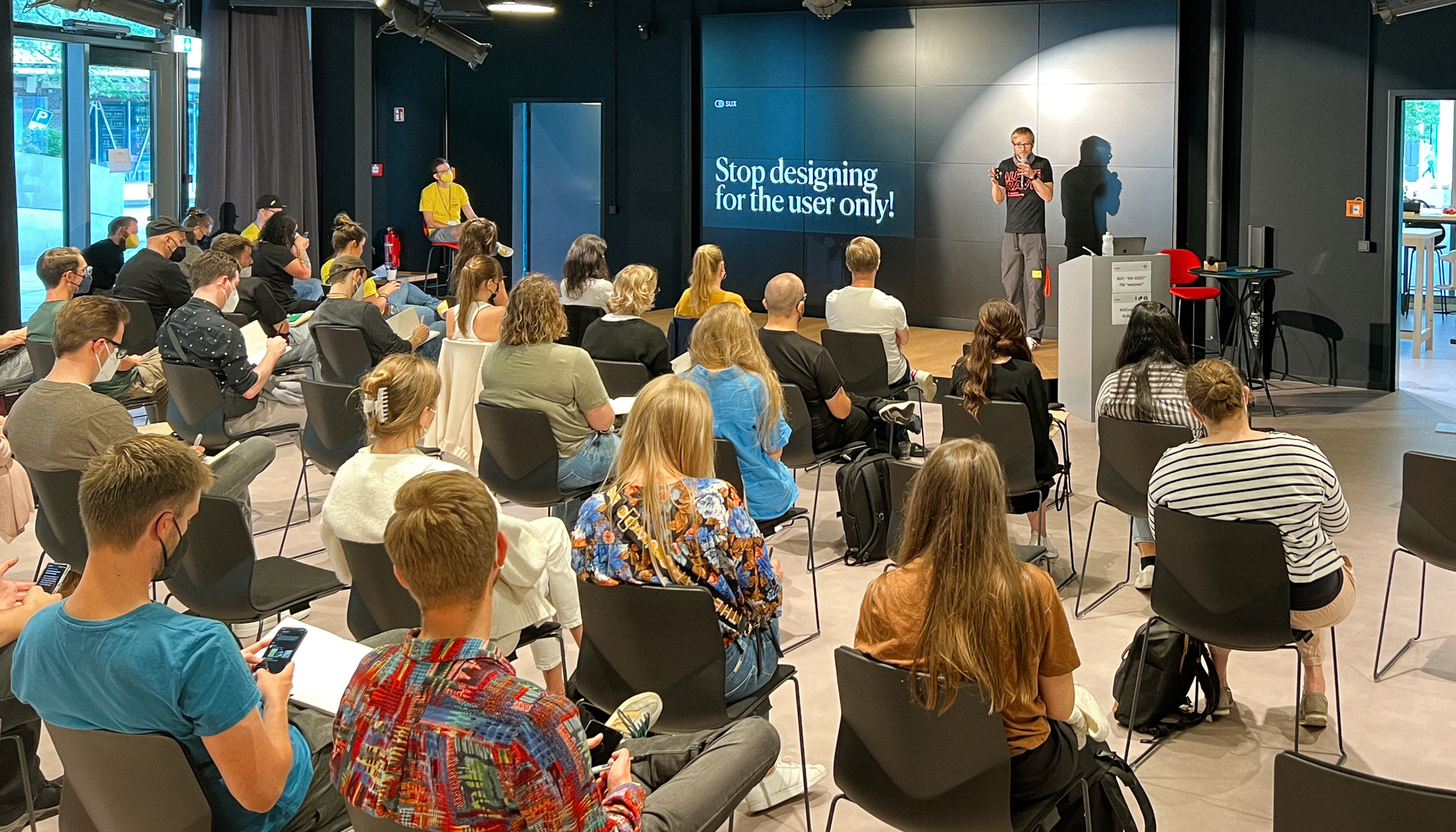
In his session, Thorsten Jonas, Strategic UX Consultant, presented “SUX: the Sustainable UX Playbook,” which he initiated. Together with a group of designers, he developed the playbook to combine sustainability and UX using a toolset. He noted that designing solely for users is not sustainable. Humanity and the environment must be taken into account. That’s why it’s important, in our day-to-day project work, to question what data is being collected and whether we can work with less data. After all, collecting data is a simple way to reduce a company’s carbon footprint.
Otto.de, Germany’s second-largest online retailer by revenue, uses the Sustainable UX Playbook. Gerhard Kühne, Creative Lead for Apps & User Experience at the Otto Group, used product images to demonstrate where and how data can be saved. He also introduced the concept of CO2 KPIs, which product teams can use to track their own sustainability. A Slack community has formed around SUX, which already has 706 members.
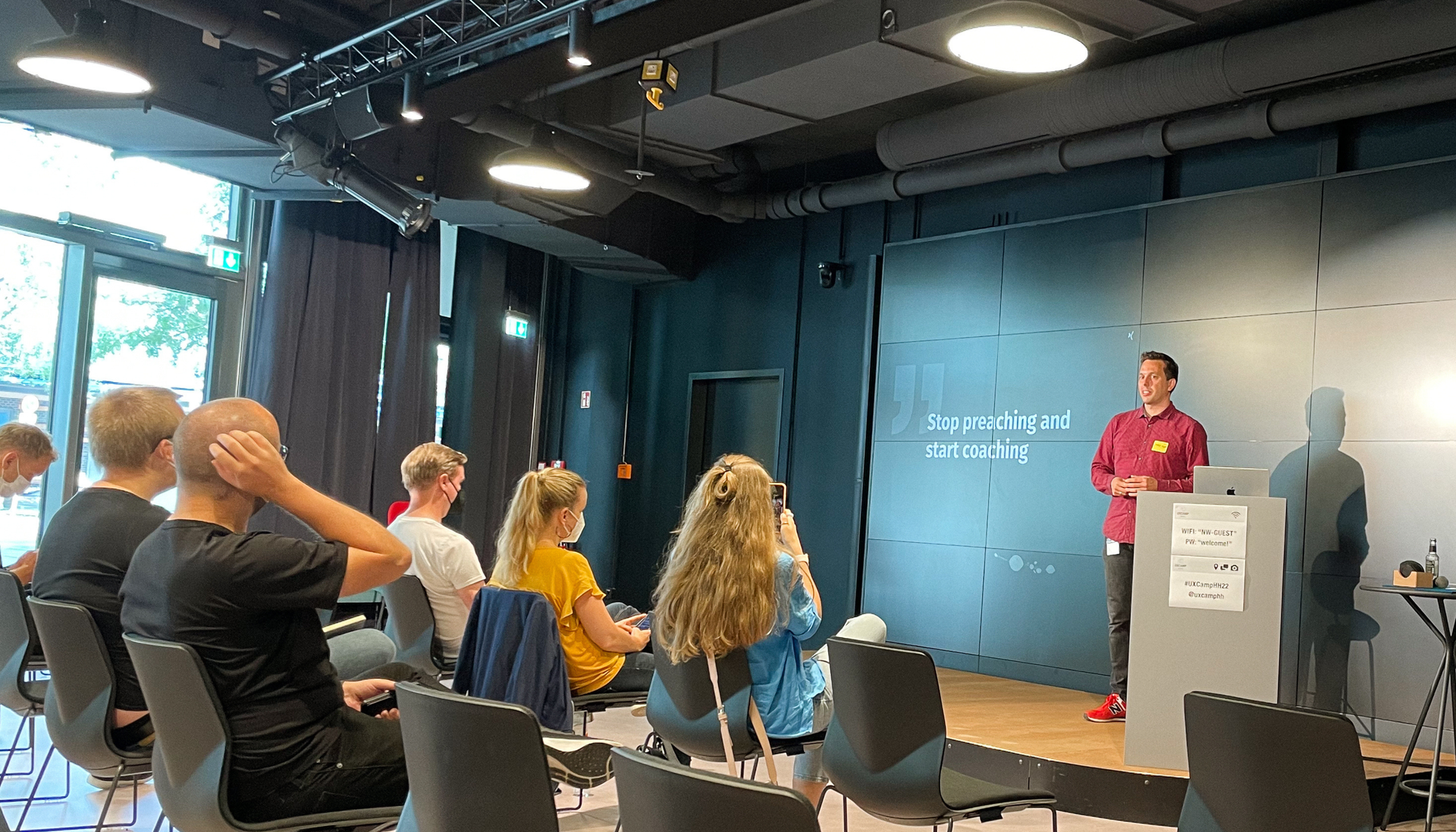
Jan Kiekeben from Xing shed light on the topic of sustainability from a different angle in his session “Why Product Discovery Trainings Suck”: How can project teams grow sustainably in their roles? His mantra: “Stop preaching, start coaching.” In his view, training is part of the solution, but only to move from unknown incompetence to known incompetence. He referenced Jared Spool’s model of the “Growth Stages of Understanding.” He advocates for coaching methods that empower product teams to better navigate the complex field of innovation and discovery.
Cross-functional collaboration
In his session titled “UX Acceptance Criteria,” Fabian F. from sum.cumo Sapiens addressed the collaboration between two distinct disciplines: UX design and development. His experience shows that checklists with acceptance criteria for designs are helpful. This aligns closely with how developers work and simplifies communication regarding design requirements.
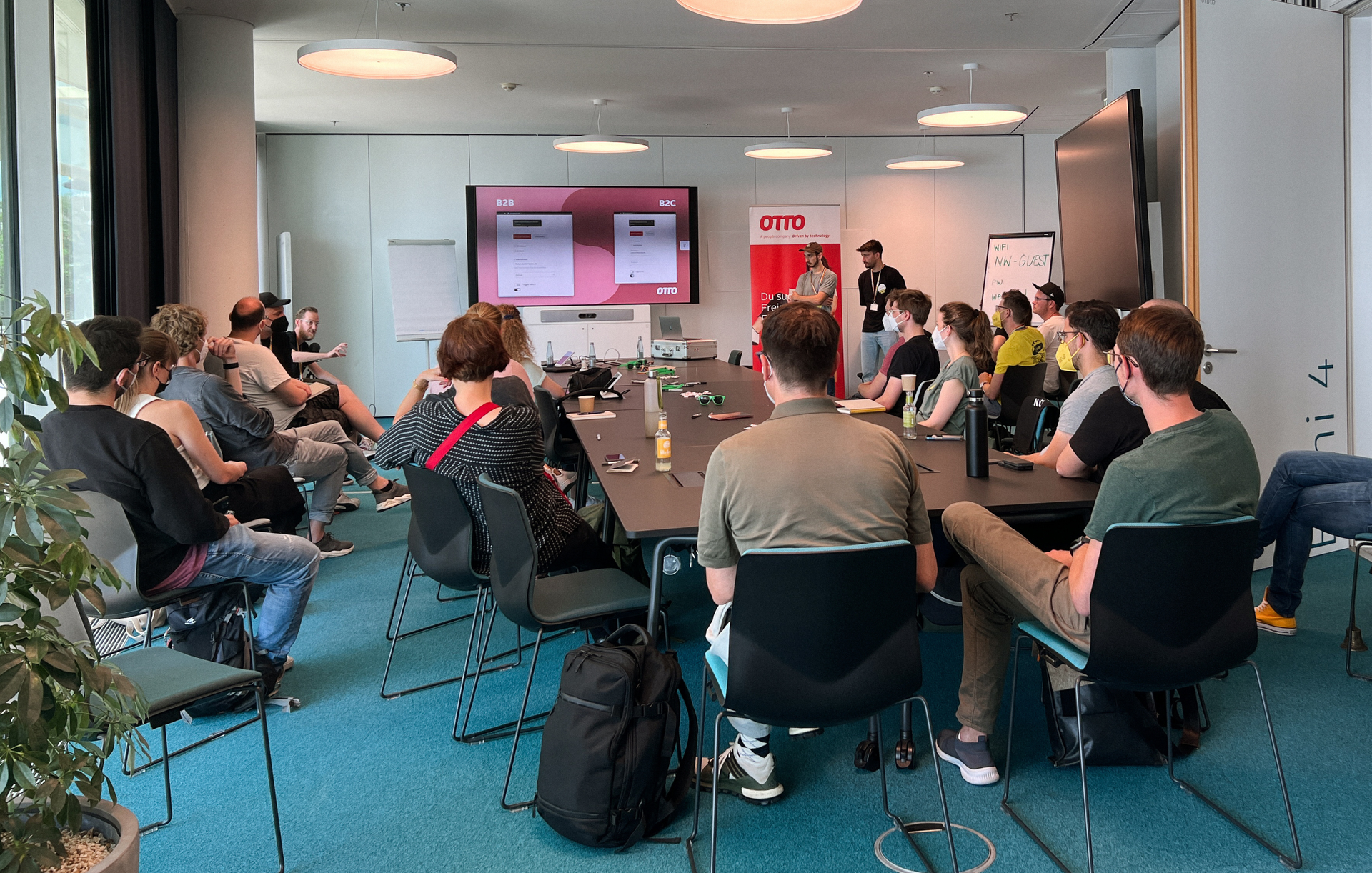
Lennart Otte and Ruben Siedler from the Otto Group chose collaboration between B2B and B2C as the theme for their session. By refining two design systems, they succeeded in establishing a consistent visual identity. Their recipe for success: getting everyone on board and involving them. A high-performance prototype of the design systems helped them secure buy-in from the Managing Director.
New Work in practice
How do we want to work? Senior UX consultant Christian Korff from UX&I shared stories of toxic experiences he’d had in the workplace and the resulting urge to find an organization that operates differently and doesn’t have micromanagers. He has been working at UX&I for seven months. Since then, he has come to appreciate and love the sociocratic circle-based organization. The circle-based organization thrives on participation and the fundamental principle of navigating tensions. Transparent principles form the basis for collaboration and decision-making.
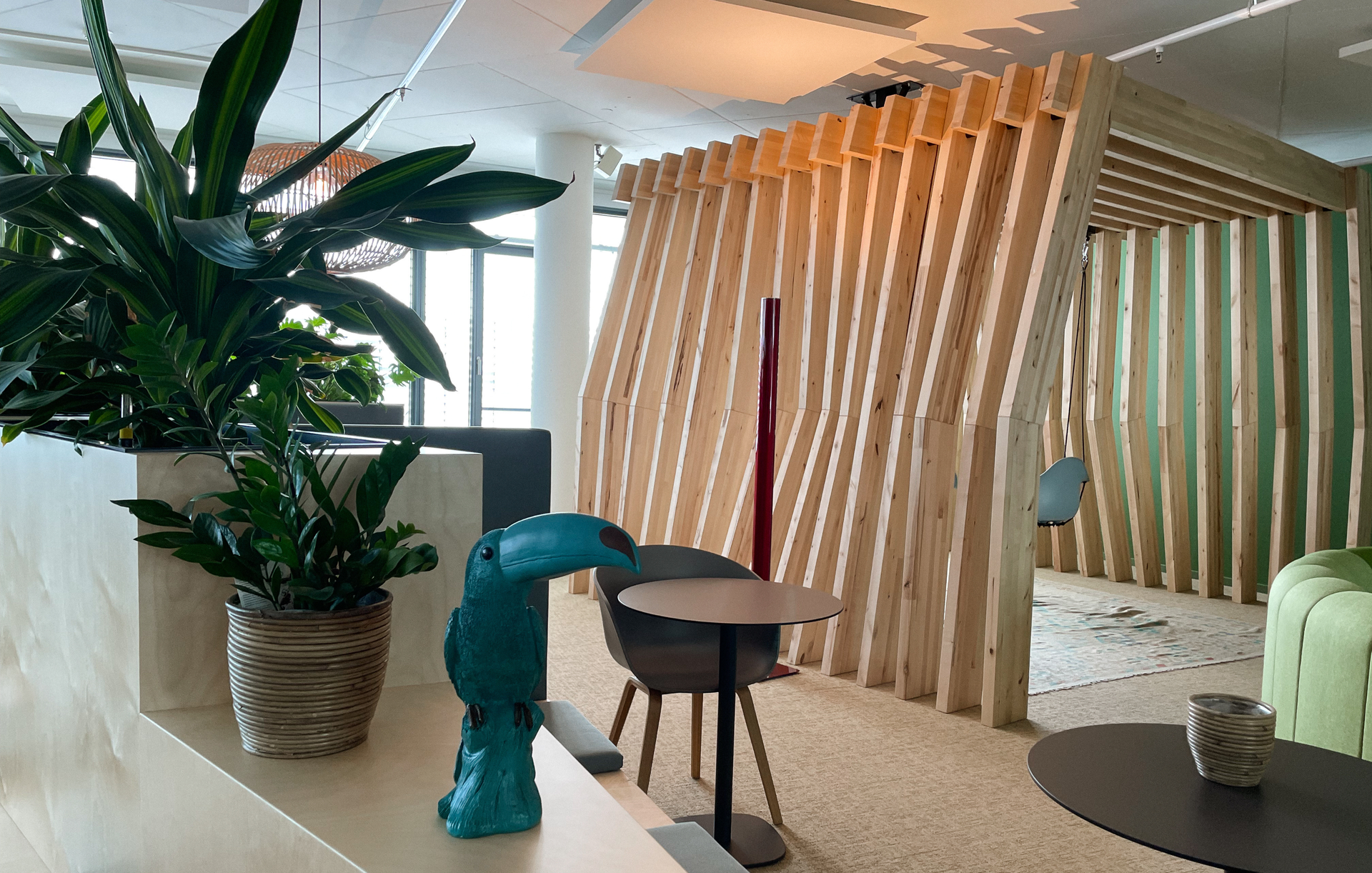
As the name suggests, the location itself is all about New Work. How can work environments be created that meet the needs of employees? The New Work Harbour, which opened in September 2021, is a prime example of this. That’s why the tour of the facilities was particularly exciting. The campus features workspaces, quiet zones, areas for creative collaboration, and various terraces. A fitness center, a swing area, a fireplace lounge, as well as cafés and a bar invite visitors to linger. They’ve even included a soundbar where employees can choose a record of their choice and work with focus while listening to great music.
Practical, hands-on tips
Unlike at many conferences, practical, hands-on tips are shared openly, true to the motto “Fail better,” and experiences were also exchanged at UX Camp Hamburg.
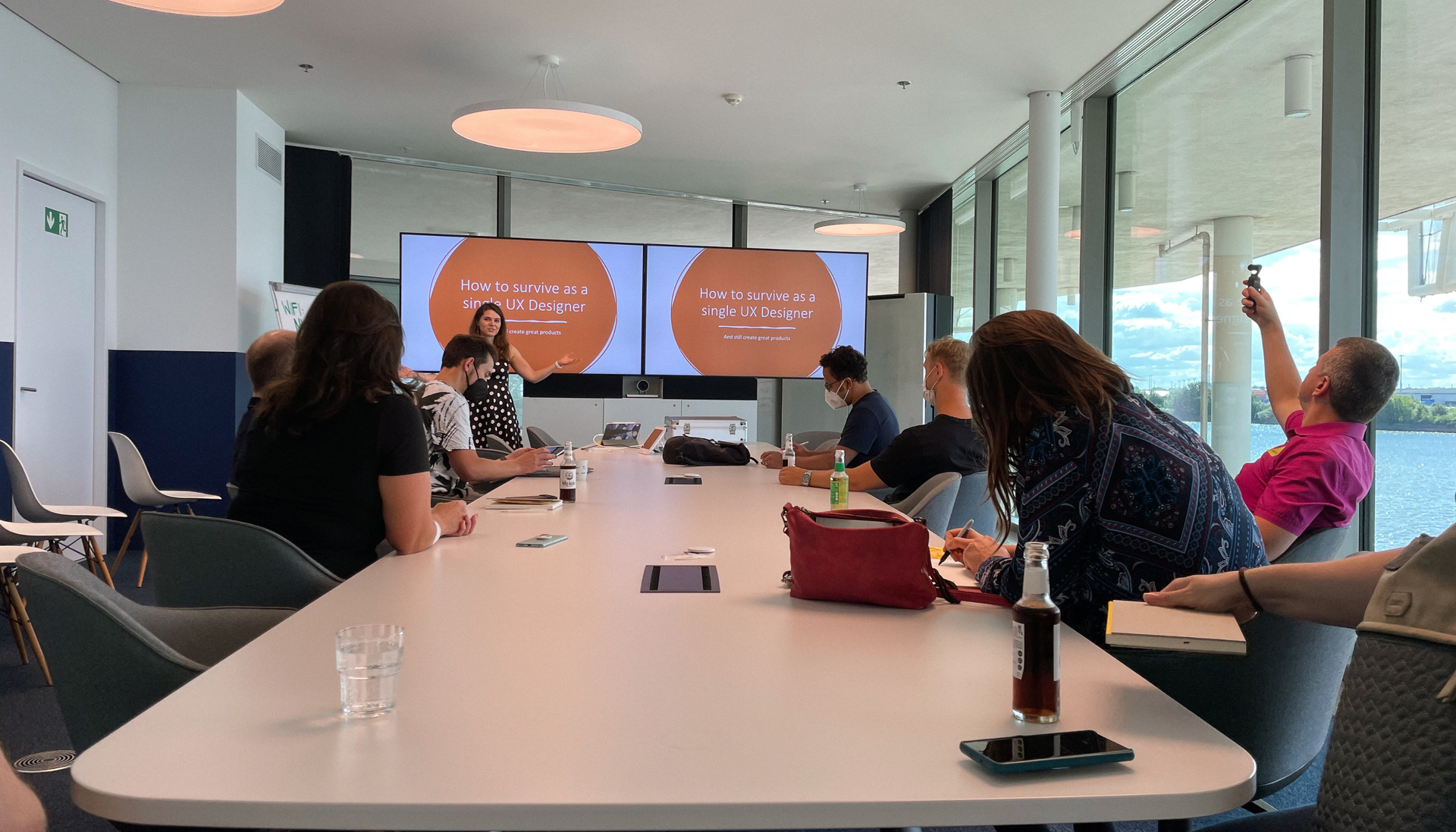
Indra Burkart from Rackspace Technology, an international multicloud service provider, shared her experience on how to thrive as a solo UX designer within an organization. She addressed the five most common challenges: a lack of feedback and communication, testing her own designs, too much work for one person, and prioritizing important tasks. Indra shared her insights on her YouTube channel.
There were additional opportunities for discussion, including during the Product Walk through HafenCity. Gerhard Kühne from the Otto Group and Elena Morawin from Muuuh! Next organized the outdoor session. The topic centered on the question: “How can we, as UX designers and product professionals, integrate aspects of diversity into our daily work?” Each participant was invited to write down a keyword related to what they wanted to discuss during the walk, and off they went.
Kudos to the organizing team: Nika Maack, Meik Mense-Koch, Nina Koch, Lisa Radel, and Erik Scheibner. The event was a huge success!
About UX&I
UX&I offers consulting, enablement, and implementation services in the field of user experience (UX). We focus on deep tech, enterprise software, and digital transformation. Our goal is to help people harness complex technology to serve users. In doing so, we bring together all relevant perspectives: human, business, and technology.
- Locations: Düsseldorf (Headquarters), Berlin, Hamburg, Frankfurt am Main, Munich
- Employees: 37
- Founded: 2014
- Clients: Ten of the fifteen largest German companies, among others, rely on our UX expertise
Contact

“UX is only sustainable if everyone gets on board.” Christian Korff turns user experience into a team effort and particularly enjoys getting involved with complex systems.