UX&I Unconference on AI: Where are we now, and where are we headed?
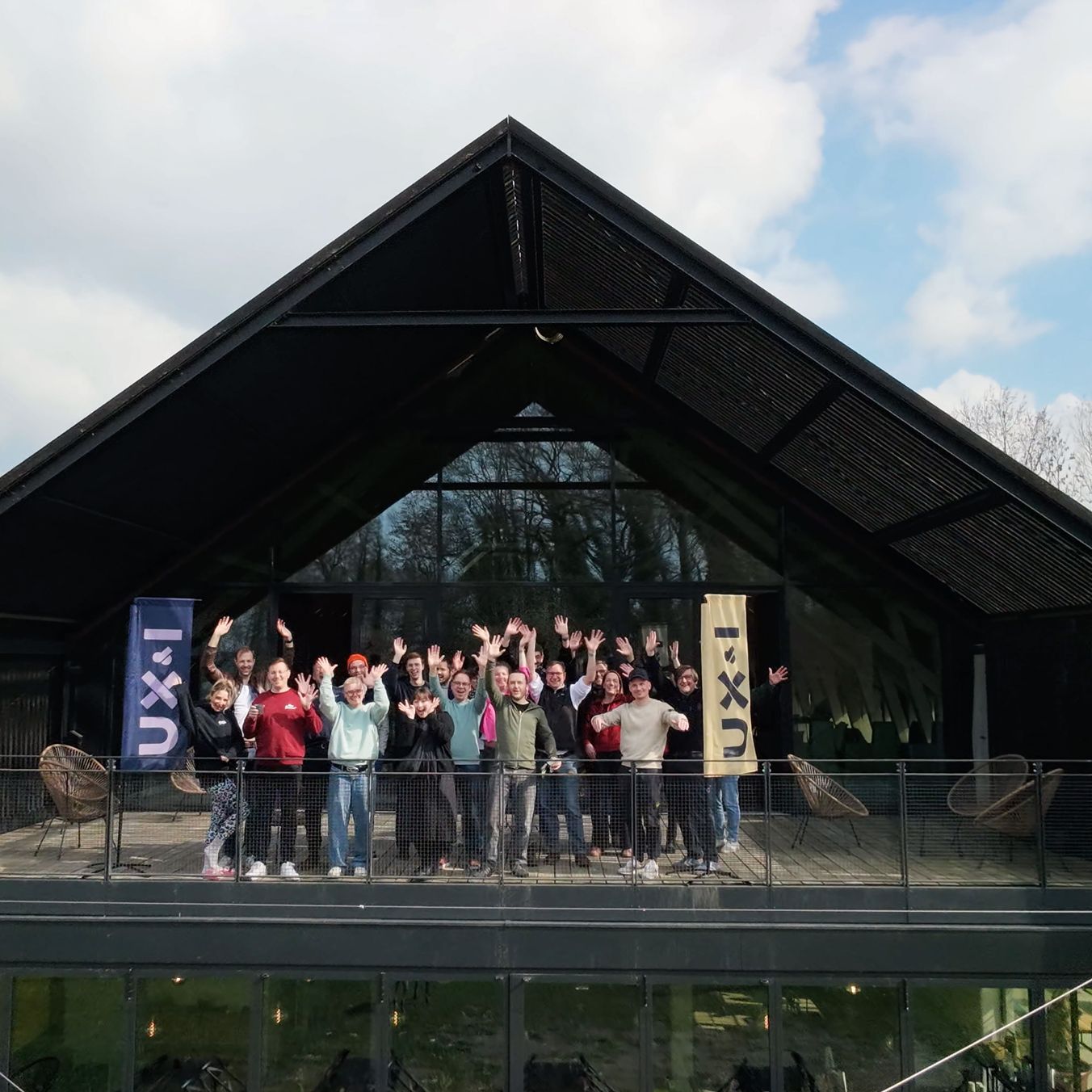
What happens when a UX team spends three days discussing AI? Featuring keynote speaker Jan Oberhagemann from codecentric, 14 sessions, and plenty of thought-provoking questions. Our report from the event.
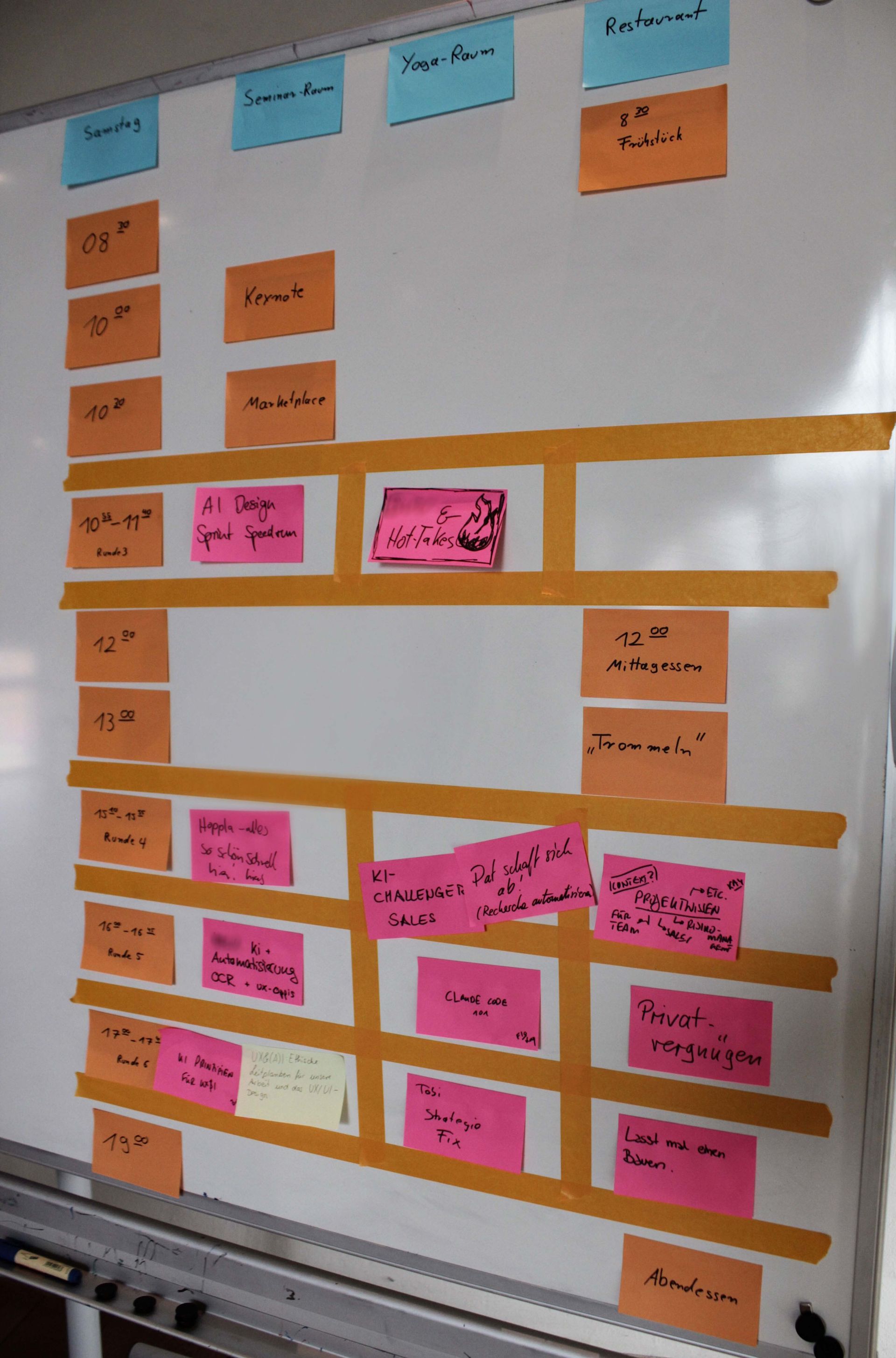
We could have spent months discussing how we, as a team, want to approach AI. Instead, we took three days off to listen, evaluate, and be honest with one another. Yurts, campfires, in the middle of nowhere. With a guest speaker from codecentric, an agenda created live and collaboratively, and a firm resolve to answer these questions: Where do we stand? What’s already working? Where are answers still missing?
Why now, and why this way?
AI is no longer a niche topic at UX&I. It’s woven into projects, processes, and everyday life. But we didn’t yet have a clear overview of exactly what’s happening where and how, both within our own organization and among our clients. The unconference format was a perfect fit: no set agenda, no lectures. The topics emerge from the team itself. Whoever proposes a topic moderates it themselves.
Keynote: Code is getting cheaper, specifications are getting more expensive
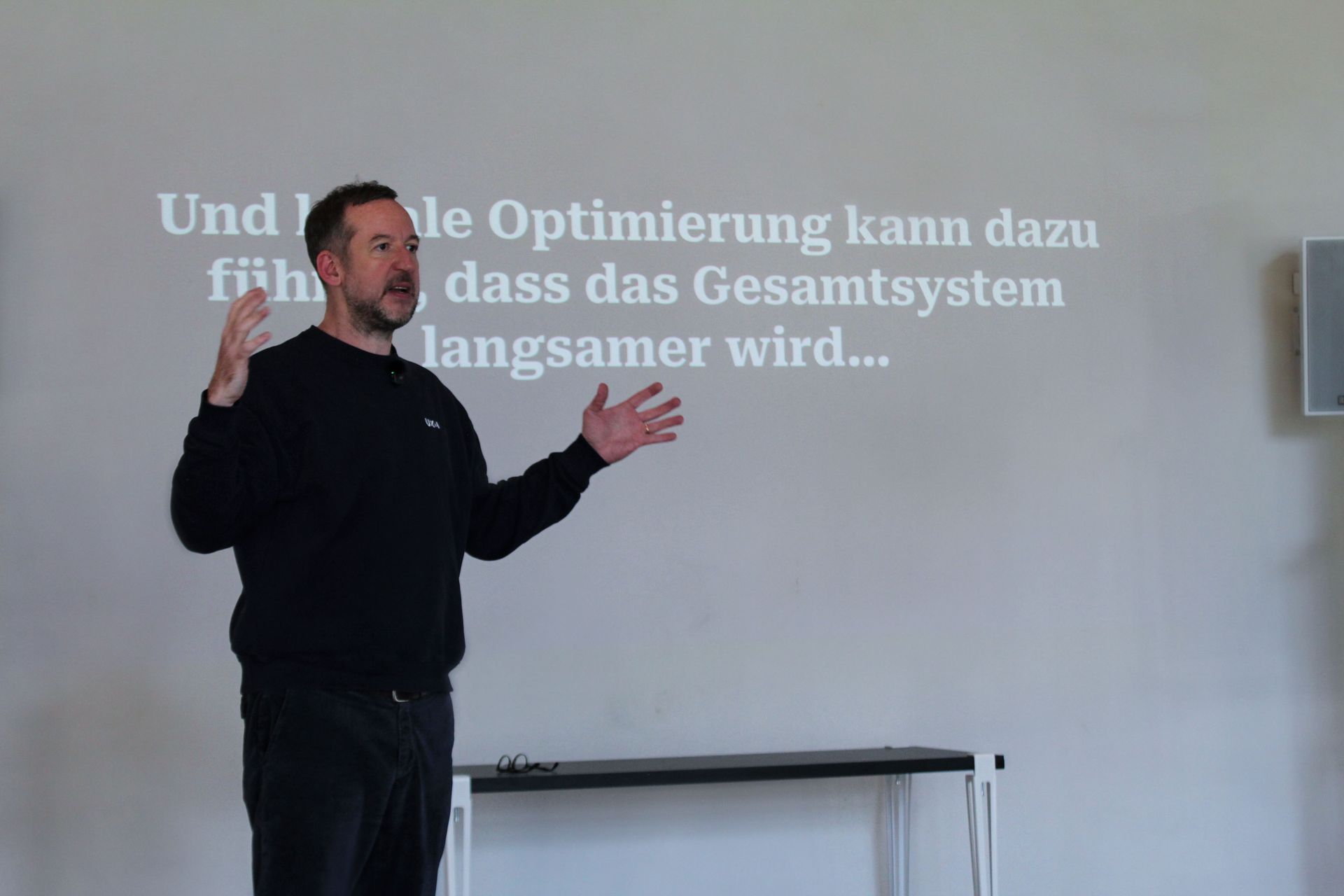
Jan Oberhagemann, Principal Consultant and People Lead at codecentric in Hamburg, kicked things off. He presented a thesis that guided us through the rest of the unconference: “Code is getting cheaper, specifications are getting more expensive.” If AI accelerates implementation, the bottleneck shifts to an earlier phase of the process: the question of exactly what should be developed. For UX teams, this isn’t a threat, it’s a shift in focus.
Using a specific project as an example, Jan demonstrated what this means in practice: Two developers and a product owner used AI to achieve the output of a ten-person team and saved a project that would not have been completed without this approach. However, the key to efficiency was that requirements had to be more precise than ever before, and decisions had to be made faster.
His conclusion, loosely based on Kent Beck, summed it up perfectly: Seeing the value of AI solely in terms of reducing headcount is like saying the only value of a car is that you no longer have to pay for a horse.
A brief look at the sessions
Hackathon: A product is created in 45 minutes
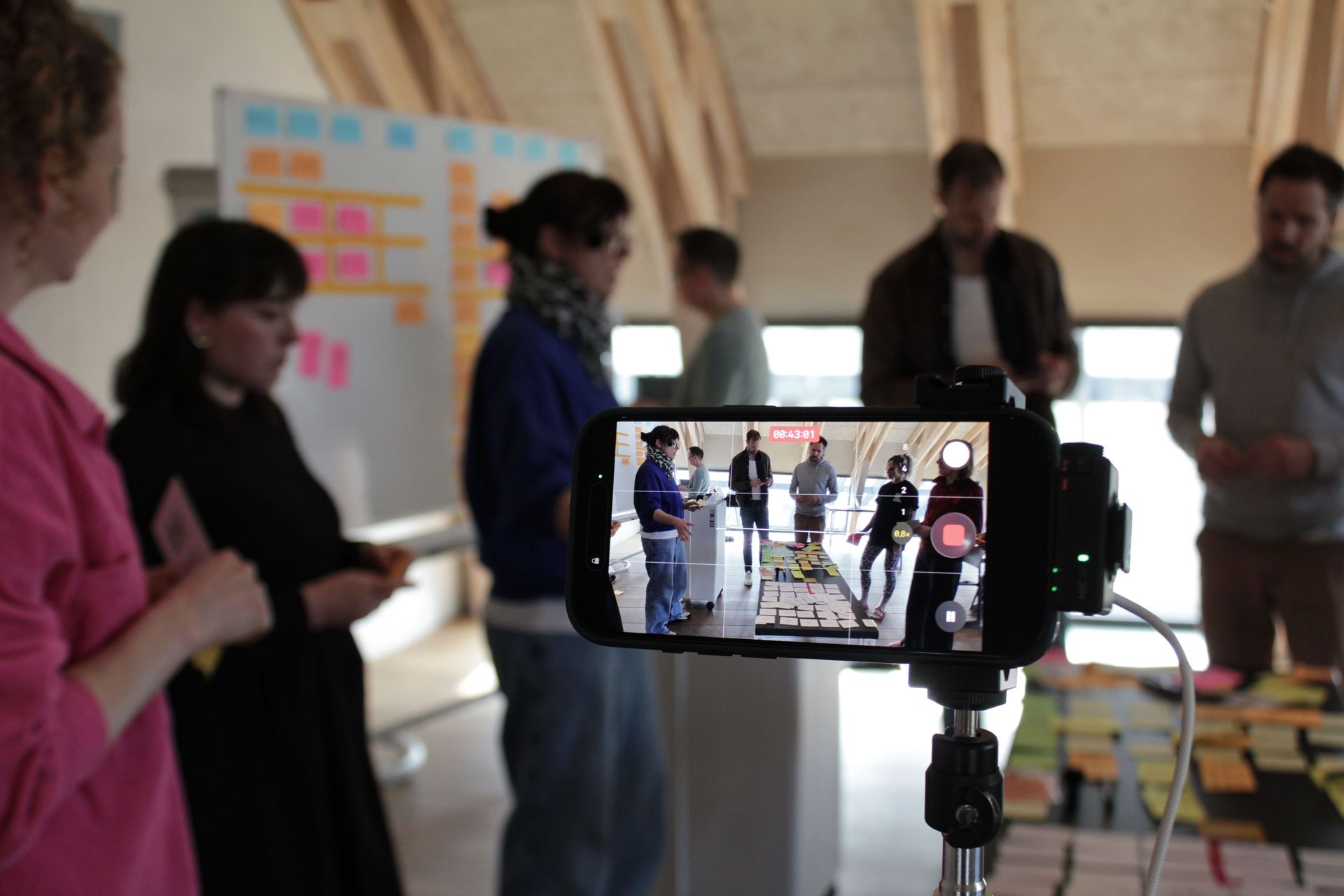
On Friday, we kicked things off with a hackathon. The team got right to work and, under the guidance of Kay Spiegel and Flora Maxwell, built an internal tool: an approval workflow for training programs and conferences designed to finally streamline what had previously been a cumbersome coordination process. What made it unforgettable was the moment when six AI-driven cursors suddenly darted around in Pencil at the same time, and a product took shape right before everyone’s eyes. The topic kept us engaged. In two additional sessions over the weekend, we continued developing the product and demonstrated live what’s already possible, and how tools like Pencil, Figma Make, and Claude Code can be used to turn an initial idea into a working prototype in no time.
“The Unconf really gave me a lot of energy. I had so much fun just ‘giving it a try’ together and learning from each other. I love that feeling of empowerment that AI gives me as a tool!” — Flora Maxwell, Senior UI Designer
UX&I and AI: A state of the industry report
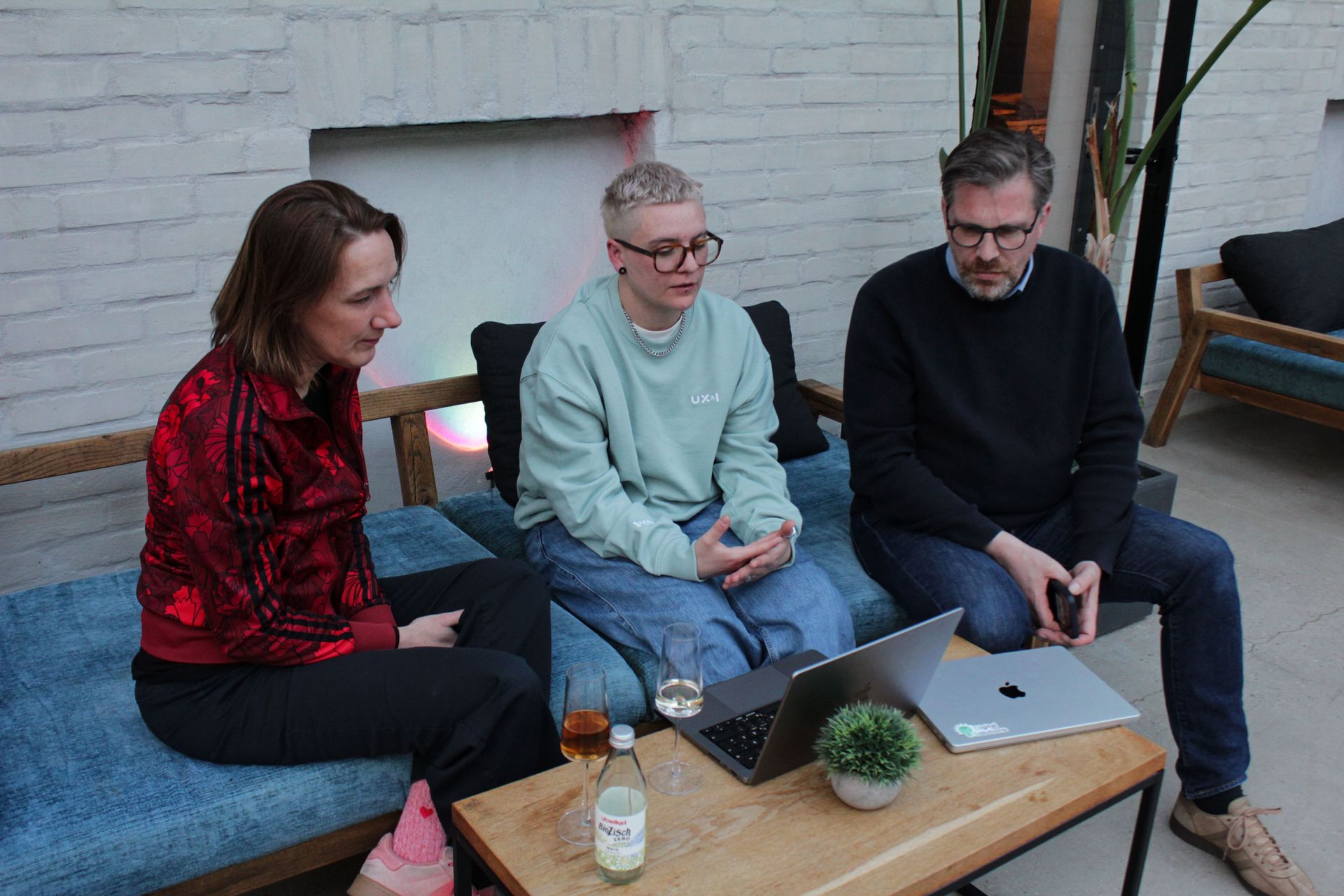
Mike Holtkamp posed the question: Where do we currently stand as an organization when it comes to AI? It was clear that the expertise exists within the company, but it isn’t yet widely visible. A lot happens quietly, on the side, without others being aware of it. Different tools are used in different projects. Mike and the participants brought to light what is already being used and how, from prompt entry in the GUI to the command line, from custom GPTs to agents and skills for various use cases, such as reproducible accessibility audits. In addition, many small but effective tips were shared, such as creating a glossary for the project right at the start to achieve more effective results.
What AI principles do we want to work by?
Kay Spiegel and Jessica Berger hosted a discussion on AI principles. In the run-up to the event, eleven AI principles for UX&I were developed, ranging from data protection to ethical guidelines, such as “Fairness is non-negotiable” or “Explainability is part of UX.” These were presented during the session and were the subject of a lively discussion. It became clear just how timely this moment is to exchange ideas on these principles together and, in doing so, clarify important questions regarding our work with AI. The proposed principles now form the basis for an internal company discussion, which is intended to provide us with guidance and offer our clients transparency.
“Whoa, everything’s moving so fast here!”
Hias Wrba posed an uncomfortable question: Does AI really make us faster, or does it just keep us busier? His answer: Velocity means nothing without direction. Delivery speed is of little use if discovery speed can’t keep up. “Time to insight” is just as important as “time to market.” That’s exactly where UX can make a difference.
Is sales making itself obsolete?
Patrick Oselka, Managing Director at UX&I with a focus on sales, explored the question: What really drives our clients? His approach: to burst the bubbles that form between technical requirements and management dependencies in order to better understand what actually needs to be decided. As a concrete result of his work, he trained a Claude skill that is now available to the entire team.
Project experiences
In her session, Claudia Schönwälder, Senior UX consultant at UX&I, asked how we should approach workplaces that involve “the human in the loop,” that is, the role of people in collaboration with AI and highly automated workplaces, and what responsibility we, as UX professionals, bear in this context. Our company purpose also plays a role here: “We empower people to shape technology for the benefit of humans.”
Rainer Sax discussed the value of intellectual property in a world where specifications and requirements are becoming increasingly more valuable than the implementation itself.
An agent as the project’s memory
Kay Spiegel developed the “Robinson” framework, which enables AI-supported, structured, and traceable documentation of projects. The framework offers, for example, a project log in which the AI asks targeted questions, simplified documentation of key decisions and insights, automated summaries of meeting notes, and a glossary that ensures a shared understanding of key terms. The result: projects become more transparent, onboarding is easier, and teams are more effective.
A quick strategy tip along the way
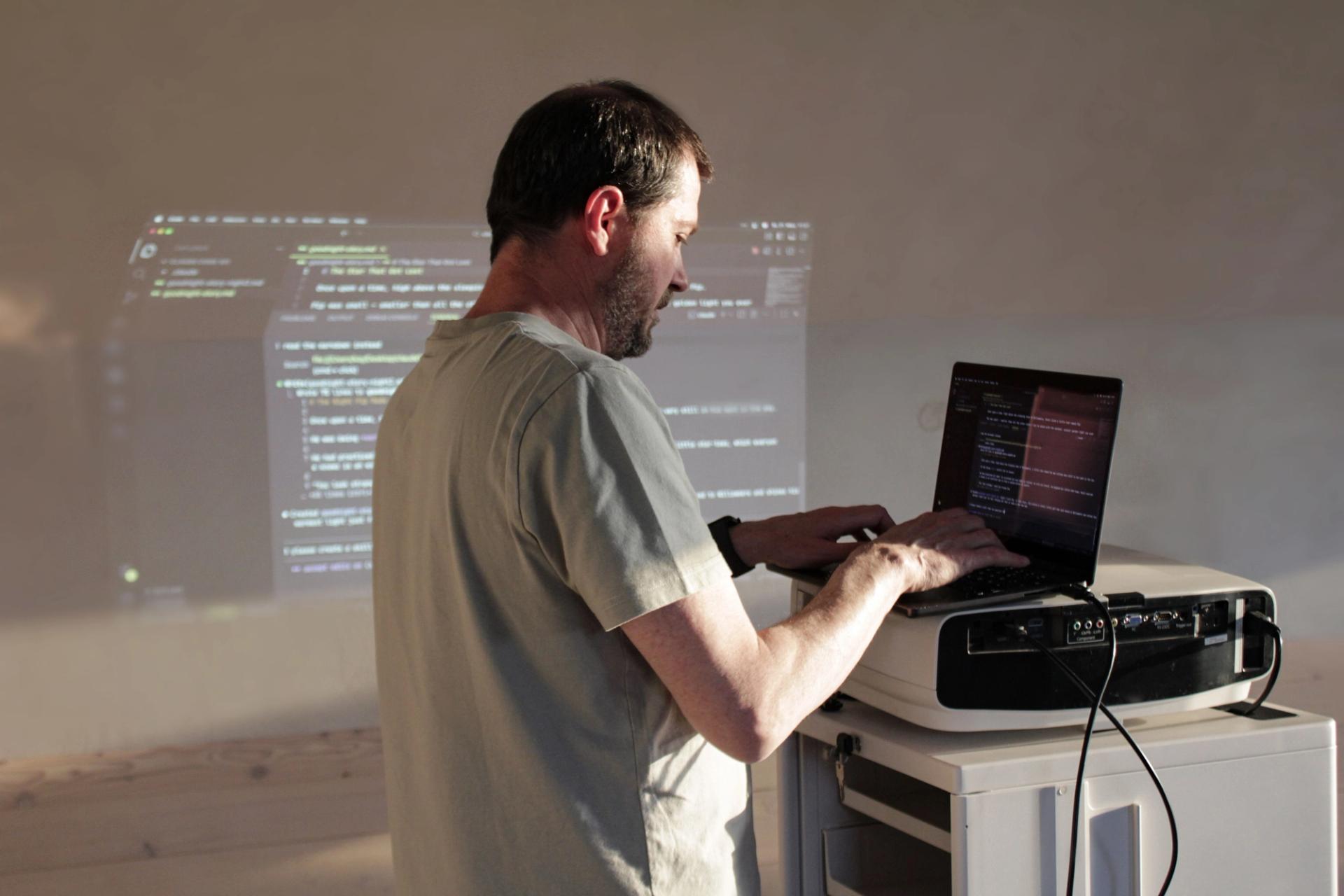
Tobias Schlei, Managing Director of UX&I, had originally intended to fix a few technical modules on the website and was learning Vibecoding to do so. What emerged almost incidentally was something much bigger: a framework that can be used to adapt or redesign an entire corporate strategy. After getting started with Cursor and n8n, he has now built Claude Code, an agent with a wide range of skills, that helps UX&I across various industries and use cases, from strategy to marketing to sales.
AI self-assessment
Robert Lischke presented the AI Skill Map by John Maeda, one of the most influential thought leaders at the intersection of design and technology. This framework allows users to assess their own level of maturity in the field of AI. Participants tried it out in real time and then discussed their impressions. Opinions were mixed: The specific recommendations for further development were well-received, but at the same time, some questioned whether an assessment is the right approach right now, given that we currently need diversity and that everyone first needs a context and use case to make progress with AI.
AI Design Sprint®
Nadine Pieper’s session focused on our new offering: the AI Design Sprint®, a structured, AI-powered sprint format. Using the fictional “Technogym” use case, Nadine guided the audience through a real, albeit abbreviated, AI Design Sprint in 45 minutes. The result: a solid foundation for the Techcheck, that is, a complete technical briefing, without requiring any prior knowledge of AI tools.

What remains
Three days weren’t enough to answer every question, but they showed us what’s already possible and which questions are truly worth asking. We took home a solid foundation for our AI principles, plenty of food for thought, and a wealth of inspiration. And we left with a sparkle in our eyes: full of new possibilities and a newfound sense of certainty. The question is no longer “Is this possible?” but rather, “What do we want to make possible with it?” For us. And for our clients.
“It was incredibly inspiring to experience the diverse approaches of my colleagues. Particularly valuable was our shared realization: AI is not currently a replacement for our expertise, but rather a sparring partner that supports us in the creative process.” Jessica Berger, Senior UX consultant
“My biggest takeaway: AI agents are a real game-changer today, but only those who use them sensibly and in an outcome-driven way can unlock their full potential, otherwise, a powerful tool quickly turns into a time-wasting toy.” Mato Sauer, Customer empowerment lead “It
was great to peek into what others are working on and see what’s brewing throughout the company. We all work with ‘AI,’ but in some cases, it looks completely different, with different perspectives, use cases, and, of course, tools.” Juliana Hirsing, Senior UX writer

About UX&I
UX&I offers consulting, enablement, and implementation services in the field of user experience (UX). We focus on deep tech, enterprise software, and digital transformation. Our goal is to help people harness complex technology to serve users. In doing so, we bring together all relevant perspectives: human, business, and technology.
- Locations: Düsseldorf (Headquarters), Berlin, Hamburg, Frankfurt am Main, Munich
- Employees: 37
- Founded: 2014
- Clients: Ten of the fifteen largest German companies, among others, rely on our UX expertise