Article
UX writing: When technology learns to speak

- Reading time
- 7 minutes
- Updated
Just a few years ago, if you Googled “UX writing,” you’d find just a handful of articles, mostly in English and often vague. A niche field for Silicon Valley. And today, nearly 1 million search results, growing international communities, job openings across a wide range of industries… Is this just a trend? Or a field that fills an important gap?
In this article, you’ll learn what UX writing entails and how text improves digital products.
What is UX writing?
“Oh, so you write user manuals,” is a comment UX writers often hear. That’s not quite accurate, but it gives you an idea. Because even though we surround ourselves with technical applications every day, regularly try out unfamiliar apps, and learn how to use new tools, we surprisingly rarely read manuals in the traditional sense.
Ever since the iPhone, if not before, we’ve come to expect digital products to be easy to use, to guide us to our goals without requiring too much effort on our part. Intuitive user guidance is generally viewed primarily as a design issue. Yet text is always a crucial tool on the path to happy users. In fact, UX design and UX writing are so closely aligned in their approach and objectives that text can be viewed as part of the design. Michael J. Metts and Andy Welfle illustrate this impressively in their book “Writing is Designing”. Both disciplines solve problems holistically and prioritize the user experience. The focus of the text is on the conversation between the user and the technical application.
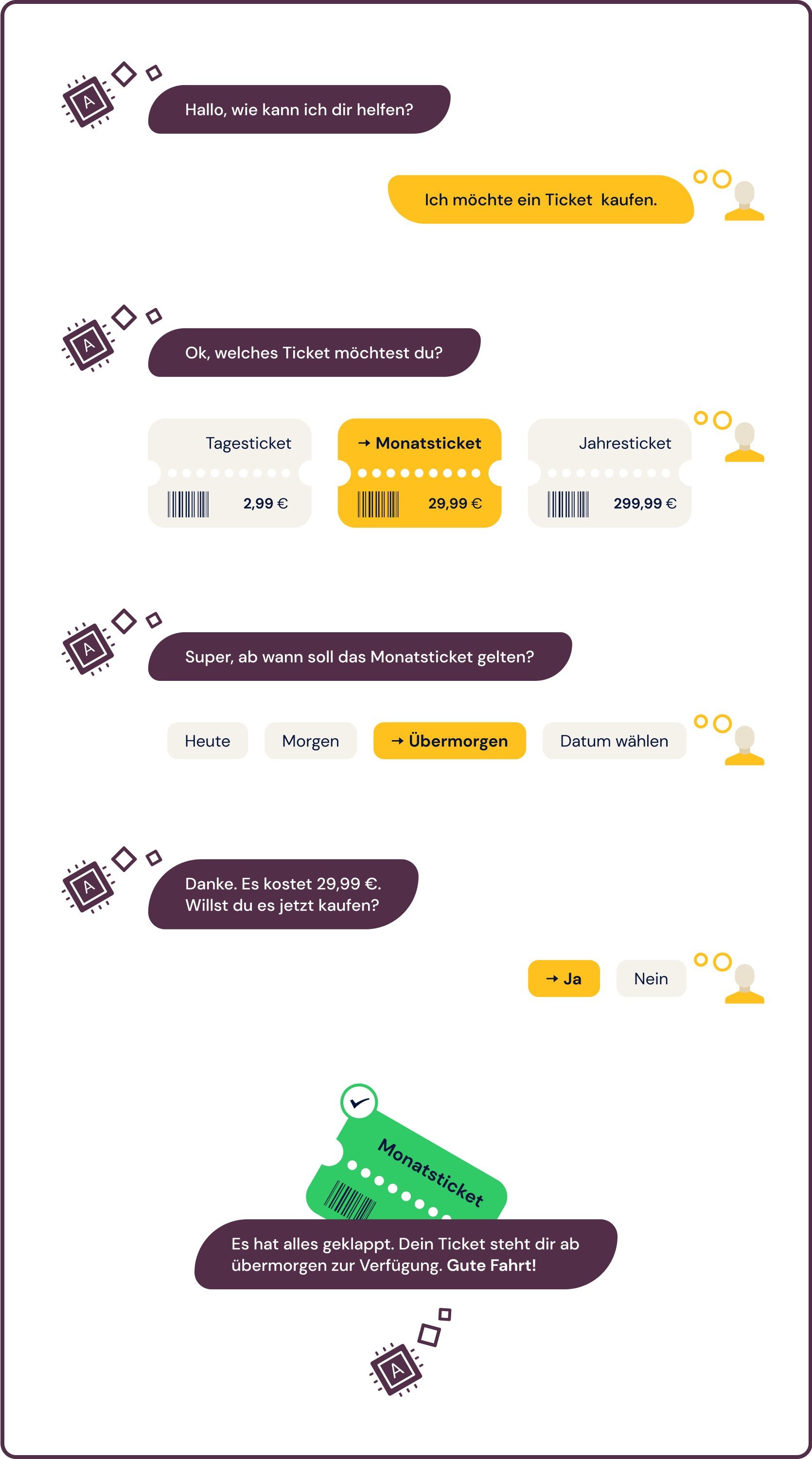
UX writing is not (yet) clearly defined or delineated. Depending on project requirements, the corporate context, and team composition, its scope can overlap with related disciplines. This is not only because UX writing, as a relatively new discipline, often has to find its place within existing structures. There are also content-related reasons: UX texts are part of an overall framework. For example, just like marketing texts, they act as brand ambassadors. They must comply with the company’s legal requirements. They must work in tandem with the design. A common question is: Is this still a text decision, or is it already a design decision? Keep in mind: UX writing is teamwork. Coordination and collaborative problem-solving are essential.
Formally, UX writing encompasses all text that is seen, heard, or felt through a user interface and that guides users toward their goal, whether on a website, in an app, or on a bread maker. In addition to buttons, informational text, and headlines, this includes FAQs, help pages, push notifications, and even legal notices. While the latter are drafted by lawyers, they can become more readable and understandable through the user-centered writing style of UX writers. Finally, the formulation of conceptual texts, such as persona definitions, storyboards, or user test hypotheses, often falls within the scope of UX writing as well.
How language improves digital products
What are the benefits of well-thought-out, user-centered language? Why does it make sense for text, which, after all, takes up an average of 36% of an app screen, to be given its own focus within the project?
Reaching your goal faster
A key benefit of well-crafted text is efficiency. A digital product is used to quickly achieve a specific goal, whether that’s making a bank transfer, booking a trip, or carrying out highly complex tasks. Even when using the app itself is the goal, as with a game, no one wants to be bogged down by lengthy explanations. The text, in conjunction with the design, must ensure that as much as possible is accomplished with just a few clicks. The language guides users and ensures that no one has to click through forums to decipher “Error 98dfgh893 (missing OAuth token).” It prompts actions, guides users safely through the process, and provides the right information at the right time. This also includes feedback: When users know immediately whether their actions were successful (e.g., “Thank you, your order is being processed”), uncertainties and detours are avoided.
A better user experience
Beyond its purely navigational function, UX copy has another key role. Acting as a kind of personal coach, it must ensure that users feel comfortable using the product, from the beginning to the end of the user journey. The copy doesn’t just convey information; it establishes a lifelike, empathetic conversation between human and machine, in the language and mindset of humans, mind you. That may sound trivial, but a technical, abstract perspective is a common problem in digital applications. UX writers must have a thorough understanding of users, their lives, goals, and ways of expressing themselves. They don’t rely on assumptions or subjective feelings; instead, they use research and testing to gain concrete insights into users’ problems and needs.
A strong brand
A digital product is part of the brand’s ecosystem and can offer significant value as an ambassador for the company. Since, for example, an app engages users more actively and emotionally in their daily lives than many traditional advertising channels, it can create a lasting association between the brand and positive experiences. UX copy plays a key role in this by reflecting the brand’s values and character. A taxi app communicates differently than a health insurance service app. Through consistent, user-centered language, the app becomes a valuable component of brand communication. It makes the company accessible, establishes a dialogue, and strengthens the brand with every interaction. However, it’s important to note that UX text is not marketing text. The focus is on supporting users, not on brand loyalty. A helpful rule of thumb: UX text doesn’t have to match the brand’s language exactly, but it must not contradict its core attributes.
More revenue
A good user experience not only meets users’ needs, it also has a positive impact on business goals (you can learn more about this in the article “ROI of UX Measures—Why Investing in a Good User Experience Pays Off”). As part of the user experience, UX copy also helps achieve business goals, either directly or indirectly. This is particularly evident in e-commerce. Even a single button label can determine whether a purchase is completed or recorded in analytics as an abandoned cart. Here, it’s crucial that every step is worded with absolute precision so users never lose their way. At the same time, UX writers must be especially careful in this area to consistently prioritize users’ needs. The text must be designed to support users in achieving their goals. Manipulation aimed at a quick sale and dark patterns are strictly off-limits.

How can you tell if UX copy is good?
How can you ensure that UX copy fully delivers on these benefits? The following criteria are helpful:
- Useful: “No one came here to read,” a harsh but essential realization for UX writers. Text isn’t an end in itself; it always serves users and their goals and needs.
- Of course: Instructions are unambiguous, actions have clear consequences, and terms always have the same meaning.
- Precise: It delivers exactly the type and amount of information needed at that moment.
- Conversational: A dialogue is established, and users are addressed in their own language and in the context of their current situation. The communication feels natural.
- Accessible: The text excludes no one and is understandable regardless of physical limitations, educational level, or cultural background. It is also readable by screen readers and can be easily translated or adapted to other cultural contexts.
The workflow
When, by whom, and how does text come into play in digital product development? Here are some guidelines:
The ideal time?
The earlier copywriters are brought into the project, the better the potential of UX writing can be harnessed. If copywriters are only called in after the wireframes (or even the UI design) are finalized, they can only fill in the gaps and can no longer comprehensively address user needs. In line with the “Content First” approach, copywriters can provide valuable input right from the initial briefing and, in collaboration with the rest of the product team, contribute to the best possible overall result.
Who does it?
It should be determined from the outset who is responsible for the text. Depending on the project’s size and budget, a professional UX writer may not always be on board; in that case, however, it’s essential that someone else take on the role of copywriter.
How does it work?
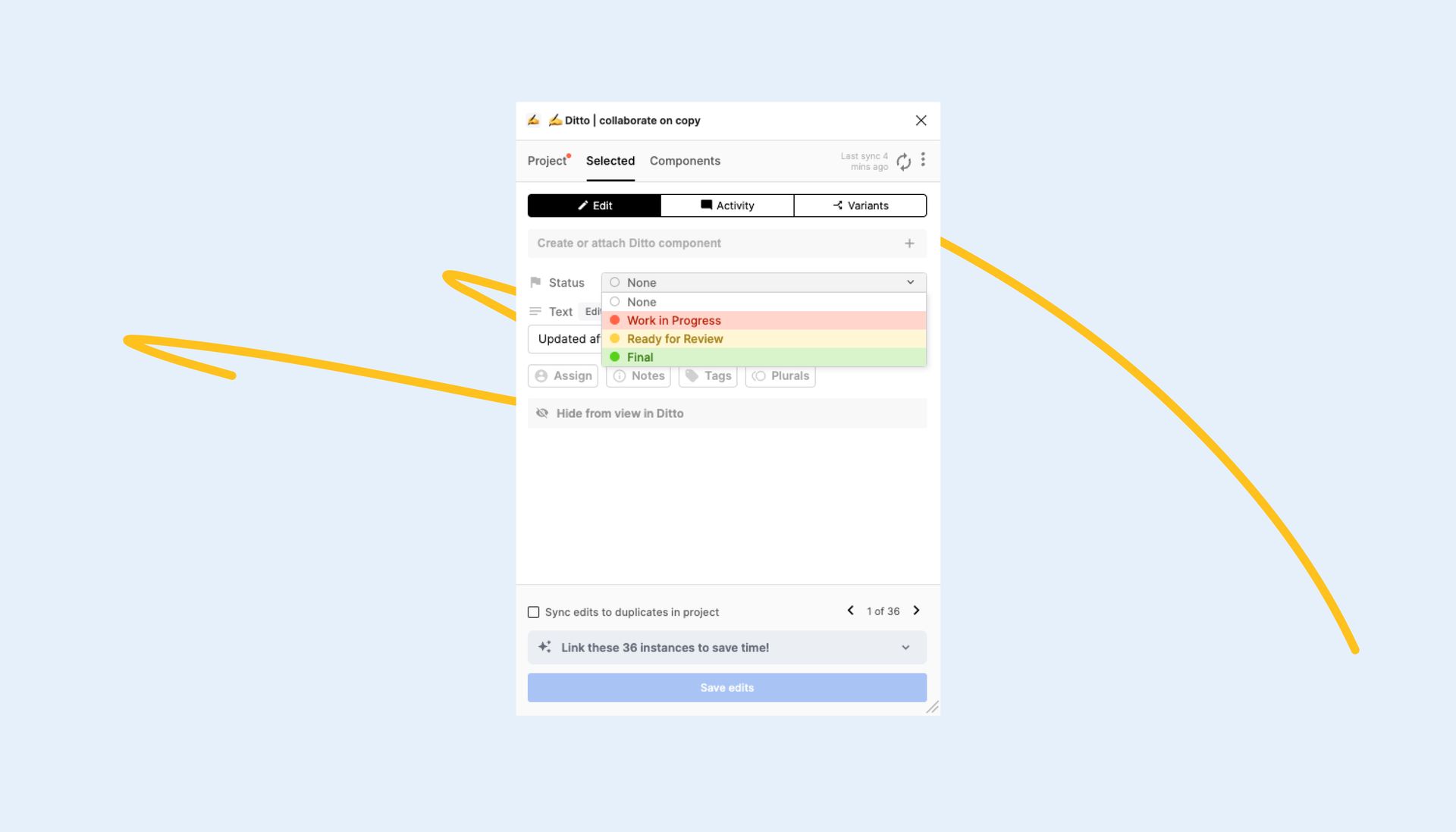
Since there are many points of overlap with related disciplines, UX writing should always be a collaborative effort with the team. In some cases, this involves the two-person team of copywriter and designer, a common pairing in the advertising world. It’s also helpful to have the text reviewed from multiple perspectives, internally by team members and externally through user testing. To streamline the UX writing process, there are now several valuable tools available, such as Ditto or Frontitude. Both can be integrated into Figma as plug-ins and allow you to edit text centrally, synchronize it with the design, and have it approved or commented on by the team. If such tools aren’t used, it’s still important to define a “source of truth” for the text: a single location where the current text is always stored and accessible to everyone. In its simplest form, this can be a spreadsheet or a text document.
Conclusion
Text is a fundamental component of every digital application. It can make human-machine communication empathetic and lifelike, and can make interactions not only more effective but also more enjoyable. UX writing is already an established discipline, particularly in the English-speaking world, and it is becoming increasingly professionalized here as well. Even if processes and responsibilities are still relatively flexible, UX writing should play a fixed role in digital product development, for the sake of an even more holistic user experience.
Our expert
Juliana has been bringing text to the digital world since 2009. As a UX writer, she ensures that language guides users to their goals and makes products measurably more successful.