UX Camp Hamburg 2024: High spirits and depth on the Elbe
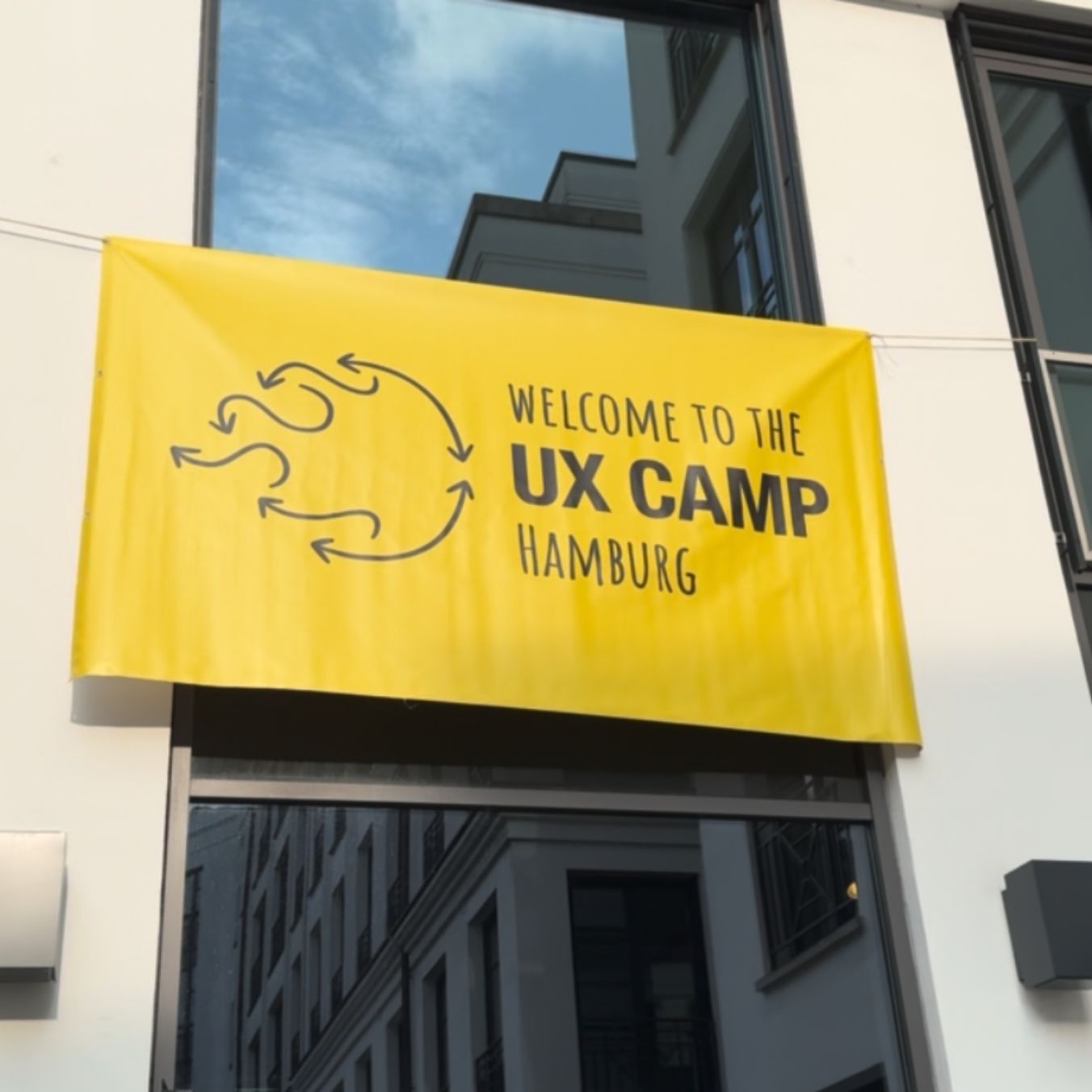
On August 3, 2024, UX Camp Hamburg was once again a highlight for the UX community. With beautiful weather and a fantastic venue, attendees had 25 exciting sessions to choose from. We were also thrilled to connect with over 150 other UX professionals.
For years, UX Camp Hamburg has been the go-to UX event where the entire Hamburg UX community, and beyond, comes together. This year, it returned to the same venue it used to be held at before the pandemic: the Ottenser Westend at Accenture Song, formerly Sinner Schrader. We were there again and had a thoroughly inspiring day:
“A really great atmosphere with lots of nice people: old friends and new faces. The camp is a great place for exchange, whether it’s about UX or beyond. It’s a great place to test out ideas. Just run a session and throw the topics out there. That’s great, especially for beginners who want to take the plunge into presenting and speaking in public,” says Rainer Sax, Senior UX consultant at UX&I.
1 day, 25 sessions
Topics ranging from AI to Shape Up
All 25 session slots were filled, so at times we were spoiled for choice. Here’s a brief excerpt:
Shida Rher kicked off the discussion on how, and whether, AI tools can be used in the UX process. The bottom line was the realization that there’s currently no reason to worry that UX professionals will be replaced by AI tools, since the quality of the output is often insufficient. In general, the discussion concluded that while AI can work well with data when necessary, that data must first be collected by humans and then definitely corrected and checked for inaccuracies.
Timo Tauchnitz invited the participants to take part in an accessibility quiz. Using the “1, 2, or 3” format, the quiz brought exciting details and background information to light. For us, it was a great way to package a topic that is still taken far too lightly into something fun.
Chris Xu presented Basecamp’s “Shape-up” method. The goal is to find a way to refine ideas to the point where they can be understood and then implemented. We also found it interesting to gain insights into how Scrum is practiced today and how the methodology we’ve known for many years has evolved and adapted over time.
Insights from UX&I’s real-world practice
Three UXIs also brought topics for the community: In his talk “From UX to Enterprise Architecture and Back,” Rainer Sax shared insights into how the UX perspective can impact a broader context. He also referred to Conway’s Law. This law states that existing organizational and communication structures can hinder the implementation of new software systems, which can lead to inefficient solutions and technical debt and impede digital transformation. Rainer recommended reading “Accelerate” by Nicole Forsgren et al. and “Designed for Digital” by Jeanne W. Ross et al. “Using the tools and skills of enterprise architecture to look at the big picture of companies and digitalization, while never losing sight of the user’s perspective, is an exciting challenge that’s truly worth taking on,” said Rainer.
In her session “Who Pays for the Party, ROI of UX,” Claudia Schönwälder demonstrated the enormous added value that UX can offer organizations. She emphasized how crucial it is to make the return on investment visible and measurable. With practical tips, she explained how to calculate ROI and ensure that the impact of UX is clearly recognizable to stakeholders. Her suggestion: Engage with stakeholders and develop buyer personas. “It was surprising for me to give a presentation on the ROI of UX and realize just how much interest there is in the topic—and how few people have really delved into it so far,” said Claudia.
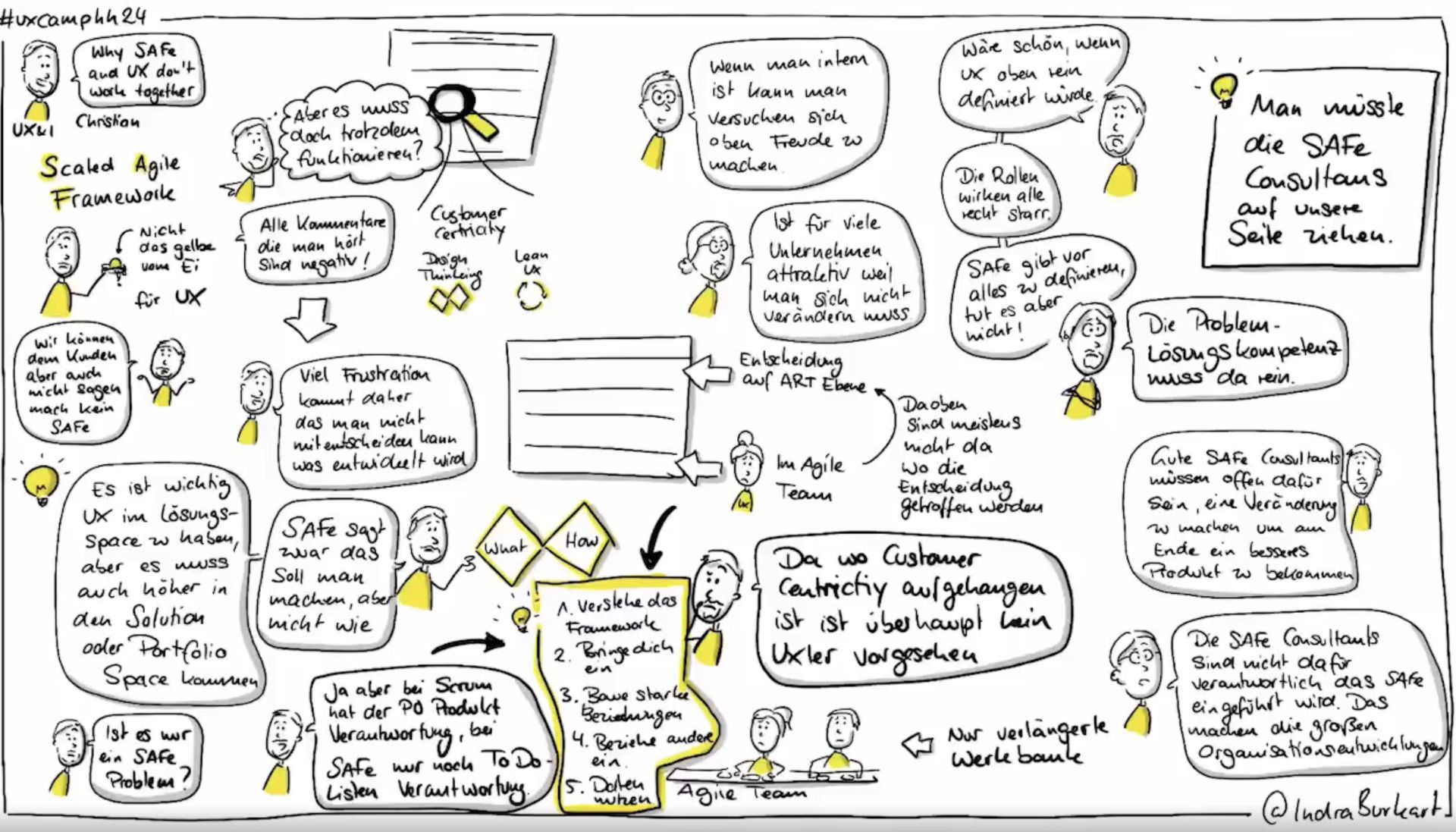
In the session “Why SAFe and UX Don’t Work Together,” Senior UX Consultant Christian Korff explained why, in his opinion, SAFe and UX usually don’t work together, and asked what could be done about it. In his experience, one of the main problems is that while SAFe dictates what needs to be done, it doesn’t specify how. Nevertheless, many companies rely on the methodology, partly out of fear of change. The conclusion of the discussion was that while the framework cannot be changed from the bottom up, it is possible for UX designers to make their voices heard through networking and by providing user insights, and to initiate changes, at least on a small scale.
A worthwhile event, even for UX newcomers
We’re grateful for a jam-packed day filled with great conversations, insights into the diverse UX community, and plenty of new food for thought, especially from the discussions during the sessions. “I made lots of great new connections from the city where I live. And this time, I was part of the organizing team for the first time, which was an amazing experience,” said Christian Korff. The level of the talks was particularly well-suited for anyone who is relatively new to UX or exploring the topic on their own. Our thanks go to the sponsors, and especially to the organizers, who put together a completely seamless event where everyone felt at home. We’re already looking forward to UX Camp Hamburg 2025!
About UX&I
UX&I offers consulting, enablement, and implementation services in the field of user experience (UX). We focus on deep tech, enterprise software, and digital transformation. Our goal is to help people harness complex technology to serve users. In doing so, we bring together all relevant perspectives: human, business, and technology.
- Locations: Düsseldorf (Headquarters), Berlin, Hamburg, Frankfurt am Main, Munich
- Employees: 37
- Founded: 2014
- Clients: Ten of the fifteen largest German companies, among others, rely on our UX expertise
Contacts

“UX is only sustainable if everyone gets on board.” Christian Korff turns user experience into a team effort and particularly enjoys getting involved with complex systems.

Claudia’s motto: To begin, begin! Her mission: To embed UX principles, convincing others that UX always pays off. Her goal: Clients who never want to do projects “without” UX again.

For over 20 years, Rainer has been advising companies on digital transformation issues that bridge the gap between strategy and technology, and between user and business needs.