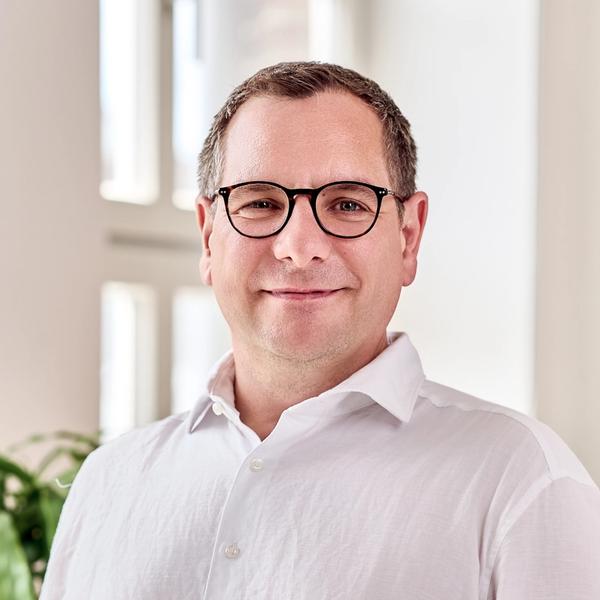
Rainer Sax joins us as senior consultant for strategy & UX

“We need to listen to our clients and give them a voice so we can understand exactly where the problem lies.” For Senior UX Consultant Rainer Sax, asking the right questions is the first step toward developing user-centered products and bringing about sustainable change in complex sociotechnical systems.
Rainer, you studied philosophy, logic, and computer science. Why?
Studying philosophy allows you to “learn how to think.” Back then, and still today, I wanted to understand connections, and to keep getting better at understanding them. Logic and philosophy are, among other things, about critically examining arguments or ensuring that an argument or response is transparent. So, you reflect on the act of thinking itself and evaluate it through methodological reflection. Tools and a well-stocked toolkit of methods are important aids, but thinking itself is even more important. And that’s a matter of training. In my work as a Senior Consultant, theoretical thinking helps me know which questions to ask. And those questions usually can’t be answered in a single sentence. As a UX strategist, I have to listen carefully, understand the other person’s perspective, and show empathy. Even if I’m not in that situation myself, I have to understand what’s driving the person and then ask myself: What is the actual problem? What is the real question at the heart of this? That sounds simple, but it’s often very complex, and working through it can take weeks or months. Precisely because I observe the clients’ socio-technical system from the outside and try to understand it, I can contribute to the solution, thereby making digital products and the company itself more human-centered. Ultimately, however, everyone must pull together to bring about real change.
Implementing UX strategies can be quite complicated, can’t it?
Achieving sustainable and meaningful process optimization or product launches as part of organizational development aimed at greater user-centeredness is complicated and complex. There’s no need to downplay or sugarcoat this. At best, everyone can contribute their part. An important approach for me in this context is precision in terminology. A consistent language doesn’t make the issues any simpler, but it does make processes faster and thinking more straightforward. The so-called “ubiquitous language” is used in Domain-Driven Design to define terms across disciplines. The better I understand terms, the easier it is for me to work with them and, ultimately, to change the processes behind them. I really need to know what lies behind a term and apply it consistently and systematically. For example, what is a customer order, and how does a partial order differ from it? Such seemingly minor details are crucial for reaching our goals more quickly. In an external role as a consultant, I can often do this better than the clients themselves, especially when they’re too deeply immersed in the technical details.
Your extensive experience is certainly an asset when it comes to designing digital products, isn’t it?
I’ve been working in the field of human-centered design for over 25 years and have seen and experienced a lot. That definitely helps when it comes to assessing situations and taking things with a sense of humor now and then. UX maturity is on the rise in many companies and agencies, which I think is great. Back when I was starting out, not many designers knew what the term “user experience” meant, and I often encountered a lack of understanding because I tried to think from both the developer’s and the user’s perspectives. A TV commercial doesn’t have a newsletter button. And a marketing microsite built in Flash doesn’t necessarily offer any added value to users. But a lot has changed in recent years, and there’s been a growing awareness of how important a good user experience is.
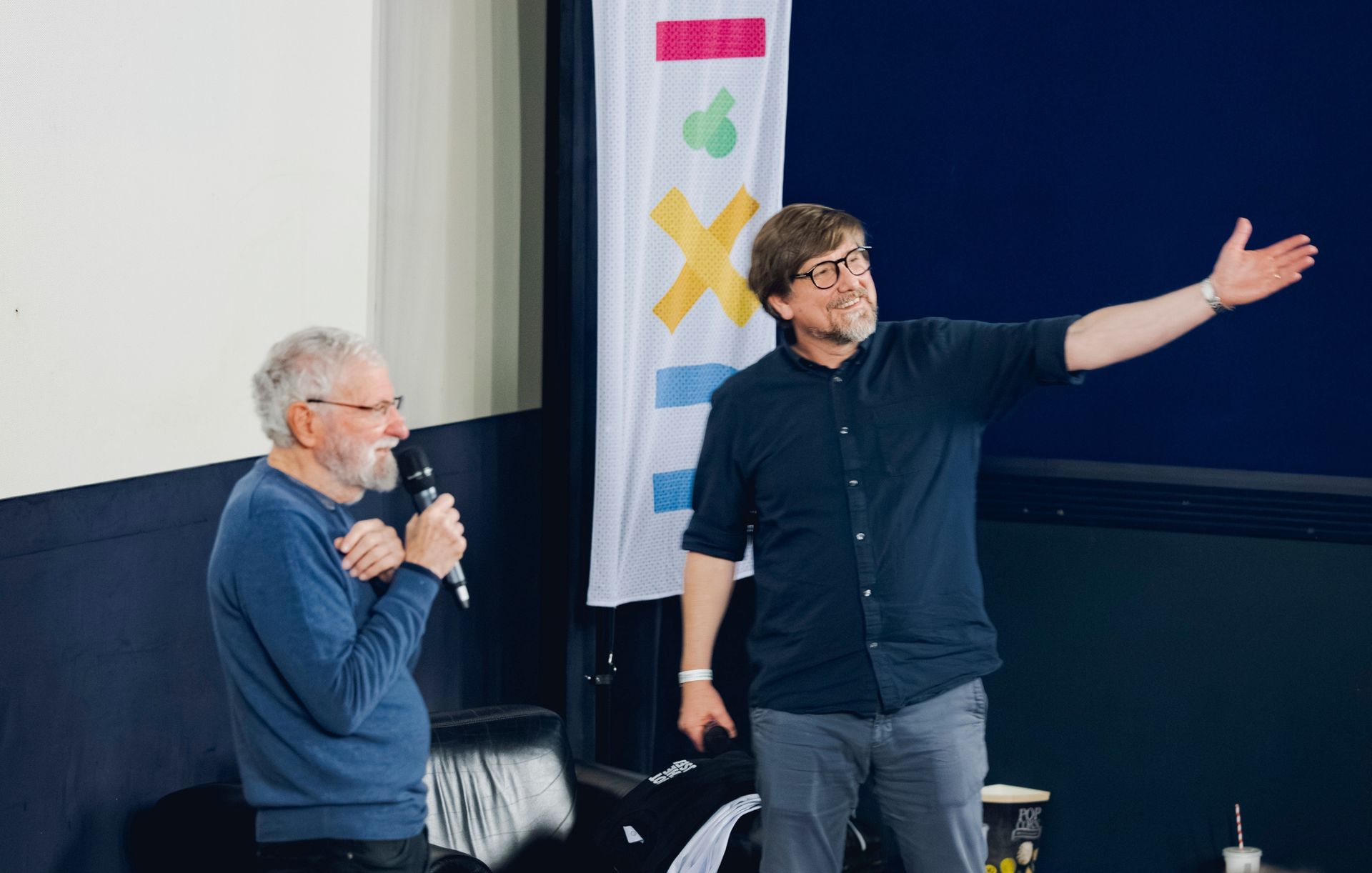
You work from home out in the countryside. Tell us, where exactly is your adopted home, and why did you move away from Hamburg? Isn’t it too lonely for you?
My partner and I moved to the countryside a while ago, and now we live in a small village in the Wendland region near Gorleben. It’s not lonely at all, and we feel very at home in the open and warm-hearted village community. Here, we run the group guesthouse “Haus an der Elbe,” which we both enjoy immensely and which serves as a great balance to my digital work. We host a wide variety of guests: seminars, family celebrations, and even yoga retreats, and the charming half-timbered house is perfect for many different occasions. The hospitality industry is a new field for me, and I’m currently learning a lot about it. But I’m especially excited to get to know the people who stay with us.
You can find out more about Rainer here.
About UX&I
UX&I offers consulting, enablement, and implementation services in the field of user experience (UX). We focus on deep tech, enterprise software, and digital transformation. Our goal is to help people harness complex technology to serve users. In doing so, we bring together all relevant perspectives: human, business, and technology.
- Locations: Düsseldorf (Headquarters), Berlin, Hamburg, Frankfurt am Main, Munich
- Employees: 37
- Founded: 2014
- Clients: Ten of the fifteen largest German companies, among others, rely on our UX expertise
Contact

For over 20 years, Rainer has been advising companies on digital transformation issues that bridge the gap between strategy and technology, and between user and business needs.